Which Center Channel Speaker Keeps Dialogue Clearest?
Most home theaters do best with the Klipsch R-52C, thanks to its horn tweeter and easy Klipsch timbre match. The SVS Prime Center adds sealed-cabinet bass for movie effects. Polk’s Signature Elite ES35 delivers similar dialogue clarity at a lower cost.
Klipsch’s R-52C fits most living rooms first, pairing a Tractrix horn tweeter with dual copper-spun woofers for forward, intelligible dialogue. Louder explosions and effects call for the sealed-cabinet SVS Prime Center instead. Existing Polk owners save money with the tonally matched Signature Elite ES35.
Dialogue carries most of a movie’s soundtrack, so a center that clashes with the mains stands out within minutes. Shallow TV stands rule out several deep cabinets before sound quality even enters the picture. Our comparison draws on published driver specs, cabinet dimensions, and recurring owner feedback on clarity rather than staged listening sessions.
The best picks, ranked
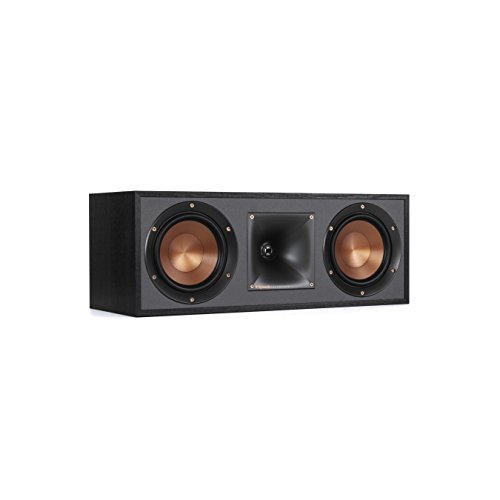
Klipsch R-52C
A 1-inch Tractrix horn tweeter projects dialogue forward, matching the tone of Klipsch’s Reference towers and bookshelf speakers. Dual copper-spun woofers fill in midrange weight without bulking up the cabinet. Multiple owners note voices stay intelligible even at low volume, a common complaint with dome-tweeter rivals.
Pros
- Horn tweeter keeps dialogue clear at low volume
- Matches tone with other Klipsch Reference speakers
- High sensitivity works with modest AV receivers
Cons
- Horn tuning can sound bright on some content
- Cabinet depth needs a deep enough TV stand

SVS Prime Center
A sealed acoustic-suspension cabinet houses dual 4.5-inch midbass drivers, trading raw output for tighter, more controlled bass. An aluminum dome tweeter adds treble detail without harshness, per SVS’s published specifications. Its smaller footprint also fits shelves too shallow for horn-loaded rivals.
Pros
- Sealed cabinet gives tight, controlled bass
- Compact depth fits shallower TV stands
- Detailed treble without harsh edges
Cons
- Less low-end extension than ported designs
- Runs quieter than horn-loaded rivals at distance

Polk Audio Signature Elite ES35
Power Port bass venting cuts cabinet noise while still reaching reasonably deep for a center this size. A 1-inch dome tweeter sits between dual 5.25-inch woofers tuned for speech. Shared voicing with the rest of Polk’s Signature Elite line simplifies matching an existing system.
Pros
- Power Port venting cuts port noise on bass notes
- Matches easily with other Polk Signature Elite speakers
- Strong dialogue clarity for the price
Cons
- Cabinet is wider than some shallow-shelf rivals
- Bass rolls off earlier than sealed SVS design

ELAC Debut 2.0 C6.2
Designer Andrew Jones voiced this center for a neutral balance instead of an exaggerated midrange bump. Dual aramid-fiber woofers resist cone flex under bass-heavy scenes. Bi-wire binding posts let owners run separate cabling for mid and high frequencies, a feature most rivals skip at this price.
Pros
- Neutral tuning avoids an exaggerated midrange
- Aramid fiber woofers resist cone flex
- Bi-wire terminals suit upgraded cabling
Cons
- Wants a full ELAC Debut set for best blending
- Less efficient than the Klipsch R-52C
Pioneer SP-C22
Andrew Jones also voiced this center during his Pioneer years, sharing tone with the older SP tower and bookshelf range. Dual 4-inch woofers keep the cabinet slim enough for narrow TV stands. Owners running a full Pioneer SP system describe it as the smoothest blend on this list.
Pros
- Slim cabinet suits narrow TV stands
- Timbre matches the Pioneer SP speaker range
- Smooth, non-fatiguing tone for long viewing
Cons
- Availability is more limited than Klipsch or Polk
- Smaller woofers cap output in larger rooms

Yamaha NS-C210BL
Dual 4-inch cone woofers pair with a balanced dome tweeter for clear speech at an entry-level price. Its compact cabinet suits small stands and secondary bedrooms just as easily as a main living room. Owners frequently describe it as a straightforward upgrade over a TV’s built-in speakers.
Pros
- Affordable step up from built-in TV audio
- Compact size fits small stands and shelves
- Clear speech reproduction for the price
Cons
- Bass output is thin without a subwoofer
- Cabinet plastic feels lighter than pricier rivals
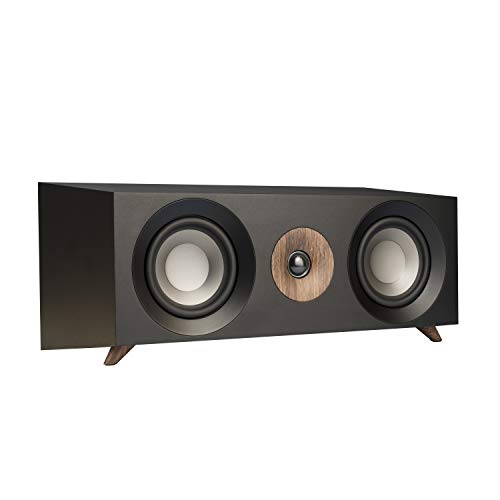
Jamo C 9 CEN
Roughly 15 inches wide, this center squeezes onto shelves too narrow for most rivals here. Dual 4-inch woofers and a 1-inch soft dome tweeter still keep dialogue intelligible in smaller rooms. Wall-mount keyholes add placement options that shelf-only competitors leave out entirely.
Pros
- Narrow cabinet fits tight shelves
- Wall-mount keyholes add placement flexibility
- Light weight simplifies mounting
Cons
- Output ceiling is lower than larger centers
- Bass thins out in bigger living rooms
Before you buy
What to look for in a center channel speaker Driver count, cabinet depth, and sensitivity together decide how a center performs under a TV. Dialogue clarity matters more than raw bass here, since a subwoofer typically covers low frequencies. This comparison relies on published specifications and recurring owner feedback rather than a staged lab test.
How to match timbre with your main speakers Panning dialogue across the screen exposes any tonal mismatch between a center and the left and right channels within seconds. Klipsch tower owners get the smoothest blend from the R-52C, while a Pioneer SP-based system pairs better with the SP-C22. Mixed-brand setups can still work when the overall tonal balance stays close.
Best options for small shelves and tight TV stands Narrow or shallow shelves eliminate several larger centers before sound quality even matters. Both the SVS Prime Center’s sealed cabinet and the Jamo C 9 CEN’s slim width suit cramped stands well. Measure shelf depth first, since some cabinets extend past 8 inches.
Movie effects versus dialogue-first viewing Sealed designs like the SVS Prime Center favor tight, controlled bass during action scenes over raw volume. Horn-loaded options such as the Klipsch R-52C push dialogue forward more aggressively at lower volumes instead. Frequent action-movie viewers tend to prefer the former; dialogue-focused viewers usually lean toward the latter.
How they compare
| # | Model | Tweeter | Best for | Score | Price |
|---|---|---|---|---|---|
| 1 | Klipsch R-52C | 1-inch Tractrix horn | Best overall | 9.4 | Check price |
| 2 | SVS Prime Center | 1-inch aluminum dome | Best for movie effects | 9.1 | Check price |
| 3 | Polk Audio Signature Elite ES35 | 1-inch dome | Best value | 8.8 | Check price |
| 4 | ELAC Debut 2.0 C6.2 | 1-inch cloth dome | Best audiophile pick | 8.7 | Check price |
| 5 | Pioneer SP-C22 | 1-inch soft dome | Best for Andrew Jones tower matching | 8.4 | Check price |
| 6 | Yamaha NS-C210BL | 1-inch balanced dome | Best budget | 8.1 | Check price |
| 7 | Jamo C 9 CEN | 1-inch soft dome | Best compact | 8.0 | Check price |
Questions worth asking
What does a center channel speaker actually do?
It reproduces most on-screen dialogue and vocals in a home theater, since surround sound mixes route speech through the center channel instead of splitting it between left and right.
Do I need a center channel speaker if I already have a soundbar?
No. A soundbar already integrates a center-style driver array internally. A standalone center channel speaker is meant for a separate AV receiver and speaker setup, not an addition to a soundbar.
How do I match a center channel speaker to my other speakers?
Check whether the center shares a driver design or product line with your towers or bookshelf pair. Same-brand, same-series speakers, like the Klipsch R-52C with Klipsch Reference towers, blend most smoothly.
Can a center channel speaker be too big for my TV stand?
Yes. Deep cabinets, common on some horn-loaded designs, need extra shelf depth to fit. Compact options such as the Jamo C 9 CEN or the sealed SVS Prime Center fit narrower or shallower stands instead.
Is a horn-loaded center better than a dome tweeter design?
Neither wins outright. Horn tweeters like the Klipsch R-52C push dialogue forward with high sensitivity, while dome tweeters such as the ELAC Debut 2.0 C6.2 lean toward a smoother, more neutral tone.
Does a center channel speaker need its own amplifier?
No. It connects to an AV receiver’s center channel output like any other passive speaker in the system, so it does not require a standalone amplifier.
What is timbre matching in a home theater system?
It means picking speakers with similar tonal character so sound stays consistent as it pans across the front soundstage, which is why many buyers stick to one speaker line for center and mains.
Are budget center channel speakers good enough for movies?
Budget models like the Yamaha NS-C210BL handle dialogue clearly but produce thinner bass on their own. Pairing one with a subwoofer covers the low end a smaller center cannot reach alone.
Center channel speaker vs soundbar: which is better for a real home theater?
A dedicated center channel paired with an AV receiver and separate surrounds generally outperforms a soundbar’s built-in virtual surround processing for dialogue placement and effects separation.
What size center channel speaker fits a compact TV stand?
Narrow models under roughly 16 inches wide, such as the Jamo C 9 CEN, or shallow sealed designs like the SVS Prime Center, tend to fit compact stands that rule out larger horn-loaded centers.
Our take
The Klipsch R-52C remains the easiest recommendation for most setups, pairing high sensitivity with dialogue that stays clear even at low volume. Shoppers chasing tighter movie bass in a shallow cabinet should choose the SVS Prime Center instead. Anyone already running Polk speakers gets the closest tonal match, plus the best value, from the Signature Elite ES35.

