Cereal Storage Containers That Actually Block Air
OXO Good Grips POP Container forms the tightest seal through a push-button silicone gasket, making it the top pick for freshness. Rubbermaid Brilliance Pantry Airtight Container stacks best in narrow pantries. mDesign Plastic Cereal Dispenser suits households pouring cereal every morning thanks to its flip-spout lid.
OXO Good Grips POP Container wins on seal strength, using a push-button lid that presses a silicone gasket flat against the rim. It fits a full cereal box, though its size takes more shelf depth than slimmer containers.
Stale cereal usually comes down to a weak seal rather than the food itself. We compared closure mechanisms, capacity, and owner feedback on long-term airtightness across seven containers to find which ones actually stop air from getting in.
Our top picks

OXO Good Grips POP Container
A push-button lid presses a silicone gasket flat against the rim for a seal with no twisting or multiple latches to manage. At 4.4 quarts, it holds a full standard cereal box with room left over. BPA-free plastic resists picking up food odors after repeated use.
Pros
- Single button creates a strong airtight seal
- Fits an entire standard cereal box
- Stacks neatly with other OXO POP containers
Cons
- Takes up more shelf depth than slim containers
- Button mechanism collects crumbs and needs periodic cleaning

Rubbermaid Brilliance Pantry Airtight Container
Clear Tritan plastic lets you check cereal level without opening the lid. A low-profile latch keeps the design flat enough to stack in tight pantry shelves. Its rectangular shape lines up edge to edge, using shelf space more efficiently than round canisters.
Pros
- Rectangular shape saves shelf space versus round bins
- Tritan plastic stays clear rather than yellowing over time
- Stacks firmly without sliding
Cons
- Latches feel stiff for the first few uses
- Opening is narrower than round containers of similar size
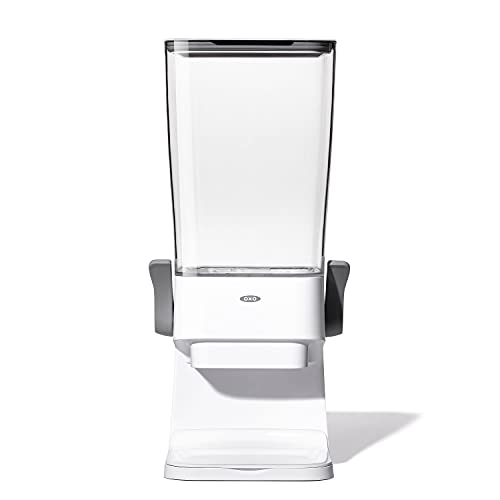
mDesign Plastic Cereal Dispenser
A flip-top spout releases cereal without lifting the entire lid, handy for pouring straight into a bowl each morning. Its narrow rectangular shape fits standard cabinet shelves better than wide bin-style containers. One hand operates the spout, leaving the other free to hold a bowl.
Pros
- Spout pours cereal without full lid removal
- Narrow profile fits typical cabinet shelving
- Works one-handed during a rushed morning
Cons
- Holds less cereal than bin-style containers
- Larger cereal pieces can jam the spout opening

Progressive ProKeeper Cereal Keeper
Eighteen cups of capacity swallows an oversized cereal box with space left over. A flip-up spout controls the pour, and interlocking sides let two units sit side by side without gaps. That interlocking shape makes better use of pantry width than round canisters.
Pros
- Large capacity fits oversized cereal boxes
- Interlocking sides cut down on wasted shelf width
- Priced lower than most gasket-sealed containers
Cons
- Seal is looser than gasket-based lids
- Spout needs a firm push to open fully

Zeroll Zerocase Cereal Storage Container
Short and wide, this container suits pantries holding several partial cereal boxes instead of one large one. A snap lid closes without a gasket, adequate for short-term freshness rather than long storage. Its low height clears shelves that taller containers cannot fit under.
Pros
- Wide opening makes hand-scooping easy
- Low profile clears short pantry shelves
- Good fit for storing multiple partial boxes at once
Cons
- Snap lid seals less tightly than gasket designs
- Two quarts limits it to partial boxes rather than full ones
Glasslock Airtight Cereal Container
Tempered glass does not absorb odors the way plastic can after years of reuse. Four locking clips compress a silicone gasket around the rim for a seal that holds up over time. The glass body adds noticeable weight, a tradeoff for buyers who dislike plastic’s texture and smell retention.
Pros
- Glass resists picking up food odors long term
- Four-clip gasket seal stays airtight
- Both body and lid go in the dishwasher
Cons
- Heavier and more breakable than plastic containers
- Costs more per unit than plastic alternatives

Snapware Airtight Plastic Food Storage Container
Four latches press a rubber gasket against the rim, keeping this container airtight without the premium price of gasket brands like OXO. Buyers stocking several containers for pantry organization get a working seal at a lower cost per unit. It stacks with matching Snapware pieces for a uniform shelf look.
Pros
- Lower cost than most gasket-sealed alternatives
- Rubber gasket still delivers a solid seal
- Stacks evenly with other Snapware containers
Cons
- Four latches take longer to open than a single button
- Holds less than the largest containers in this lineup
What to look for
What actually keeps cereal fresh Seal type outweighs material when it comes to blocking air. Push-button and multi-clip lids paired with a silicone or rubber gasket beat plain snap lids over weeks of storage. Material affects durability and odor resistance more than freshness itself.
Sizing a container to your cereal habits A single 16 to 18 cup container, like the OXO POP or Progressive ProKeeper, swallows one large box whole. Households rotating two or three partial boxes often do better with a shorter, wider container such as the Zeroll Zerocase.
Glass vs plastic for pantry storage Glasslock and similar glass containers resist long-term odor absorption and show contents through the side clearly. Plastic options weigh less and cost less, which suits most everyday kitchens. Fragility is the main tradeoff glass buyers accept.
Pouring habits: daily vs occasional use A flip-spout container such as the mDesign Dispenser suits pouring straight into a bowl each morning without lifting a lid. Wide-mouth containers work better for anyone who prefers scooping cereal with a measuring cup instead.
How they stack up
| # | Model | Capacity | Best for | Score | Price |
|---|---|---|---|---|---|
| 1 | OXO Good Grips POP Container | 4.4 quarts | Best overall | 9.4 | Check price |
| 2 | Rubbermaid Brilliance Pantry Airtight Container | 1.3 gallons | Best for small kitchens | 9.0 | Check price |
| 3 | mDesign Plastic Cereal Dispenser | 2.8 quarts | Best for daily pouring | 8.7 | Check price |
| 4 | Progressive ProKeeper Cereal Keeper | 18 cups | Best value | 8.6 | Check price |
| 5 | Zeroll Zerocase Cereal Storage Container | 2 quarts | Best for multiple cereal types | 8.5 | Check price |
| 6 | Glasslock Airtight Cereal Container | 3 liters | Best for glass storage | 8.8 | Check price |
| 7 | Snapware Airtight Plastic Food Storage Container | 11.5 cups | Best budget | 8.2 | Check price |
Good to know
What keeps cereal fresh the longest?
An airtight gasket compressed by a push-button, clip, or latch lid outperforms a basic snap-fit lid. Air exposure, not container material, is the main cause of cereal turning stale.
Do cereal containers really need to be airtight?
Yes. Cereal loses crunch once air reaches it, so gasket-sealed containers like the OXO POP or Glasslock hold freshness longer than snap-lid designs.
Can glass cereal containers go in the dishwasher?
Most tempered glass containers, including Glasslock, are dishwasher safe for both body and lid. Check the gasket specifically, since some manufacturers recommend hand washing that part.
What size container fits a full box of cereal?
Look for roughly 16 to 18 cups or about 4 quarts of capacity. Containers under 3 quarts usually only fit a partial box.
Which cereal storage container works best for small pantries?
Rectangular stackable containers, such as the Rubbermaid Brilliance, line up more efficiently on narrow shelves than round canisters and resist sliding once stacked.
Are flip-spout containers good for kids pouring their own cereal?
Generally yes. A spout like the one on the mDesign Dispenser limits pour speed and reduces spills compared with removing an entire lid.
Plastic vs glass cereal containers, which lasts longer?
Plastic stays lighter and cheaper but can pick up odors over years of use. Glass resists that odor buildup and shows contents clearly, at a higher cost and weight.
How many cereal containers does a typical household need?
Two to four containers usually cover two or three cereal varieties, with room left for oats, granola, or other dry pantry staples.
Is switching from the original cereal bag to a container worth it?
Yes for most households, since bag clips let more air in than a gasket-sealed lid. The upgrade matters most for anyone buying cereal in bulk or restocking infrequently.
The bottom line
OXO Good Grips POP Container earns the top spot for a seal that actually blocks air and a size that swallows a full box. Buyers short on shelf space should choose the Rubbermaid Brilliance set instead for its stacking shape. Skip snap-lid containers like the Zeroll Zerocase if freshness over several weeks matters more than low height.


