How to Choose a Charcoal Smoker That Holds Steady Heat
Weber’s Smokey Mountain Cooker 18 Inch holds low temperatures better than anything near its class, which explains its competition following. Pit Barrel Cooker Classic gives beginners strong results with a single vent to learn. Masterbuilt’s Gravity Series 800 automates fuel and airflow for overnight cooks.
Weber’s Smokey Mountain Cooker is the charcoal smoker to buy first, the Pit Barrel Cooker Classic delivers excellent results with almost no learning curve, and the Masterbuilt Gravity Series 800 answers anyone who wants overnight cooks without setting an alarm.
Picking well is tricky because the gap between a good smoker and a frustrating one is not looks or cooking area, it is whether the body seals tightly enough to control airflow. We compared temperature stability, burn time, vent design, and build quality, plus what pitmasters report about tending frequency and common modifications.
The top picks, ranked

Weber Smokey Mountain Cooker 18 Inch
Bullet geometry, a water pan, and a tight lid combine to hold low temperatures with a stability far pricier smokers struggle to match, which keeps it on competition circuits year after year. Two grates pack real capacity into a small footprint. Owners often gasket the access door, the one known weak seal, though it performs well untouched.
Pros
- Exceptional temperature stability for its class
- Long unattended burns on one charcoal load
- Huge community knowledge and accessory support
Cons
- Access door seals imperfectly from new
- Ash removal is fully manual

Pit Barrel Cooker Classic Package
Meat hangs vertically on hooks over the coals inside this drum, so dripping fat hits the fire and builds a flavor between smoking and roasting. One vent setting covers most cooks, which makes results consistent from the first attempt. Expect hotter, faster cooking than a traditional smoker, with less fine control on long sessions.
Pros
- Almost no learning curve
- Hanging method builds excellent bark and flavor
- Hooks, rods, and grate come in the package
Cons
- Runs hotter than classic low and slow
- Limited fine temperature control

Masterbuilt Gravity Series 800
A gravity-fed charcoal hopper, a fan, and a digital controller hold a set temperature the way a pellet grill does while burning real charcoal. Searing and griddle modes make it the most versatile unit here. Electronics bring a power requirement and more failure points, so it stays home rather than going camping.
Pros
- Digital control holds temperature overnight
- Real charcoal flavor with pellet grill convenience
- Doubles as a searing grill and griddle
Cons
- Needs mains power and adds electronics to maintain
- More complex to clean than a simple smoker

Oklahoma Joe’s Highland Offset Smoker
An accessible route into traditional offset smoking, complete with the Texas-style ritual of tending a wood fire beside the chamber. Skilled hands pull excellent results from it. Thin steel and loose seals make stock heat management harder than on the vertical smokers here, so most owners add gaskets and a baffle plate.
Pros
- Traditional offset cooking with wood splits
- Large total cooking capacity
- Firebox doubles as a direct grill
Cons
- Thin steel and gaps need sealing modifications
- Requires frequent tending through a cook

Char-Griller Akorn Kamado Charcoal Grill
Double-walled insulated steel delivers kamado heat retention at a fraction of ceramic’s cost and weight, so modest charcoal loads burn for many hours. Low smoking and high-heat searing both sit within its range. Steel sheds heat faster than ceramic in cold weather, and the lid gasket needs periodic replacement.
Pros
- Excellent fuel efficiency
- Wide temperature range from smoking to searing
- Much lighter than ceramic equivalents
Cons
- Gasket wears and needs replacing
- Less stable than ceramic in cold conditions
Dyna-Glo Vertical Offset Charcoal Smoker
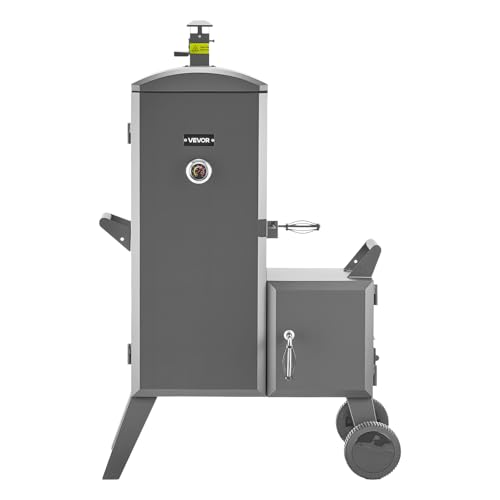
Multiple racks in a tall cabinet swallow enough food for a crowd rather than a family. Its side firebox keeps the heat source away from the meat. Lighter-gauge steel than premium options means wind and cold sap stability, so a welding blanket or a sheltered corner helps in winter.
Pros
- Very large capacity for the class
- Offset firebox keeps direct heat off the food
- Adjustable racks handle tall cuts
Cons
- Thin steel loses heat in cold or wind
- Temperature varies between top and bottom racks

Char-Griller Smokin Pro Charcoal Grill and Smoker
One barrel grill with a bolt-on side firebox covers weeknight burgers and weekend brisket alike. Cast iron grates sear well, and a height-adjustable fire grate helps with direct cooking. As a pure smoker it trails the rest here, since the chamber needs sealing work before it holds steady low temperatures.
Pros
- Grills and smokes in one unit
- Cast iron grates sear well
- Adjustable fire grate for direct cooking
Cons
- Needs sealing to hold low temperatures
- Large temperature gradient across the chamber
How to pick the right one
What are the main charcoal smoker designs? Vertical water smokers like the Weber stabilize temperature with a water pan and add humidity, which makes them forgiving. Offsets burn a fire in a separate box and pull heat across the chamber, producing the traditional flavor competition cooks chase at the cost of constant tending. Drum cookers hang meat over the coals for a hotter, faster cook. Kamados insulate heavily and sip fuel. No design wins outright; each asks for a different amount of your attention.
Why sealing and steel thickness decide stability Holding 225 to 250 degrees Fahrenheit for hours depends on metering how much air reaches the coals. Air leaking through a warped door or loose lid makes that impossible. Heavier steel and insulation smooth out swings from wind and cold, which is why thin-walled smokers turn into hard work in winter. Seals and material thickness predict how a cook will go far better than cooking area does.
How to control temperature with the vents Standard practice leaves the top exhaust fully open and steers temperature with the bottom intakes alone. Opening intakes feeds the fire and raises heat; closing them starves it. Changes take fifteen to twenty minutes to register, so the classic beginner mistake is chasing the dial with rapid adjustments and oscillating all afternoon. Small moves and patience are the entire technique.
Which fuel and thermometer setup works best Briquettes burn evenly and predictably, which suits long cooks, while lump charcoal lights faster, burns hotter, and leaves less ash. Wood chunks outlast chips and give sustained smoke without reloading. Built-in lid thermometers read dome air rather than grate level and are usually inaccurate, so a dual-probe digital thermometer tracking grate and meat temperature is the single most useful accessory for any smoker here.
How they compare
| # | Model | Type | Best for | Score | Price |
|---|---|---|---|---|---|
| 1 | Weber Smokey Mountain Cooker 18 Inch | Vertical water smoker | Best overall | 9.4 | Check price |
| 2 | Pit Barrel Cooker Classic Package | Vertical drum cooker | Best for beginners | 9.2 | Check price |
| 3 | Masterbuilt Gravity Series 800 | Gravity-fed charcoal with digital control | Best for overnight cooks | 9.0 | Check price |
| 4 | Oklahoma Joe’s Highland Offset Smoker | Horizontal offset with firebox | Best offset | 8.8 | Check price |
| 5 | Char-Griller Akorn Kamado Charcoal Grill | Insulated steel kamado | Best fuel efficiency | 8.6 | Check price |
| 6 | Dyna-Glo Vertical Offset Charcoal Smoker | Vertical cabinet with offset firebox | Best capacity | 8.3 | Check price |
| 7 | Char-Griller Smokin Pro Charcoal Grill and Smoker | Barrel grill with side firebox | Best combination grill | 8.0 | Check price |
Good to know
What temperature should I smoke meat at?
Most low and slow cooking sits between 225 and 250 degrees Fahrenheit. Poultry often goes higher, near 300, to render the skin. Consistency beats precision, so pick a target and hold it.
How long does charcoal last in a smoker?
Design decides. The Weber Smokey Mountain and kamado-style cookers manage ten hours or more on one load using the minion method, while thin-walled offsets can need refueling every couple of hours because they shed heat faster.
What is the minion method?
Unlit briquettes fill the charcoal ring, then a small batch of lit coals goes on top. Fire spreads slowly downward and outward, which stretches one load across ten hours or more of steady low heat.
Is lump charcoal or briquettes better for smoking?
Briquettes burn more evenly, which suits long cooks where stability matters most. Lump lights faster, burns hotter, and leaves less ash, making it better for searing and kamados. Many pitmasters run briquettes as the base with lump for extra heat.
Do I need to soak wood chunks before smoking?
No. Soaking mostly delays combustion while the water boils off, producing steam rather than better smoke. Dry chunks on or near the coals give cleaner smoke and outlast chips in any real smoker.
What does the water pan in a smoker do?
It absorbs heat to stabilize temperature, adds humidity that helps smoke adhere to meat, and shields food from direct coals. Experienced cooks sometimes run it dry with sand or foil for a hotter, drier chamber.
Why does thin blue smoke matter?
Thick white smoke carries unburned particles that taste bitter and acrid. A clean fire with good airflow produces smoke that is barely visible, and that is the flavor you want. Billowing white smoke means the fire needs more air.
Can you use a charcoal smoker in winter?
Yes, but thin-walled models struggle because wind and cold pull heat out faster than the fire replaces it. Insulated designs, a sheltered spot, and a welding blanket all help. Budget for noticeably more fuel than in summer.
How do you clean a charcoal smoker?
Empty ash after every cook, since it blocks airflow and traps moisture. Scrape grates while warm. Leave the seasoned buildup on interior walls, because it protects the steel; remove it only if it starts flaking onto food.
The verdict
For anyone serious about low and slow, the Weber Smokey Mountain Cooker 18 Inch earns the first recommendation, because its stability turns long cooks into relaxing ones. Beginners who want great results without vent management should take the Pit Barrel Cooker Classic shortcut. If overnight briskets are the goal, the Masterbuilt Gravity Series 800 justifies its electronics.