6 Chicken Waterers That Keep Water Clean Longer
RentACoop’s 5 Gallon Poultry Waterer tops this comparison because sealed horizontal nipples keep droppings and bedding out. Harris Farms’ Plastic Poultry Drinker is the value pick for keepers who prefer a simple gravity fount. In freezing climates, the Farm Innovators Heated Poultry Fountain ends daily ice breaking.
For most backyard flocks, the RentACoop 5 Gallon Poultry Waterer is the strongest choice because its sealed nipples keep water clean for days. Harris Farms’ gravity drinker covers keepers who want a cheap, no-training fount, and the Farm Innovators heated fountain solves frozen water in northern winters.
Picking a waterer is harder than it looks because flock size, coop layout, chick age, and winter lows each rule out different designs. We compared these seven on published capacity, delivery type, and freeze protection, then weighed what keepers report about mess, refilling frequency, and how quickly birds adapt.
Our top picks
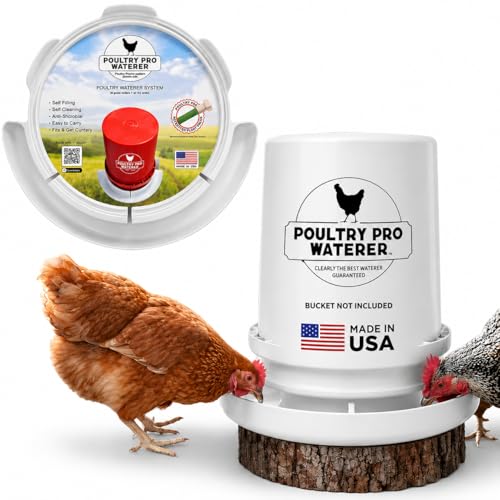
RentACoop 5 Gallon Poultry Waterer
Hens peck a sealed horizontal nipple to release water, so the five gallon supply never sits open to droppings or scratched bedding. Capacity carries a small flock for several days between refills. Keepers hang the bucket or set it on a stand, and spillage stays near zero.
Pros
- Sealed nipples block droppings and bedding
- Five gallon capacity cuts refills to twice a week
- Peck-activated flow wastes almost no water
Cons
- Birds new to nipples need a short training period
- Freezes in winter unless a heater is added

Harris Farms Plastic Poultry Drinker
Gravity feeds a shallow trough from a three gallon reservoir that screws onto its base. Birds of any age drink from it immediately, with no training period. Filling takes seconds at a hose, and the molded plastic rinses out fast.
Pros
- Every bird understands the open trough instantly
- Screw-on base makes filling and rinsing quick
- Low cost and stocked almost everywhere
Cons
- Exposed trough collects debris within a day
- Active birds can knock it over

Little Giant Plastic Poultry Fountain
A wide base keeps this three gallon gravity fountain upright when hens jostle it at the trough. Refilling means twisting the jug off, filling it, and twisting it back on. Grow-out pens, spare waterers, and tight budgets are its natural territory.
Pros
- Cheapest dependable option for a small flock
- Wide footprint resists tipping
- Twist-on jug refills in under a minute
Cons
- Open water needs rinsing every few days
- No freeze protection of any kind

Farm Innovators Heated Poultry Fountain
A thermostat in the base switches the heating element on only when temperatures approach freezing, so the roughly three gallon supply stays liquid through winter. Northern keepers use it to skip the morning chore of hauling hot water or smashing ice. Placement requires a safe outdoor outlet within cord reach.
Pros
- Water stays liquid through hard freezes
- Thermostat runs the heater only when needed
- Replaces daily ice breaking entirely
Cons
- Depends on an outdoor power source
- Open trough still collects debris

Premier 1 Screw-On Poultry Waterer
This cap system threads onto a standard bucket and feeds drinking cups or nipples, so capacity scales with whatever container you attach. Moving birds between pens gets easier because the unit travels light and swaps containers in seconds. Rotational grazing setups and multi-pen yards suit it best.
Pros
- Works with buckets you already own
- Light enough to carry between pens daily
- Cups and nipples keep delivery clean
Cons
- Bucket is sold separately
- Cups collect dust and need wiping

RentACoop Horizontal Side-Mount Nipples
Drill a hole in any clean bucket or length of pipe, push these horizontal nipples in, and you have a sealed waterer sized exactly to your flock. Each nipple stays closed until a bird pecks it, matching the hygiene of a finished nipple system. Cost per drinking point stays low, which favors large or multi-pen setups.
Pros
- Builds a waterer to any capacity you want
- Sealed delivery keeps the supply clean
- Low cost per drinking point
Cons
- Drilling and assembly are on you
- Birds still need nipple training

Rural365 Chicken Waterer
Sized for a handful of hens, this hanging waterer uses sealed vertical nipples to keep droppings out of the supply. Light weight makes lifting, rinsing, and rehanging easy for anyone. Coops with three to six birds fit it best.
Pros
- Right-sized for three to six hens
- Hanging design keeps bedding out
- Easy to lift and refill one-handed
Cons
- Runs dry fast with larger flocks
- Needs topping up more often than bucket systems
Side by side
| # | Model | Capacity | Best for | Score | Price |
|---|---|---|---|---|---|
| 1 | RentACoop 5 Gallon Poultry Waterer | 5 gallons | Best overall | 9.4 | Check price |
| 2 | Harris Farms Plastic Poultry Drinker | 3 gallons | Best value | 9.2 | Check price |
| 3 | Little Giant Plastic Poultry Fountain | 3 gallons | Best budget | 9.0 | Check price |
| 4 | Farm Innovators Heated Poultry Fountain | Around 3 gallons | Best for winter | 8.8 | Check price |
| 5 | Premier 1 Screw-On Poultry Waterer | Screw-on cap system | Best for portability | 8.5 | Check price |
| 6 | RentACoop Horizontal Side-Mount Nipples | Horizontal nipple kit | Best DIY option | 8.3 | Check price |
| 7 | Rural365 Chicken Waterer | Hanging nipple waterer | Best for small flocks | 8.0 | Check price |
How to choose
Nipple waterers vs open founts: which stays cleaner? Sealed nipple systems release water only when a bird pecks, so droppings, bedding, and algae stay out almost entirely. Open gravity founts like the Harris Farms and Little Giant models cost less and need zero training, but the exposed trough collects debris within a day or two. Choose nipples if clean water and fewer refills matter most. Pick a fount if you want the simplest setup or are brooding very young chicks.
What size waterer does your flock need? Each hen drinks roughly a pint to a quart daily, and summer heat pushes that higher. A five gallon bucket waterer carries six hens for several days, while a compact unit like the Rural365 suits three to six birds with more frequent top-ups. Add a second drinking station once a flock passes about eight birds, because dominant hens can guard a single water source. Extra capacity saves labor without hurting hygiene in a sealed system.
How do you keep chicken water from freezing? Unheated waterers turn into ice blocks overnight in cold climates. A thermostatically controlled fount such as the Farm Innovators model heats only when temperatures near freezing, which keeps running costs modest. Some keepers instead set a standard fount on a heated base plate. Run a safe outdoor-rated outlet or cord to the coop before the first hard frost, not after it.
Which features make daily care easier? Wide openings and screw-on parts decide how fast cleaning goes, since biofilm builds wherever water sits. Bucket systems with removable lids scrub out in a minute, and sealed nipple designs need attention far less often than open troughs. Keepers who rotate pens favor the Premier 1 screw-on cap because it moves without hauling a full fount. Handy owners can also drill a food-safe bucket and fit RentACoop side-mount nipples for a custom sealed setup.
Questions worth asking
How much water do chickens drink per day?
A laying hen drinks roughly a pint in cool weather and up to a quart during summer heat. Multiply that by flock size to choose capacity. Six hens can empty a three gallon fount in three to four days, and faster during a heat wave.
Are nipple waterers better than open founts?
For hygiene, yes. Sealed nipples block droppings, bedding, and algae, and they waste almost nothing. Open founts win on price and simplicity because every bird understands them instantly. Keepers who switch to nipples rarely go back.
How do I train chickens to use a nipple waterer?
Tap each nipple so a bead of water hangs from it, then let a curious hen investigate. Removing other water sources for a few hours speeds the process. Most birds learn within a day, and chicks pick it up faster than adults.
Do heated chicken waterers use a lot of electricity?
Thermostatic models like the Farm Innovators fount run their element only when temperatures approach freezing. Power draw is intermittent rather than constant, so mild winter days cost little. Continuous-heat designs without a thermostat use noticeably more.
How often should a chicken waterer be cleaned?
Rinse open founts every two to three days and scrub them weekly, since algae grows in the exposed trough. Sealed nipple systems can go weeks between cleanings because the water stays enclosed. Check everything more often in warm weather, when biofilm forms fastest.
Can I turn a bucket into a chicken waterer?
Yes. A side-mount nipple kit like the RentACoop set converts any clean food-safe bucket into a sealed waterer. Drill the marked hole size, push the nipples in, and fill. Capacity ends up matched exactly to your flock.
Should the waterer go inside the coop or in the run?
Many keepers place water in the run to keep spills and humidity out of the bedding. Birds need access whenever they are awake, so a second station indoors helps in bad weather. In winter, a heated unit usually sits wherever power safely reaches.
Why does my chickens’ water get dirty so fast?
Ground-level open troughs catch everything hens scratch up. Raising the waterer to back height cuts most of the mess, and hanging it helps further. Switching to a sealed nipple design removes the problem almost completely.
Can chicks use the same waterer as adult hens?
Gravity founts work for all ages right away, though very young chicks need the trough shallow enough to stay safe. Nipple heights must sit where each bird can reach, so mixed-age flocks often run two waterers at different heights until the chicks grow.
Our take
RentACoop’s 5 Gallon Poultry Waterer earns the top spot by keeping water clean for days with almost no waste. Budget-minded keepers get proven simplicity from the Harris Farms drinker or the Little Giant fountain, with the tradeoff of frequent rinsing. Anyone facing real winters should add the Farm Innovators heated fount and retire the ice-breaking routine for good.

