How to Choose a Circular Saw for Clean Straight Cuts
DeWalt’s DWE575SB leads this group with 15 amp power, an electric brake, and a weight under nine pounds. Framers cutting dense or wet lumber should look at the Skilsaw SPT67WL worm drive. For cord free work on decks and fences, the Ryobi P508 One+ is the practical pick.
DeWalt’s DWE575SB earns the top spot by pairing full 15 amp power with one of the lightest corded bodies available and an electric brake that stops the blade fast. Skilsaw’s SPT67WL worm drive adds the torque heavy framing demands, and the Ryobi P508 covers anyone who wants to leave the cord behind.
Choosing a circular saw is harder than it looks because sidewinders and worm drives balance completely differently, and blade orientation changes what each hand can see. We compared motor power, cut depth, bevel range, weight, and safety features across current listings, then weighted the durability patterns owners report over years of use.
The best picks, ranked
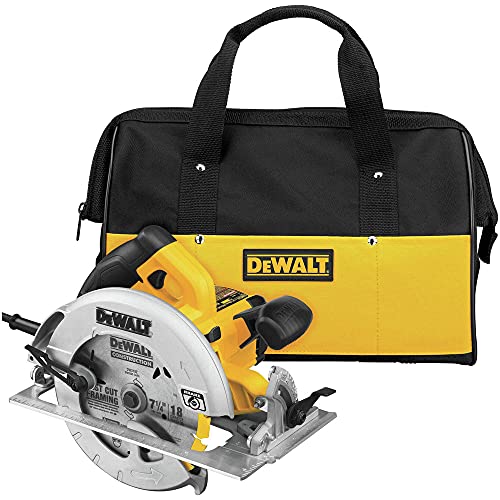
DeWalt DWE575SB
At about 8.8 pounds, this 15 amp sidewinder cuts all day without wearing out an arm, and the electric brake stops the 7-1/4 inch blade seconds after trigger release. Cut depth of 2-9/16 inches at 90 degrees clears two-by lumber with room to spare. Blade-right layout partly blocks the line of sight for right-handed users, the one real tradeoff.
Pros
- Among the lightest full-power corded saws
- Electric brake stops the blade quickly
- Deep 2-9/16 inch cut at 90 degrees
Cons
- Blade-right side hides the cut line from righties
- Cord ties you to an outlet

Skilsaw SPT67WL Worm Drive
Worm drive gearing puts the motor behind the blade for the torque that wet, dense, and stacked lumber demands. Blade-left orientation gives right-handed framers a clear view of the cut line, and the magnesium shoe shrugs off drops. Extra length and weight make overhead or one-handed cuts more tiring than with a compact sidewinder.
Pros
- Torque powers through dense and wet lumber
- Blade-left layout keeps the line visible
- Magnesium construction survives job sites
Cons
- Heavier than comparable sidewinders
- Long body is less nimble in tight spots

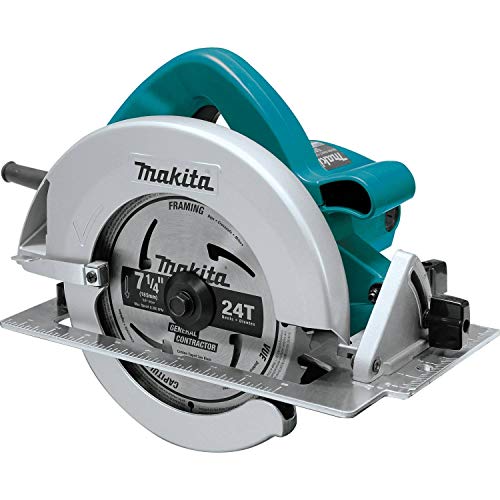
Makita 5007MG
Magnesium components keep this 15 amp sidewinder light while resisting job site abuse. Twin LED lights and a built-in dust blower keep the cut line visible in dim garages and sawdust clouds. Balance and smoothness are what owners praise most, though the blade-right layout asks right-handed users to lean over the saw.
Pros
- Magnesium body cuts weight without cutting strength
- LEDs and dust blower keep the line visible
- Smooth, well-balanced feel through cuts
Cons
- Blade-right sight line for right-handed users
- Costs more than comparable sidewinders

Milwaukee 6390-21
Blade-left orientation in a 15 amp sidewinder gives right-handed users a clear cut line without the weight of a worm drive. A Tilt-Lok handle adjusts through eight positions, which owners appreciate for bevel cuts and awkward angles. Bulk from that adjustable handle is the main compromise.
Pros
- Blade-left visibility without worm drive weight
- Handle adjusts to eight positions for comfort
- Full 15 amp power for continuous cutting
Cons
- Adjustable handle adds bulk to the grip
- Heavier than compact sidewinders

Ryobi P508 One+ Cordless
An 18 volt brushless motor drives a full 7-1/4 inch blade, so cut capacity matches corded saws even though sustained power does not. Decks, fences, and yard projects far from an outlet are its home turf. Batteries come from the wide One+ ecosystem, and runtime depends on which pack you fit.
Pros
- No cord to drag across a yard or deck
- Brushless motor stretches each charge
- Shares batteries with the One+ tool range
Cons
- Runtime is capped by battery size
- Continuous heavy ripping favors corded saws

Bosch CS10
Straightforward 15 amp power, a solid footplate, and a bevel capacity up to 56 degrees cover the sheet goods and framing lumber a homeowner actually cuts. Balance in the hand is the standout quality. No electric brake and no LED lighting appear on the spec sheet, which keeps it a plain workhorse.
Pros
- Dependable straight cuts with no fuss
- Comfortable, balanced grip
- 56 degree bevel capacity beats most rivals
Cons
- No electric brake
- No onboard light for dim work areas

Craftsman CMES500
Occasional projects get full-size capability here: a 15 amp motor, a 7-1/4 inch blade, and bevel adjustment to 55 degrees. Plywood and dimensional lumber cut cleanly, and depth changes use a simple lever. Refinement and an electric brake are what the low cost leaves out.
Pros
- Full-size power and capacity at entry cost
- Depth and bevel adjust with simple levers
- Handles plywood and two-by stock cleanly
Cons
- Heavier and less refined than premium saws
- Skips the electric brake
What to look for
Sidewinder vs worm drive: which type fits your work? Sidewinders mount the motor beside the blade, keeping the saw shorter, lighter, and easier for overhead or one-handed cuts. Worm drives like the Skilsaw SPT67WL gear the motor behind the blade, trading weight for torque that powers through wet and dense framing lumber. Most DIYers and finish carpenters are better served by a sidewinder. Framers who rip stacked stock daily justify the worm drive.
Is corded or cordless better for a circular saw? Corded 15 amp saws deliver constant power for continuous ripping, which is why they still dominate job sites. Cordless models like the Ryobi P508 trade some sustained power for the freedom to cut on decks, fences, and yards without an extension cord. Owners already invested in a battery platform often find cordless the more practical buy. All-day heavy cutting still belongs to the cord.
What do blade orientation and an electric brake change? Blade-left saws such as the Milwaukee 6390-21 and the Skilsaw give right-handed users a direct view of the cut line, while blade-right saws keep the motor weight over the supported side of the board. An electric brake, standard on the DeWalt DWE575SB, stops the blade within seconds of trigger release instead of letting it spin down. Frequent cutters should treat the brake as a genuine safety upgrade. LED lights and dust blowers matter most in dim shops.
Which blade size and cut depth do you need? A 7-1/4 inch blade is the standard on every saw here and clears two-by lumber at 90 degrees, with depths ranging from 2-3/8 to 2-9/16 inches across these models. Beveling the shoe reduces effective depth, so a 45 degree cut through thick stock needs the deeper-cutting saws. Compact saws with smaller blades shave weight but give up that capacity. Match the blade tooth count to the material for clean edges: fewer teeth rip fast, more teeth cross-cut cleanly.
Side by side
| # | Model | Motor | Best for | Score | Price |
|---|---|---|---|---|---|
| 1 | DeWalt DWE575SB | 15 amp | Best overall | 9.4 | Check price |
| 2 | Skilsaw SPT67WL Worm Drive | 15 amp worm drive | Best for framing | 9.2 | Check price |
| 3 | Makita 5007MG | 15 amp | Best magnesium build | 9.0 | Check price |
| 4 | Milwaukee 6390-21 | 15 amp | Best blade-left corded | 8.8 | Check price |
| 5 | Ryobi P508 One+ Cordless | 18V brushless | Best cordless | 8.5 | Check price |
| 6 | Bosch CS10 | 15 amp | Best for general DIY | 8.3 | Check price |
| 7 | Craftsman CMES500 | 15 amp | Best budget corded | 8.0 | Check price |
Questions worth asking
What is the difference between a sidewinder and a worm drive saw?
Sidewinders put the motor beside the blade for a shorter, lighter saw that suits general and overhead work. Worm drives gear the motor behind the blade, adding torque and a blade-left view. Framers cutting heavy or wet lumber tend to choose worm drives.
How many amps should a circular saw have?
Full-size corded saws standardize on 15 amp motors, which handle framing lumber and sheet goods without bogging. Lower amperage suits light trim work only. Continuous demanding cuts make 15 amps the safe default.
Is a cordless circular saw as good as corded?
For decks, fences, and remote cuts, a cordless saw like the Ryobi P508 wins on sheer convenience. Sustained heavy ripping still favors a corded 15 amp motor, which never runs out of charge. Owning a battery platform already tips the decision toward cordless.
Do I need an electric brake on a circular saw?
Not strictly, but it is a meaningful safety feature. A brake stops the blade within seconds of releasing the trigger, as on the DeWalt DWE575SB, instead of letting it coast. Frequent cutters and beginners benefit most.
What can a 7-1/4 inch circular saw cut?
At 90 degrees it cuts roughly 2-3/8 to 2-9/16 inches deep depending on the saw, which clears standard two-by lumber. Sheet goods, decking, and most framing stock are all within reach. Beveled cuts reduce that depth, so check capacity at 45 degrees for angle work.
What is a blade-left circular saw?
A blade-left saw mounts the blade on the left side of the motor, giving right-handed users an unobstructed view of the cut line. Both the Skilsaw SPT67WL and Milwaukee 6390-21 use this layout. Many framers refuse to work any other way.
Why does my circular saw bog down or burn the wood?
A dull or wrong-tooth blade, feeding too fast, or a kerf pinching closed are the usual causes. Fit a sharp blade matched to the material and support the board so the cut stays open. Let the motor reach full speed before the blade touches wood.
Is a magnesium circular saw worth the extra cost?
Magnesium parts, as on the Makita 5007MG and Skilsaw SPT67WL, cut weight while resisting drops and job site abuse. Less fatigue over a long day is the real payoff. Occasional users can skip the upgrade; daily users usually recoup it.
What bevel capacity does a circular saw need?
Most cuts happen at 90 or 45 degrees, which every saw here handles. Capacity beyond 45, like the Bosch CS10’s 56 degrees, helps with roof pitches and specialty angles. Check that the detents at common angles lock positively, since accuracy matters more than maximum range.
Our pick
DeWalt’s DWE575SB remains the saw to buy for most people, combining light weight, full 15 amp power, and an electric brake. Framers who fight dense or wet lumber get their money’s worth from the Skilsaw SPT67WL worm drive. Pick the Ryobi P508 when cutting far from an outlet matters more than maximum sustained power.