Choosing a Climbing Harness for Gym, Sport and Trad
Black Diamond’s Momentum fits the widest range of climbers, pairing Dual Core waistbelt padding with adjustable leg loops. Petzl’s Corax adds a second waist buckle that suits shared and club use. Sport climbers cutting weight should look at the Camp Energy CR4 and its minimal webbing build.
Most climbers should start with the Black Diamond Momentum, which balances hanging comfort, adjustability and four gear loops without excess weight. Petzl’s Corax fits the widest range of bodies for shared or club gear, while the Camp Energy CR4 strips weight for sport climbers.
Every harness on this list meets the same certification standard, so strength is not what separates them. Fit, padding construction, leg loop adjustment and gear loop count are, and those map directly to discipline. We compared published weights, buckle systems and padding designs, then grouped picks by how each is actually used. Whatever you buy must be fitted correctly, inspected regularly and retired per the manufacturer’s guidance.
The shortlist, ranked
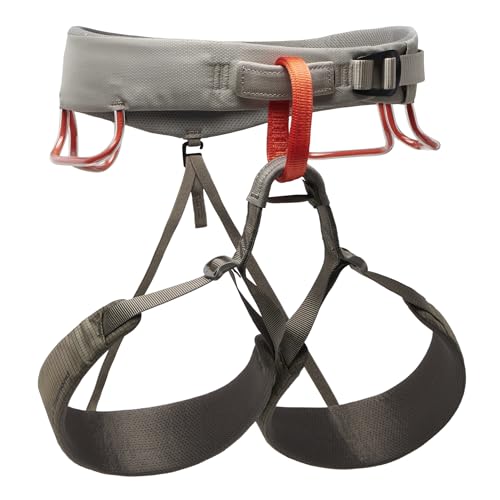
Black Diamond Momentum Harness
Dual Core Construction spreads load across the full waistbelt width, and that pays off on hanging belays that stretch past a few minutes. Buckled leg loops adapt from summer shorts to winter softshells. Four gear loops carry a sport rack easily and a light trad rack at a push.
Pros
- Waistbelt stays comfortable on long hangs
- Leg loops adjust across seasonal clothing
- Strong build quality for the outlay
Cons
- Four loops run out of room for a full trad rack
- Carries more weight than sport specific models

Petzl Corax Harness
Two waistbelt buckles let the belay loop be centred on any body shape, which is exactly what shared club gear needs. Generous padding and widely adjustable leg loops extend that flexibility to beginners in any season. Weight is the trade off, so redpoint attempts at your limit favour lighter models.
Pros
- Double buckles centre the belay loop precisely
- Thick padding forgives beginner hang time
- Adjustment range covers many body shapes
Cons
- One of the heavier harnesses in this group
- Bulk clashes with a pack hipbelt

Camp Energy CR4 Harness
Wide thin webbing replaces foam padding, spreading load while keeping weight and bulk low. Movement feels unrestricted, which matters when working routes near your limit. Fixed elasticated leg loops save further weight but make accurate sizing essential before purchase.
Pros
- Low weight without harsh pressure points
- Slim profile never snags mid route
- Gear loops sit where draws are easy to grab
Cons
- No leg loop adjustment to rescue a marginal fit
- Thin build tires on extended belay hangs

Edelrid Jay III Harness
A wide, anatomically shaped waistbelt makes this the hanging comfort pick of the seven, suited to long belay sessions and multi pitch days. Slide block buckles set the waist and legs quickly and hold position. Insulation is the flip side of the padding, so summer crags feel warmer in it than in minimalist rivals.
Pros
- Outstanding comfort during long hangs
- Slide block buckles adjust fast and stay put
- Construction quality holds up to frequent use
Cons
- Runs warm in hot weather
- Packs bulkier than webbing based designs

Mammut Ophir 3 Slide Harness
Three slide buckles adjust the waist and both legs independently, which makes a correct fit nearly foolproof and swaps between climbers quick. Cost stays modest without dropping below four gear loops. Padding sits mid pack, so marathon belay sessions favour the Edelrid instead.
Pros
- Independent adjustment makes fitting simple
- Suits club and shared gear rotations
- Sensible weight for the feature set
Cons
- Padding is basic on long hangs
- Loose webbing tails need stowing after adjustment

Metolius Safe Tech Deluxe Harness
Full strength construction extends to the belay loop and leg loop connections, a detail aid and big wall climbers value when hanging for hours. Heavy waistbelt padding supports that use, and a haul loop plus multiple gear loops swallow a wall rack. Gym sessions in it feel like wearing armour.
Pros
- Every connection point is rated full strength
- Padding built for hours of hanging
- Racking capacity suits big wall loads
Cons
- Weight and warmth punish sport climbing use
- Far more harness than most climbers require

Trango Aura Harness
Essentials only: a padded waistbelt, adjustable leg loops and four gear loops at the lowest cost in this group. New climbers unsure whether the sport will stick get a certified starting point without a big commitment. Fit and finish trail the established brands.
Pros
- Lowest cost certified option compared here
- Adjustable legs handle changing layers
- Buckles operate simply for beginners
Cons
- Padding compresses sooner than premium belts
- Soft gear loops make racking fiddlier
How they stack up
| # | Model | Gear loops | Best for | Score | Price |
|---|---|---|---|---|---|
| 1 | Black Diamond Momentum Harness | Four pressed loops | Best overall | 9.4 | Check price |
| 2 | Petzl Corax Harness | Two, for centring adjustment | Best for adjustable fit | 9.2 | Check price |
| 3 | Camp Energy CR4 Harness | Wide webbing, minimal foam | Best for sport climbing | 9.0 | Check price |
| 4 | Edelrid Jay III Harness | Wide padded belt | Best for comfort | 8.8 | Check price |
| 5 | Mammut Ophir 3 Slide Harness | Three slide buckles | Best for beginners | 8.6 | Check price |
| 6 | Metolius Safe Tech Deluxe Harness | Full strength tie in points | Best for trad and aid | 8.3 | Check price |
| 7 | Trango Aura Harness | Four | Best budget pick | 8.0 | Check price |
How to pick the right one
How should a climbing harness fit? Fit decides everything else, and it is more specific than a size chart. Position the waistbelt above the hip bones, tight enough that it cannot be pulled down over them, with the belay loop centred at the front. Leg loops should admit a flat hand between webbing and thigh, no more. Hang in the harness at a shop or gym before committing, because comfort differences only appear under load.
Which harness type suits your climbing discipline? Gym and sport climbing favour light builds with four gear loops and modest padding, since hangs last seconds. Trad wants six loops plus a haul loop for cams, nuts and a prusik. Aid and big wall use demands heavy padding and full strength connections, which is the Metolius Safe Tech’s territory. Alpine and glacier harnesses go the opposite way, prioritising low weight and donning over crampons and skis.
Adjustable vs fixed leg loops: which do you need? Adjustable loops let one harness span summer shorts and winter softshell trousers, so year round climbers and gear sharers should choose them. Fixed elasticated loops, as on the Camp Energy CR4, cut weight and fiddle for sport climbers who dress the same every session. Sizing tolerance is the real difference. Fixed loops leave no adjustment to rescue a marginal fit, so try before buying.
How do you inspect a harness, and when should it be retired? Check tie in points, belay loop and buckles before every session for fuzzing, cuts, discolouration or exposed wear indicator threads. Store the harness dry, out of direct sun and away from acids and solvents. Manufacturers publish maximum service lives, typically a set number of years from first use with shorter limits for heavy use. A serious fall or any visible damage means immediate retirement, whatever the age.
Questions worth asking
How tight should a climbing harness be?
Snug enough above the hip bones that the waistbelt cannot be pulled down over them, with the belay loop centred. Leg loops should fit a flat hand between webbing and thigh. Weight the harness before buying, since comfort only shows under load.
Do I need adjustable leg loops on a harness?
Climbers who face changing seasons or share gear benefit from them, because they absorb different clothing thicknesses. Fixed elasticated loops are lighter and simpler, and they work well for sport climbers in consistent clothing when the size is right.
How many gear loops do I need for trad climbing?
Six plus a haul loop is the usual trad target, since cams, nuts and quickdraws outgrow four loops fast. Gym and sport climbing manage comfortably on four. Aid climbing wants even more capacity.
When should a climbing harness be retired?
Follow the manufacturer’s stated service life, typically a fixed number of years from first use, sooner under heavy use. Retire immediately after a severe fall or on finding cuts, heavy fuzzing at tie in points, exposed wear indicators or chemical contamination.
Can you wash a climbing harness?
Hand washing in lukewarm water with mild soap is generally permitted, followed by drying away from heat and sunlight. Solvents, bleach and machine washing are off limits unless the manufacturer explicitly allows them. Your harness’s own instructions take precedence.
Are expensive climbing harnesses safer?
No. Certification puts every harness sold for climbing at the same strength standard, so extra money buys comfort, lighter materials and features, not strength. Real world safety comes from correct fitting, correct tie in, inspection and timely retirement.
What is the difference between a sport and a trad harness?
Sport harnesses chase low weight and a slim profile with four gear loops. Trad harnesses add loops, a haul loop and thicker waistbelt padding, because a full rack is heavier and belays last longer.
Can a climbing harness be used for via ferrata or work at height?
Only within its stated intended uses. Work at height, caving and via ferrata carry their own standards and equipment requirements. Check the manufacturer’s documentation for exactly what the harness is certified to do.
Is it safe to buy a used climbing harness?
Buying used is widely discouraged, because fall history, chemical exposure and age cannot be verified by inspection alone. Hidden damage does not always show on the surface. A new entry level harness like the Trango Aura removes that uncertainty for modest cost.
Final word
Black Diamond’s Momentum suits the widest spread of climbers, comfortable on hanging belays and adjustable enough to follow the seasons. Shared and club gear points to the Petzl Corax and its double buckle centring, while sport specialists will prefer the lighter Camp Energy CR4. Whichever you pick, fit it properly and inspect it before every session.