Which Cloth Diapers Actually Hold Up Wash After Wash?
bumGenius Freetime All-in-One is the simplest system for daily use because the absorbent layers stay attached and nothing needs stuffing. GroVia Hybrid Shell cuts laundry by reusing one cover across several changes. Mama Koala Pocket Diapers keep a full stash affordable while letting you tune absorbency per change.
bumGenius Freetime All-in-One wins for most families because any caregiver can put one on without instructions. GroVia Hybrid Shell trims laundry by serving several changes with one cover, and Mama Koala Pocket Diapers make a full stash affordable. Each adjusts across a wide weight range.
Choosing cloth is harder than the marketing suggests because absorbency, drying time and convenience pull against each other, and one size claims rarely hold at the newborn end. Leaks trace to fit far more often than to the product. We compared materials, snap ranges, closures and laundry demands, then weighed what owners report about sizing and stripping before ranking each system by how it handles a real daily routine.
The shortlist, ranked

bumGenius Freetime All-in-One Cloth Diaper
Absorbent layers are sewn to the waterproof shell, so a clean diaper comes out of the wash ready to use. Grandparents and daycare staff can put one on without a walkthrough, which keeps cloth in rotation on busy days. A snap down rise stretches the fit from roughly 7 to 35 pounds.
Pros
- Nothing to stuff or assemble after washing
- Simple enough for any caregiver or daycare
- Snap down rise covers a wide weight range
Cons
- Attached layers dry slower than separates
- Costs more per diaper than pocket styles

GroVia Hybrid Shell
One waterproof shell snaps around either a reusable soaker or a disposable insert. When the shell stays clean, you swap the insert and carry on, so a full day can run on two or three covers. Disposable inserts also simplify travel and daycare handoffs.
Pros
- One shell serves several changes
- Disposable inserts make travel simple
- Trim profile under clothes
Cons
- Soakers and inserts sold separately
- Shell needs wiping between changes
Thirsties Natural All-in-One
Cotton and hemp layers replace synthetic microfibre, so each layer holds more liquid and sits gently against reactive skin. Double inner gussets at the legs catch runny newborn messes better than single elastic designs. Sizing runs from about 8 to 40 pounds on one shell.
Pros
- Hemp and cotton hold more per layer
- Double gussets contain messes well
- Fits to about 40 pounds
Cons
- Natural fibres dry slowly
- Needs several prep washes to reach full absorbency

Mama Koala Pocket Diaper
A pocket opening lets you load light absorbency for daytime and double up for nights in the same shell. Per diaper pricing makes the roughly 24 piece stash a two day wash cycle needs realistic. Unstuffed shells and inserts dry quickly on a line.
Pros
- Affordable enough for a complete stash
- Absorbency adjusts per change
- Separated pieces dry fast
Cons
- Every diaper needs stuffing after washing
- Included microfibre inserts are basic
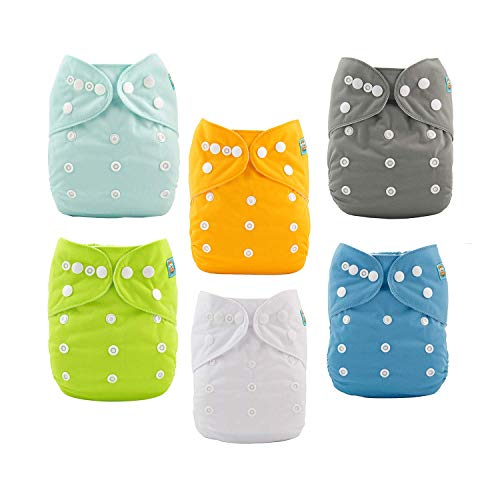
Alva Baby Pocket Diapers
Many families try cloth with Alva before committing to pricier shells. A snap down rise and a standard pocket accept whichever inserts you prefer, and prints come in huge variety. Quality control varies more than premium brands, with elastic life the most common complaint.
Pros
- Lowest cost per change
- Pocket accepts upgraded inserts
- Huge choice of prints
Cons
- Elastics wear out sooner
- Fit consistency varies between batches

Nora’s Nursery Pocket Cloth Diapers
Bundling diapers, bamboo blend inserts and a wet bag removes the guesswork from a first order. Bamboo absorbs more than plain microfibre and can sit directly against skin. Set size supports a genuine every other day wash cycle from the start.
Pros
- Everything needed to start in one box
- Bamboo blend inserts outperform microfibre
- Wet bag covers outings and the pail run
Cons
- Bulky under newborn clothes
- Snap quality feels less refined

OsoCozy Indian Prefold Cloth Diapers
Unbleached Indian cotton prefolds pair with a separate waterproof cover, still the cheapest and most absorbent route per layer. Folding and fastening take practice, and a stretchy fastener speeds the job. Owners also tuck them inside pocket diapers as overnight boosters.
Pros
- Highest absorbency for the cost
- Line dries fast
- Doubles as an overnight booster
Cons
- Requires a cover and a fastener
- Folding takes practice to learn
How they compare
| # | Model | Type | Best for | Score | Price |
|---|---|---|---|---|---|
| 1 | bumGenius Freetime All-in-One Cloth Diaper | All in one, one size | Best overall | 9.4 | Check price |
| 2 | GroVia Hybrid Shell | Hybrid shell system | Best for fewer washes | 9.2 | Check price |
| 3 | Thirsties Natural All-in-One | All in one, one size | Best for natural fibres | 9.0 | Check price |
| 4 | Mama Koala Pocket Diaper | Pocket, one size | Best value | 8.8 | Check price |
| 5 | Alva Baby Pocket Diapers | Pocket, one size | Best budget | 8.6 | Check price |
| 6 | Nora’s Nursery Pocket Cloth Diapers | Pocket, one size | Best starter set | 8.3 | Check price |
| 7 | OsoCozy Indian Prefold Cloth Diapers | Prefold, sized | Best for night time absorbency | 8.0 | Check price |
What to look for
Which cloth diaper system is easiest to use? All in ones behave most like a disposable, so they suit anyone handing changes to relatives or daycare, at the cost of drying time and price. Pockets dry fast and let you tune absorbency, but every clean diaper needs stuffing. Hybrids stretch one cover across several changes and travel well. Prefolds with covers cost the least and absorb the most, while asking the most technique of the changer. Most families settle on a mix rather than one system.
What absorbency material works best? Microfibre absorbs quickly, holds less than natural fibres and cannot touch skin directly. Cotton is the dependable middle ground. Hemp holds the most per layer but absorbs slowly, and bamboo blends sit between cotton and hemp. For overnight, place a fast absorber against the wet zone with a hemp or cotton layer beneath it. Based on specifications, pairing two materials beats stacking more of the same one.
Why do cloth diapers leak? Fit causes nearly every leak owners report, not absorbency. Leg elastic should sit in the crease with no gap, and rise snaps belong just below the belly button. Inserts must tuck fully inside the leg elastic, since any exposed edge wicks moisture onto clothes. One size shells rarely fit babies under about ten pounds, so many families run disposables or newborn covers for the first weeks.
How do you wash cloth diapers without ruining them? Run a prewash to shift soil, then a full hot wash with a normal dose of mainstream detergent. Fabric softener and non cloth safe diaper creams leave residue that repels liquid, so skip both. Dry shells and covers on low heat or a line to protect elastic and the waterproof layer. High heat is fine for inserts and prefolds only, and it speeds up the slowest drying pieces.
Frequently asked questions
How many cloth diapers do I need?
Plan on about 24 for a newborn washed every other day, or 18 to 20 for an older baby. A few spares buy you slack when a wash day slips.
Do cloth diapers really save money?
Usually yes across the full diapering period, and clearly yes if the stash serves a second child. Costs are front loaded, then shift to water, energy and detergent.
Will one size diapers fit a newborn?
Rarely at the smallest end. Most one size shells fit well from around ten to twelve pounds, so families bridge the first weeks with newborn covers or disposables.
How do I deal with poop in cloth diapers?
Breastfed newborn waste washes straight out in the machine. Once solids begin, shake or spray the mess into the toilet first. A diaper sprayer mounted by the toilet makes that a ten second job.
What detergent should I use for cloth diapers?
Use a mainstream detergent at a normal dose. Specialty cloth detergents are often too gentle for heavily soiled fabric, and underwashing causes far more problems than strong detergent does.
Why do my cloth diapers smell after washing?
Underwashing explains it almost every time. Raise the detergent dose, avoid overloading the drum and add a prewash. An ammonia smell as diapers warm points to residue a stronger routine will clear.
Can you use cloth diapers overnight?
Yes, with extra absorbency. A hemp or cotton booster under a stay dry layer handles long stretches, and a cotton prefold stuffed into a pocket diaper works well too.
Will daycare accept cloth diapers?
Many will if diapers arrive ready to use. All in ones and pre stuffed pockets hand over easiest, and a labelled wet bag covers the return trip.
Our take
bumGenius Freetime is the diaper we would hand most families, because a system anyone can use without instruction is the one that stays in use. GroVia Hybrid Shell suits households short on machine time, and Mama Koala pockets build an affordable stash with tunable absorbency. Expect to spend the first month dialing in fit and wash routine, since that is where nearly all early frustration lives.


