Which Combination Square Belongs in Your Toolbox?
The Starrett C11H-12-4R is the accuracy benchmark, with a hardened forged head and a photo etched blade. The Empire Level E250 gives most of that usefulness for far less fuss, and the Swanson Tool TC132 is the one to keep in a site bag where tools take a beating.
The Starrett C11H-12-4R is the combination square to buy if layout accuracy is the whole point, the Empire Level E250 is the sensible everyday choice, and the Swanson Tool TC132 handles rough site work. All three hold a reliable ninety degree reference, which is the only thing that really matters here.
Combination squares are tricky to shop for because almost every model looks identical in photos and the differences hide in the casting, the blade finish and how the lock seats. A cheap head that flexes will read square on the bench and fool you on the work. We ranked these by comparing published tolerances, blade markings, head material and what owners report about squares staying true after a year of use.
The best picks, ranked

Starrett C11H-12-4R Combination Square
The Starrett C11H pairs a hardened cast iron head with a photo etched 4R blade, and it is the square most machinists measure others against. Graduations are crisp enough to read under shop light without a magnifier. Owners report that a single unit stays true for decades if it is kept off the concrete floor.
Pros
- Photo etched graduations stay legible
- Hardened head holds its reference over years
- Smooth lock that seats without wobble
Cons
- Heavier than site oriented squares
- Overkill for rough framing work

Empire Level E250 Heavy Duty Combination Square
The E250 uses a cast head with a solid locking bolt and a clearly stamped blade, which covers the bulk of woodworking and metal layout. It is the square most people should own if the Starrett feels like more tool than the job needs. Owners report it survives being knocked around a bench without losing its reference.
Pros
- Strong accuracy for the money
- Positive locking bolt
- Readable markings in poor light
Cons
- Level vial is a rough reference only
- Blade finish scuffs faster than premium models

Swanson Tool TC132 Combo Square
Swanson built the TC132 around site reality, with a chunky head, a stainless blade and markings that stay visible through sawdust. It is not a precision instrument, but it is the square you can drop in a bucket and still trust for framing and trim layout. The lock loosens quickly for one handed scribing.
Pros
- Built for rough handling
- Stainless blade shrugs off moisture
- Fast lock and release for repeat marks
Cons
- Not accurate enough for machinist work
- Head can pick up dings that need dressing

Johnson Level & Tool 400EM-S Combination Square
The Johnson 400EM-S keeps things straightforward with a stamped stainless blade and an easy to read scale, which suits anyone learning layout. It handles squaring, depth checks and forty five degree marks without any fuss. Treat the built in vial as a rough guide rather than a substitute for a real level.
Pros
- Very easy scale to read
- Light enough for all day use
- Good first square for a home shop
Cons
- Softer head casting than premium picks
- Lock needs a firm hand to stay put

iGaging 4-Piece Combination Square Set
This iGaging set adds a protractor head and a centre finder to the usual square and blade, so it covers angle layout and round stock centring in one purchase. The finish is closer to shop grade than machinist grade, but the extra heads earn their place. Owners report checking the square head against a known reference before trusting fine work.
Pros
- Protractor and centre head included
- Satin blade cuts glare under shop lights
- Strong value for a full set
Cons
- Fit and finish varies unit to unit
- Worth checking for square out of the box
Stanley 46-222 Combination Square
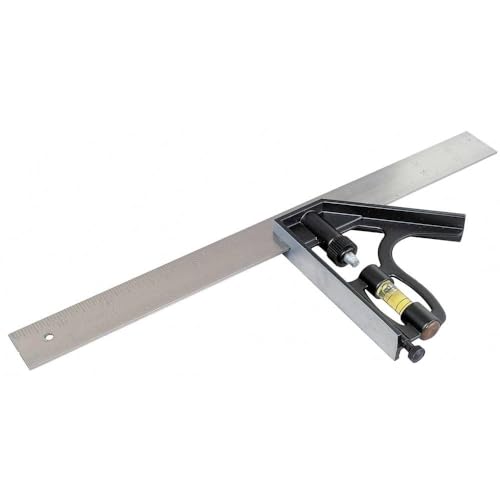
The Stanley 46-222 is the square most people picture, with a light cast head and an etched blade that handles home projects and basic shop layout. It is easy to find and easy to replace, which counts for something in a busy garage. Precision work will outgrow it, but shelf building and trim will not.
Pros
- Light and comfortable in the hand
- Widely available and inexpensive to replace
- Fine for shelving, trim and general layout
Cons
- Head is easier to knock out of true
- No scribe included
Mr. Pen 12 Inch Combination Square
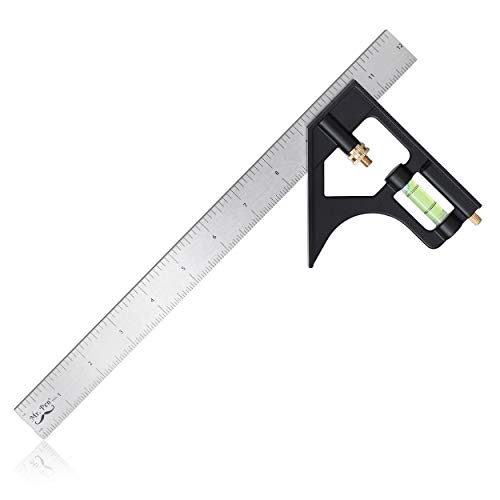
The Mr. Pen square covers occasional layout, craft work and light carpentry at the lowest cost in this group. Markings are legible and the head locks firmly enough for marking cuts. Based on specifications and owner feedback, verify it against a reference edge before relying on it for anything that needs to fit tightly.
Pros
- Lowest cost way to get a working square
- Clear stainless blade markings
- Fine for hobby and craft layout
Cons
- Accuracy should be checked before use
- Soft alloy head dents easily
The lineup, side by side
| # | Model | Blade length | Best for | Score | Price |
|---|---|---|---|---|---|
| 1 | Starrett C11H-12-4R Combination Square | 12 inches | Best overall | 9.4 | Check price |
| 2 | Empire Level E250 Heavy Duty Combination Square | 12 inches | Best value | 9.2 | Check price |
| 3 | Swanson Tool TC132 Combo Square | 12 inches | Best for job sites | 9.0 | Check price |
| 4 | Johnson Level & Tool 400EM-S Combination Square | 12 inches | Best for beginners | 8.8 | Check price |
| 5 | iGaging 4-Piece Combination Square Set | 12 inches | Best for versatility | 8.6 | Check price |
| 6 | Stanley 46-222 Combination Square | 12 inches | Best for general DIY | 8.3 | Check price |
| 7 | Mr. Pen 12 Inch Combination Square | 12 inches | Best budget | 8.0 | Check price |
How to choose
Check the square before you trust it Draw a line across a board using the square, flip the head to the other face, and draw again from the same point. If the two lines diverge, the square is out. Do this the day you unbox it, because a square that arrived untrue will quietly ruin joinery for months before you notice.
Blade markings decide daily usability Photo etched and filled graduations stay readable after years of handling, while printed or lightly stamped scales fade with sawdust and solvent. A satin blade also cuts glare under shop lighting. If you work with reading glasses, look for a 4R style layout that separates coarse and fine graduations on opposite edges.
Head material and locking feel Hardened cast iron heads hold their reference far longer than soft zinc alloy, which dents when dropped. The locking bolt should seat with a smooth turn and hold the blade with no side play. Any wobble at the lock translates directly into an inaccurate line at the far end of the blade.
Match the blade length to the work A 12 inch blade is the default and covers most furniture and framing layout. A 6 inch square is easier to control for small parts and fits an apron pocket, while 18 and 24 inch blades help with cabinet sides and sheet goods. Many owners keep a 6 inch and a 12 inch rather than one long square.
Questions worth asking
What is a combination square used for?
It marks ninety and forty five degree lines, checks depth, measures like a rule, and finds whether a surface is flat against an edge. Most models also include a scribe and a small level vial for rough reference.
How do you test a combination square for accuracy?
Mark a line against a known straight edge, flip the head over, and mark again from the same start point. The lines should sit directly on top of each other. Any gap at the far end shows the square is off.
What does 4R graduation mean?
4R is a machinist scale layout that puts 8ths and 16ths on one edge and 32nds and 64ths on the other. It makes fine readings easier because coarse and fine graduations do not crowd each other.
Is a 6 inch or 12 inch square better?
A 12 inch blade is the more useful single purchase because it reaches across most stock. A 6 inch version is easier to handle on small parts and fits a pocket, which is why many shops keep both.
Can a combination square replace a speed square?
For layout, largely yes. A speed square is still faster as a circular saw fence and survives more abuse, so framing carpenters usually carry both rather than choosing one.
Are the built in level vials accurate?
Treat them as rough indicators. They are useful for a quick plumb check on a post or a shelf bracket, but a dedicated torpedo level is far more reliable for anything that has to look right.
Why do blades come loose over time?
Usually the locking bolt threads pick up grit or the small brass shoe inside the head wears. Clean the blade slot, wipe the shoe, and check the bolt for damage before assuming the square itself is finished.
How should you store a combination square?
Keep it off concrete and out of a loose drawer where it can bang against other tools. A wall hook or a slot in a tool board protects the head casting, and a light wipe of oil on the blade prevents rust in damp shops.
Final word
The Starrett C11H-12-4R is the square to buy once and keep, because the hardened head and etched blade stay accurate long after cheaper models drift. For everyday shop and site work the Empire Level E250 covers the same jobs with less investment, and the Swanson Tool TC132 is the one that belongs in a bag that gets thrown in a truck.