Top Commercial Cordless Cultivators for Heavy-Duty Work
For most commercial landscapers, the Milwaukee M18 Fuel Cordless Cultivator is the top pick because it delivers gas-like power with a brushless motor and impressive runtime on High Output batteries. It excels in compacted soil, but it is heavy, so operators with smaller frames may find it tiring during prolonged use.
Commercial cordless cultivators have evolved rapidly, offering landscapers and groundskeepers a clean alternative to gas models without sacrificing performance. The best ones feature brushless motors, robust tines, and compatibility with high-capacity batteries.
This roundup focuses on models that can handle daily professional use. We analyzed specifications, owner reports, and brand reputation to identify the standouts for heavy tilling, weeding, and soil preparation.
What we recommend
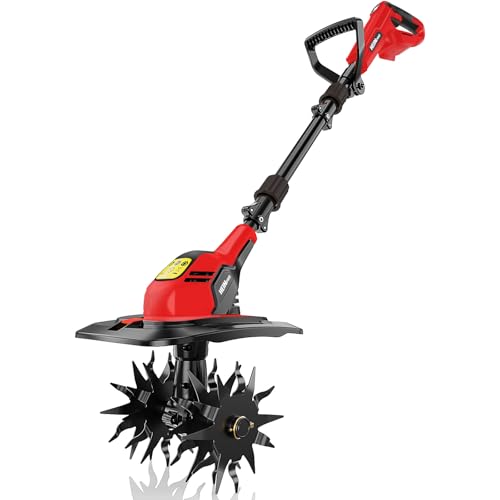
Milwaukee M18 Fuel Cordless Cultivator (4824-21HD)
This cultivator uses a brushless motor and a high-output battery system to deliver gas-like performance. It has a 10 inch tine width and can run up to 60 minutes on a 12.0 Ah battery. Owners report it powers through hard soil and thick roots.
Pros
- Excellent torque for compacted soil
- Long runtime with high-output batteries
- Durable metal tines
Cons
- Heavy for prolonged overhead work
- Requires premium batteries for full power

DeWalt 20V MAX XR Cordless Cultivator (DCMCF100B)
DeWalt’s cultivator uses a 20V MAX XR brushless motor and features a 10 inch tine width. It runs up to 45 minutes with a 6.0 Ah battery. Users appreciate its comfortable ergonomics and reliable performance in average soil conditions.
Pros
- Lightweight design reduces fatigue
- Strong battery ecosystem
- Adjustable tine depth
Cons
- Not as powerful as Milwaukee in hard clay
- Runtime decreases under heavy load

Greenworks Pro 80V Cordless Cultivator (2700402)
This cultivator delivers 80V of power at a more accessible price point. It has a 10 inch tine width and runs up to 60 minutes on a 4.0 Ah battery. It is ideal for lighter commercial tasks like flower bed maintenance and weeding.
Pros
- Lower cost without sacrificing basic performance
- Lightweight and easy to maneuver
- Quiet operation
Cons
- Battery not included (sold separately)
- Less torque for breaking new ground

EGO Power+ 56V Cordless Cultivator (MCA2000)
EGO’s cultivator features a 56V ARC lithium battery that lasts up to 60 minutes on a single charge. It has a 10 inch tine width and a brushless motor. Landscapers like its variable speed trigger and durable construction.
Pros
- Excellent battery life
- Variable speed control
- Battery charge indicator
Cons
- Premium price for batteries
- Some users report vibration

RYOBI 40V HP Brushless Cordless Cultivator (RY40700B)
RYOBI’s 40V HP cultivator offers a 12 inch tine width, the widest in this lineup, covering more ground per pass. It runs up to 50 minutes on a 6.0 Ah battery. It suits commercial gardeners maintaining large beds.
Pros
- Wider swath increases productivity
- Good balance and control
- Battery fuel gauge
Cons
- May be too wide for tight spaces
- Battery and charger sold separately

Kobalt 40V Max Cordless Cultivator (KCM 4040B)
Kobalt’s 40V cultivator stands out with its adjustable handle and cushioned grip. It has a 10 inch tine width and runs up to 40 minutes on a 5.0 Ah battery. It is a reliable choice for routine weeding and soil aeration.
Pros
- Adjustable handle reduces strain
- Compact and easy to store
- Good value for occasional heavy use
Cons
- Brushed motor less efficient
- Not for tough clay soil

Black+Decker 20V MAX Cordless Cultivator (BDCUT100B)
This compact cultivator from Black+Decker is lightweight and easy to control. It has a 7.5 inch tine width, perfect for raised beds and narrow rows. It runs up to 30 minutes on a 4.0 Ah battery, making it suitable for quick maintenance tasks.
Pros
- Very lightweight
- Easy to maneuver in tight areas
- Affordable for small businesses
Cons
- Limited power for deep tilling
- Shorter runtime
How they stack up
| # | Model | Motor | Best for | Score | Price |
|---|---|---|---|---|---|
| 1 | Milwaukee M18 Fuel Cordless Cultivator (4824-21HD) | Brushless | Heavy-duty professional use | 9.4 | Check price |
| 2 | DeWalt 20V MAX XR Cordless Cultivator (DCMCF100B) | Brushless | Versatility and balanced power | 9.1 | Check price |
| 3 | Greenworks Pro 80V Cordless Cultivator (2700402) | Brushless | Budget-friendly commercial use | 8.8 | Check price |
| 4 | EGO Power+ 56V Cordless Cultivator (MCA2000) | Brushless | Long runtime and rapid charging | 9.2 | Check price |
| 5 | RYOBI 40V HP Brushless Cordless Cultivator (RY40700B) | Brushless | Professional landscaping flexibility | 8.9 | Check price |
| 6 | Kobalt 40V Max Cordless Cultivator (KCM 4040B) | Brushed | Light to medium commercial work | 8.5 | Check price |
| 7 | Black+Decker 20V MAX Cordless Cultivator (BDCUT100B) | Brushed | Small commercial jobs and tight spaces | 8.0 | Check price |
What matters most
Good to know
Can cordless cultivators match gas models in power?
Modern brushless models with high voltage and high-output batteries can perform comparably to gas for most tasks. However, for extremely compacted soil or continuous heavy tilling, gas still has a slight edge. Cordless models offer easier maintenance and no fumes.
How long does a battery last on a cordless cultivator?
Runtime varies with battery amp hours and load. A 4.0 Ah battery might last 30 to 45 minutes on light soil, while a 12.0 Ah battery can last over an hour. Heavy tilling reduces runtime by up to 50 percent.
What is the difference between a cultivator and a tiller?
A cultivator is lighter and designed for weeding and aerating the top few inches of soil. A tiller is heavier and breaks new ground or mixes soil deeper. Commercial cordless cultivators are best for maintaining existing beds.
Are brushless motors worth the extra cost?
Yes for commercial use. Brushless motors are more efficient, produce more torque, and have fewer moving parts, so they last longer. They also run cooler and extend battery life.
Can I use a cultivator to dig new garden beds?
Cordless cultivators can prepare loose or tilled soil, but they struggle with hard, compacted ground. For new beds, consider a cordless tiller or break up the soil manually first, then use the cultivator to refine.
Do I need a special battery for a commercial cultivator?
Some brands offer high-output batteries with increased amp hours and power delivery. These are recommended for heavy tasks. Standard batteries may work but will drain faster and may not provide full power.
How do I maintain a cordless cultivator?
Keep tines clean and sharp. Remove debris after each use. Check for loose bolts. Store in a dry place. Charge batteries at room temperature and avoid deep discharges.
What safety gear should I wear when using a cultivator?
Wear safety glasses, gloves, and sturdy boots. Avoid loose clothing that could get caught in the tines. Be aware of underground utilities and rocks.
Are there any cordless cultivators with a tiller attachment?
Some brands offer a multi-tool system where you can attach a cultivator or tiller to the same power head. Check your preferred battery platform for compatibility.
What is the warranty on commercial cordless cultivators?
Most brands offer a 3 to 5 year limited warranty on the tool and a 2 to 3 year warranty on the battery. Always register your product to activate the warranty.
The verdict
For most professional landscapers, the Milwaukee M18 Fuel Cordless Cultivator is the best investment because it offers the highest power output and durability. If you are on a tighter budget or need a lighter tool for softer soils, the Greenworks Pro 80V provides excellent value. However, if runtime is your priority and you already own EGO tools, the EGO Power+ is a strong contender. Choose Milwaukee if you need maximum performance, and choose Greenworks if you want to save money without compromising basic reliability.


