Commercial Leaf Blowers That Tackle Any Property
For most commercial landscapers, the ECHO PB-9010T backpack blower is the top pick because it offers the highest air volume and velocity in its class, making it ideal for clearing large properties and wet leaves. Its main limitation is the higher price and weight compared to other backpack models.
When you’re running a landscaping business or maintaining a large commercial property, a residential leaf blower just won’t cut it. You need a machine that can handle hours of continuous use, move heavy debris, and withstand the rigors of daily work.
We compared the most popular commercial heavy-duty leaf blowers on the market, focusing on specifications and real-world owner reports to help you choose the right tool for your crew.
What we recommend
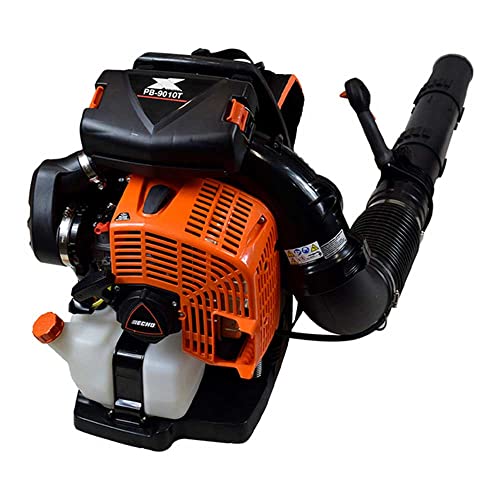
ECHO PB-9010T
The ECHO PB-9010T is a professional-grade backpack blower with the highest air volume and velocity in its class. It features a 75.6 cc professional two-stroke engine and a patented variable-cruise control for reduced operator fatigue. Owners report exceptional build quality and the ability to move wet leaves and small debris with ease.
Pros
- Industry-leading air power
- Durable professional construction
- Cruise control reduces fatigue
Cons
- Heavy and expensive
- Requires mixed fuel
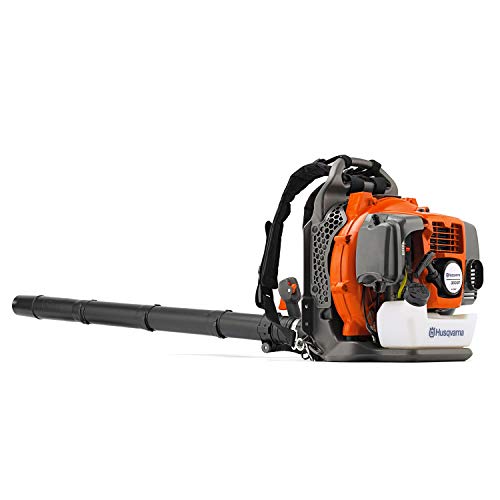
Husqvarna 350BT
The Husqvarna 350BT offers a great balance of power and ergonomics, featuring a 65.6 cc X-Torq engine that delivers high performance with lower fuel consumption. Its air purge system and LowVib anti-vibration design make it a favorite among contractors who need reliable power without the back strain.
Pros
- Excellent power-to-weight ratio
- Lower emissions and fuel consumption
- Comfortable harness and handles
Cons
- Air volume lower than top pick
- Some users find the harness adjustment tricky

STIHL BR 600
The STIHL BR 600 is a trusted workhorse among professional landscapers. With a 64.8 cc engine and STIHL’s anti-vibration system, it provides powerful performance and comfort. Its single-sided strap is easy to adjust, and the machine is known for its longevity when properly maintained.
Pros
- Built to last with professional use
- Effective anti-vibration system
- Easy starting with reduced effort
Cons
- Air volume not as high as ECHO
- Premium price

RedMax EBZ8500RH
The RedMax EBZ8500RH is a powerhouse with a 75.6 cc engine delivering 1,058 CFM and 250 MPH. It features a heavy-duty frame and a comfortable harness designed for all-day use. While it’s one of the heavier models, its performance is unmatched for clearing large areas quickly.
Pros
- Highest air speed in its class
- Durable construction for industrial use
- Excellent for moving heavy debris
Cons
- Heavy, causing fatigue over time
- Fuel consumption is high

Makita XBU02PT1 (36V)
The Makita XBU02PT1 is a 36V lithium-ion backpack blower that offers commercial-grade power without the noise and fumes of gas. It delivers up to 473 CFM and 120 MPH, which is less than gas models but sufficient for many commercial tasks. Its brushless motor ensures longer runtime and less maintenance.
Pros
- Zero emissions and low noise
- No fuel mixing or engine maintenance
- Variable speed control with cruise
Cons
- Runtime is limited by battery life
- Less power than top gas models
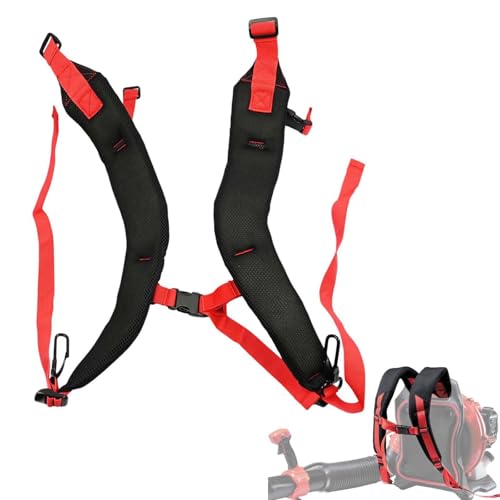
Craftsman B215 (Gas Backpack)
The Craftsman B215 is an affordable gas backpack blower that still offers respectable performance for commercial use. With a 51 cc engine producing 750 CFM and 200 MPH, it handles typical leaf cleanup well. Owners note it starts reliably and is lighter than more expensive models, though it may not endure the same level of abuse.
Pros
- Lower price point
- Lighter than many competitors
- Easy to operate
Cons
- Less power for heavy wet debris
- Build quality not as robust

Greenworks Pro 80V (Handheld)
The Greenworks Pro 80V handheld blower is a cordless option that offers surprising power for a handheld, producing 145 MPH and 580 CFM. It’s ideal for smaller commercial properties or as a secondary blower for tight spaces. Its battery system is shared with other Greenworks tools, making it convenient for mixed fleets.
Pros
- Lightweight and easy to maneuver
- No gas or cords
- Quiet operation
Cons
- Battery runtime is limited
- Not as powerful for heavy jobs
Compared at a glance
| # | Model | Engine Displacement | Best for | Score | Price |
|---|---|---|---|---|---|
| 1 | ECHO PB-9010T | 75.6 cc | Maximum power for large properties | 9.4 | Check price |
| 2 | Husqvarna 350BT | 65.6 cc | Balanced power and comfort | 9.1 | Check price |
| 3 | STIHL BR 600 | 64.8 cc | Professional reliability | 9.0 | Check price |
| 4 | RedMax EBZ8500RH | 75.6 cc | Heavy-duty commercial use | 8.9 | Check price |
| 5 | Makita XBU02PT1 (36V) | 36V (2x18V) | Cordless convenience with power | 8.7 | Check price |
| 6 | Craftsman B215 (Gas Backpack) | 51 cc | Budget-conscious buyers | 8.4 | Check price |
| 7 | Greenworks Pro 80V (Handheld) | 80V | Light commercial tasks | 8.0 | Check price |
How to pick the right one
Good to know
What is the most powerful commercial leaf blower?
The RedMax EBZ8500RH is one of the most powerful, with 1,058 CFM and 250 MPH, but the ECHO PB-9010T offers similar power with slightly higher volume. The best choice depends on whether you need more air speed or volume.
How many CFM do I need for commercial use?
For commercial use, look for at least 700 CFM to handle typical yards. For large properties or heavy debris, consider models with 900 CFM or more. Higher CFM moves leaves faster but may be heavier and consume more fuel.
Are battery leaf blowers powerful enough for commercial work?
Battery models like the Makita 36V can handle light to moderate commercial tasks, but they lack the sustained power and runtime of gas blowers for heavy-duty all-day use. They are best for smaller properties or as a second unit.
What is the difference between CFM and MPH?
CFM (cubic feet per minute) measures air volume, indicating how much air is moved. MPH (miles per hour) measures air speed, indicating how fast the air is blown. For clearing large open areas, CFM is more important; for dislodging wet or stuck debris, MPH is key.
How do I maintain a gas leaf blower?
Regular maintenance includes checking and replacing the air filter, spark plug, and fuel filter. Use fresh fuel and properly mix the oil. Clean the cooling fins and inspect the blower tubes for blockages. Proper storage with fuel stabilizer prevents issues.
Can I use a commercial leaf blower for snow?
Some users use leaf blowers to clear light snow or dusting. However, they are not designed for heavy snow removal. Using a leaf blower on wet snow can damage the engine or clog the impeller.
What is the best backpack leaf blower for the money?
The Husqvarna 350BT offers a great balance of performance, comfort, and price, making it a top value. For a budget option, the Craftsman B215 is affordable but with lower power and durability.
How heavy is too heavy for a backpack blower?
Most commercial backpack blowers weigh between 20 and 25 pounds. Anything above 25 pounds can be fatiguing over a full day. Look for models with good harness systems to distribute weight effectively.
Do commercial leaf blowers require premium fuel?
Most gas leaf blowers run on regular unleaded gasoline with a fuel-oil mix (typically 50:1). Using higher octane fuel isn’t necessary but can reduce knocking in some high-compression engines. Always check the owner’s manual.
Are there electric commercial leaf blowers with cords?
Yes, there are corded electric models, but they are rare in commercial settings because of the limitation of the cord. They offer infinite runtime but can be a trip hazard and limit range. Most professionals prefer gas or battery for mobility.
The bottom line
For a commercial operation that demands maximum productivity, the ECHO PB-9010T is the clear winner. Its superior air volume and speed make quick work of even the toughest leaf piles. If you want nearly the same power at a lower price and with less weight, choose the Husqvarna 350BT. For those ready to go battery, the Makita XBU02PT1 is a solid choice but be ready to invest in extra batteries.