Compact Binoculars Worth Packing for Travel and Trails
The Vortex Diamondback HD 10×28 leads on optical clarity and a lifetime warranty. Nocs Provisions Standard Issue 8×25 packs waterproof glass in a bright, grippy body for travel. Celestron’s Nature DX 8×25 delivers most of that quality for less.
Compact binoculars only justify the pocket space when the view stays bright and the focus holds. The Vortex Diamondback HD 10×28 fits most users, pairing sharp HD glass with Vortex’s no fault lifetime warranty. Travelers who want a lighter, waterproof pair should look at the Nocs Provisions Standard Issue 8×25. Budget minded buyers get close on clarity with the Celestron Nature DX 8×25.
A small objective lens gathers less light, so cheap compacts often go dim at dusk and blur toward the edges. We compared objective diameter, prism design, coatings, eye relief and waterproof sealing, then read owner reports on brightness in low light, focus feel and how each pair holds up to being carried loose in a bag.
Before you buy
What to look for in compact binoculars Objective diameter drives brightness, and compacts pay for their small size with dimmer views in low light. A 28mm lens gathers noticeably more light than a 25mm one at dusk. Prism quality matters too, since BAK4 glass with phase coatings holds contrast that cheaper BK7 prisms lose. Weigh magnification against steadiness, because 10x reaches farther but amplifies every tremor in your hands.
8x versus 10x for a compact pair An 8x view is easier to hold steady and shows a wider field, which helps when following birds or scanning a landscape. A 10x pair pulls distant subjects closer but magnifies hand shake and narrows the field. For travel and general wildlife, 8x tends to win. Choose 10x when you glass open country or watch subjects far off and can brace your arms.
Best compact binoculars for glasses wearers Eyeglass users need long eye relief to see the full field without pressing their lenses to the glass. Aim for 15mm or more and twist down eyecups. The Nikon Travelite, Nocs Standard Issue and Zeiss Terra all clear that bar comfortably. Short relief models near 12mm, like some budget picks here, crop the view for anyone keeping glasses on.
Waterproofing and why sealing matters Sealed, gas purged binoculars resist internal fogging when temperatures swing and shrug off rain on the trail. Nitrogen or argon filling keeps moisture from condensing inside the barrels. If you paddle, hike in wet climates or watch wildlife at dawn, a waterproof pair is worth the small premium. The unsealed Nikon Travelite saves weight but asks you to keep it dry.
The top picks, ranked

Vortex Diamondback HD 10×28 Binoculars
HD optical glass and fully multi coated lenses keep the image bright and true across the field. The 10x magnification pulls distant wildlife closer than most compacts, and a roof prism body stays slim. Vortex backs it with an unconditional lifetime warranty that transfers between owners.
Pros
- HD glass keeps colors sharp and true
- Unconditional lifetime transferable warranty
- 10x reach beats most compact rivals
Cons
- 10x magnifies hand shake more than 8x
- Costs more than entry level compacts

Nocs Provisions Standard Issue 8×25 Binoculars
A rubber armored body in bright colorways shrugs off rain and drops on the trail. Fully multi coated glass and an 8x view give a steady, wide image good for scanning. The compact frame slips into a jacket pocket, and it plays well with a phone adapter for digiscoping.
Pros
- Grippy armor survives rough handling
- Steady 8x image is easy to hold
- Works with a phone digiscoping adapter
Cons
- 25mm lens dims in low light
- Narrower reach than 10x models

Celestron Nature DX 8×25 Binoculars
Phase coated BAK4 prisms and multi coated lenses punch above the price for clarity. A close focus near six feet suits butterflies and garden birds up close. The waterproof, nitrogen filled body handles wet weather better than most compacts in its range.
Pros
- Strong clarity for the price
- Close focus near six feet for insects
- Waterproof and fogproof sealing
Cons
- 13mm eye relief is tight for glasses
- Focus wheel feels stiff when new

Nikon Travelite 8×25 EX Binoculars
At under ten ounces this pair disappears into a coat pocket for travel days. A Porro prism layout gives a slightly wider view than similarly priced roof designs. Turn and slide eyecups and long eye relief make it comfortable for eyeglass wearers.
Pros
- Very light for all day carry
- Long eye relief suits glasses
- Wide, comfortable field of view
Cons
- Not sealed against rain
- Porro hinge adds a little bulk

Bushnell H2O 10×25 Binoculars
Full waterproof sealing at a low price makes this a fit for kayaks and rainy hikes. Non slip rubber armor grips wet hands, and 10x reach pulls in distant shorelines. The glass is basic multi coated rather than HD, but it holds up for casual daytime use.
Pros
- Fully waterproof at a low price
- Grippy armor holds in wet conditions
- 10x reach for the money
Cons
- Short eye relief strains eyeglass users
- Image dims noticeably at dusk
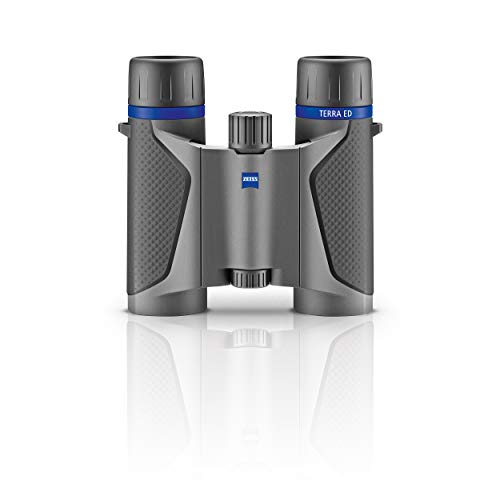
Zeiss Terra ED Pocket 8×25 Binoculars
Zeiss ED glass and Schott coatings deliver a bright, high contrast image that stands out among pocket binoculars. A double hinge folds it down to fit a shirt pocket. The build feels dense and precise, and the focus wheel turns smoothly with one finger.
Pros
- ED glass gives excellent contrast
- Folds very small on a double hinge
- Smooth, precise focus action
Cons
- Priced well above the field
- 25mm lens still limits low light reach
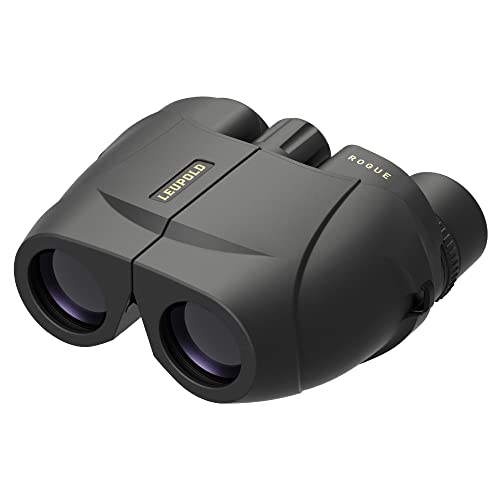
Leupold BX-1 Rogue 10×25 Compact Binoculars
A light armored body backed by Leupold’s lifetime guarantee suits hard trail use. Multi coated lenses and 10x magnification handle open country scanning. The folding roof prism design tucks into a hip pocket, and the finish resists scuffs from rocky ground.
Pros
- Lifetime guarantee for rugged use
- Light and pocketable for hikes
- Comfortable 16mm eye relief
Cons
- Glass lacks HD or ED coatings
- 10x shows more shake handheld
Side by side
| # | Model | Magnification | Best for | Score | Price |
|---|---|---|---|---|---|
| 1 | Vortex Diamondback HD 10×28 Binoculars | 10x, 28mm objective | Best overall | 9.3 | Check price |
| 2 | Nocs Provisions Standard Issue 8×25 Binoculars | 8x, 25mm objective | Best for travel | 9.0 | Check price |
| 3 | Celestron Nature DX 8×25 Binoculars | 8x, 25mm objective | Best value | 8.8 | Check price |
| 4 | Nikon Travelite 8×25 EX Binoculars | 8x, 25mm objective | Best lightweight pick | 8.5 | Check price |
| 5 | Bushnell H2O 10×25 Binoculars | 10x, 25mm objective | Best waterproof budget | 8.3 | Check price |
| 6 | Zeiss Terra ED Pocket 8×25 Binoculars | 8x, 25mm objective | Best premium | 8.6 | Check price |
| 7 | Leupold BX-1 Rogue 10×25 Compact Binoculars | 10x, 25mm objective | Best for hiking durability | 8.1 | Check price |
Questions worth asking
What magnification is best for compact binoculars?
For most travel and wildlife use, 8x offers the steadiest image and widest field. Step up to 10x only if you glass distant open country and can brace your arms, since higher power magnifies every hand tremor.
Are compact binoculars good for bird watching?
Yes for casual and travel birding, though the small objective limits low light performance at dawn and dusk. An 8×25 or 10×28 with quality coatings, like the Celestron Nature DX or Vortex Diamondback HD, handles daytime birding well.
What does 8×25 mean on binoculars?
The first number is magnification, so 8x makes objects appear eight times closer. The second is the objective lens diameter in millimeters, and 25mm is a compact size that keeps the pair pocketable but dimmer in low light.
Do compact binoculars work in low light?
Less well than full size models, because a 25mm or 28mm lens gathers limited light. A larger 28mm objective like the Vortex Diamondback HD holds brightness longer at dusk than a 25mm pair, but none match a 42mm binocular after dark.
Which compact binoculars are best for eyeglass wearers?
Look for eye relief of 15mm or more and twist down eyecups. The Nikon Travelite, Nocs Standard Issue and Zeiss Terra ED Pocket all provide comfortable relief for keeping glasses on.
Are roof prism or Porro prism binoculars better for travel?
Roof prisms make a slimmer, easier to pack shape, which suits travel. Porro prisms, like those in the Nikon Travelite, give a slightly wider view and depth but add bulk at the hinge.
Can you use compact binoculars for concerts and sports?
Yes, their small size and light weight make them ideal for stadiums and theaters. An 8x pair keeps the wide view needed to follow fast action, while 10x brings distant stages closer.
How do I keep the image from shaking with 10x binoculars?
Brace your elbows against your chest or rest them on a rail or ledge. Some users steady the view by leaning against a post. If shake still bothers you, an 8x pair is the simpler fix.
Are expensive compact binoculars worth it?
For frequent use in tough conditions, better glass shows real gains in contrast and low light, as the Zeiss Terra ED Pocket demonstrates. Occasional users get most of the benefit from mid priced pairs like the Celestron Nature DX.
Final word
The Vortex Diamondback HD 10×28 is the overall pick, combining bright HD glass, extra reach and a lifetime transferable warranty. Travelers who value a lighter, grippier waterproof pair should choose the Nocs Provisions Standard Issue 8×25. Eyeglass wearers on a tighter budget will be happiest with the Nikon Travelite 8×25, whose long eye relief and low weight offset its lack of sealing.


