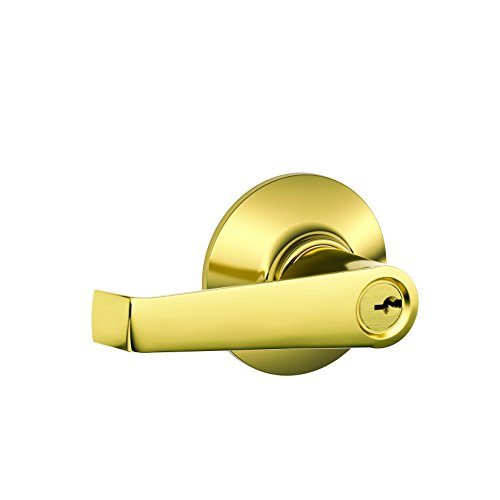
Door hardware that frees up space in small rooms
SMARTSTANDARD’s 6.6FT barn door kit ranks first, because a sliding panel erases the swing arc completely. Johnson Hardware’s 1500 Series goes further and buries the door inside a 2×4 wall. For hallways too narrow for a knob, Kwikset’s 720 Tustin lever costs nothing in clearance.
SMARTSTANDARD’s 6.6FT sliding kit suits any small room where a swinging panel eats usable floor. Carbon steel rail and J shaped hangers carry a slab weighing up to roughly 200 lb. Fitting it means hitting studs, or adding a backer board across a thin partition wall. One limit stays fixed: a sliding panel never seals or locks the way a hinged door does, so bathrooms need something else.
Compact hardware splits into five different jobs. Sliding rails, pocket frames, low profile levers, recessed pulls and surface hinges each buy back space in their own way. We compared track lengths against panel widths, backsets against stile widths, rated loads and required mortise depth. Owner feedback filled in the rest, mostly on rattle, sag and stiff latches.
The best picks, ranked
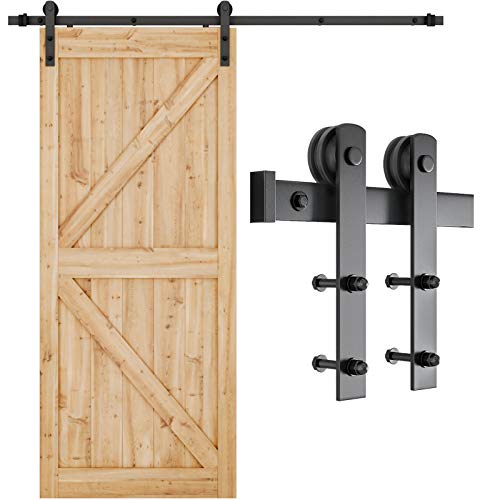
SMARTSTANDARD 6.6FT Sliding Barn Door Hardware Kit
One straight track replaces the quarter circle of floor a hinged door claims. At 6.6 ft the rail covers a single panel between 30 in and 40 in wide, and hangers, floor guide, stops and spacers arrive in the box. Rattle usually traces back to loose splice bolts, which thread locker cures.
Pros
- Recovers the full swing area for furniture
- Hangers accept slabs from 1-3/8 in thick
- Goes up in an afternoon with no wall opened
Cons
- Rail needs studs or a continuous backer board
- Panel overlaps the opening instead of sealing it

Johnson Hardware 1500 Series Pocket Door Frame Kit
Door vanishes into a 2×4 stud wall here, the only layout that costs no wall space at all. Split jamb studs and a steel header let the frame adjust while the rough opening is still exposed. Three wheel nylon roller hangers ride a steel track rated to roughly 125 lb.
Pros
- Both wall faces stay free for shelving
- Frame adjusts to out of square framing
- Track accepts a soft close upgrade later
Cons
- Drywall has to come off to install it
- That stud bay can carry no wiring or pipe

Kwikset 720 Tustin Passage Lever
Levers sit closer to the door face than a round knob, so a narrow corridor keeps its clearance. Tustin mounts on a low profile rose and reverses handing in the box, covering left and right doors from one carton. Passage function latches without locking, which fits hallways, closets and pantries.
Pros
- Drops into standard bored doors with no new holes
- One box covers either hand
- Forearm opens it when both hands are full
Cons
- No thumb turn, so bathrooms need another set
- Plated finish wears sooner than solid brass

Schlage F10 Latitude Passage Lever
Flat rectangular lever meets a compact square rose on Latitude, clearing stiles too narrow for a wide round rosette. ANSI Grade 2 residential internals give the latch a firmer return than most passage sets. Backset adjusts between the two common bore positions before any screw goes in.
Pros
- Square rose clears glass panels and slim stiles
- Grade 2 latch holds alignment as doors settle
- Handing reverses during installation
Cons
- Squared edges mark painted casing on contact
- Passage only, so bedrooms need the privacy version

Sumnacon Recessed Flush Pull Handle
Nothing protrudes, so a sliding or pocket panel travels fully into its opening with nothing left to catch. 304 stainless shrugs off the humidity of bathrooms and laundry rooms better than plated zinc. Fitting calls for a routed pocket roughly 3.9 in by 1.3 in, which a template and trim router cut cleanly.
Pros
- Zero projection keeps pockets and jambs clear
- Stainless face holds up in damp rooms
- Same cutout suits closet and cabinet panels
Cons
- Routed mortise required, not a simple bore
- Shallow finger grip slips with wet hands

Hinge Outlet 3.5 Inch Non-Mortise Hinges
Leaves nest into one another, letting these hinges screw straight onto the door edge and jamb. Skipping the mortise saves a router setup when rehanging a slab in an older, out of square opening. Thin overall stack keeps the reveal close to the gap the original butt hinges left.
Pros
- No chiselling or routing at either leaf
- Screws land in fresh wood beside old mortises
- Good match for hollow core closet doors
Cons
- Hinge gap grows by the thickness of the leaves
- Shear load rules them out for heavy solid core slabs

Probrico Privacy Door Lever
Thumb turn on the inside rose makes this the only privacy function in the group, which bathrooms and bedrooms need. Stainless steel internals survive steam better than the zinc used in most low cost sets. Outside release runs through a pin hole, so park a paperclip nearby rather than hunting for a key.
Pros
- Lowest outlay here for a real privacy function
- Rust resistant where steam collects
- Reverses for left or right hand doors
Cons
- Fixed 2-3/8 in backset will not suit deeper bores
- Lever action feels lighter than Schlage or Kwikset
How to pick the right one
What to measure before you buy Four numbers settle most of this. Panel width sets track length, since a sliding rail runs about twice the door width. Backset is the distance from door edge to bore centre, and interior doors use 2-3/8 in or 2-3/4 in almost without exception. Stile width caps rose diameter, while slab thickness has to land inside the 1-3/8 in to 1-3/4 in range that lever sets are built for.
Sliding, pocket or swinging doors Every layout trades one thing for another. A barn rail like the SMARTSTANDARD kit installs in a day, but parks the panel against wall you may have wanted for shelving. Pocket frames such as the Johnson 1500 Series give up no wall space at all, at the cost of drywall and one stud bay. Keep the existing swing and change only the hinges when the opening is already framed and the job has to stay small.
Slim levers and flush pulls for narrow hallways Projection is the number that counts in a corridor under 36 in wide. Compact roses, as on the Schlage Latitude, hold hardware clear of adjacent casing and glass. Flush pulls delete projection entirely, which is why pocket and sliding panels use them. Skip knobs altogether if grip strength is limited, since a lever opens under a forearm and a knob does not.
Bathrooms, closets and damp rooms Function follows the room, not the finish. Privacy thumb turns belong on bathrooms and bedrooms, so the Probrico lever fits where a passage set cannot. Pantries and linen closets take passage hardware, plus a flush pull once the door slides. Choose stainless over plated zinc wherever steam collects, because moisture lifts thin plating at the screw heads first.
How they stack up
| # | Model | Track length | Best for | Score | Price |
|---|---|---|---|---|---|
| 1 | SMARTSTANDARD 6.6FT Sliding Barn Door Hardware Kit | 6.6 ft, one piece or spliced | Best overall | 9.4 | Check price |
| 2 | Johnson Hardware 1500 Series Pocket Door Frame Kit | 2×4 stud wall, split jamb frame | Best for zero clearance openings | 9.2 | Check price |
| 3 | Kwikset 720 Tustin Passage Lever | Passage, no lock | Best value | 9.0 | Check price |
| 4 | Schlage F10 Latitude Passage Lever | Passage, no lock | Best for narrow door stiles | 8.8 | Check price |
| 5 | Sumnacon Recessed Flush Pull Handle | 304 stainless steel | Best for sliding panels | 8.6 | Check price |
| 6 | Hinge Outlet 3.5 Inch Non-Mortise Hinges | 3.5 in | Best for retrofit hangs | 8.3 | Check price |
| 7 | Probrico Privacy Door Lever | Privacy, thumb turn inside | Best budget for bathrooms | 8.0 | Check price |
Good to know
What counts as compact door hardware?
Any hardware picked to save space or clearance. That covers sliding and pocket systems, low profile levers, recessed pulls, and surface hinges that avoid deep mortises.
How long should a barn door track be?
Roughly twice the panel width, so the door clears the opening fully when open. A 6.6 ft rail like the SMARTSTANDARD kit handles slabs around 30 in to 40 in wide.
Pocket door vs barn door: which is better for small rooms?
Pocket frames win on space, because the panel sits inside the wall and both faces stay usable. Barn rails win on effort, since no drywall comes off and one afternoon finishes the job.
Can you lock a sliding barn door?
Only with an add on hook or latch, and gaps remain at the edges. Rooms needing real privacy or sound control are better served by a hinged door and a privacy lever.
What is a door backset and why does it matter?
Backset measures from the door edge to the centre of the bore. Buy the wrong one and the latch will not reach the strike, which is why adjustable sets like the Kwikset Tustin cover both 2-3/8 in and 2-3/4 in.
Are non-mortise hinges strong enough for interior doors?
For hollow core and light panel doors, yes. Solid core slabs load the thin leaves in shear, so mortised butt hinges remain the safer choice there.
Do barn door rails need to hit studs?
Yes, or a continuous mounting board screwed back into studs. Drywall anchors alone will not hold a 200 lb rating once the panel is in daily use.
Which door levers are easiest for arthritic hands?
Long levers with a light spring return. Both the Kwikset Tustin and the Schlage Latitude open with a forearm or elbow, which no round knob allows.
Do flush pulls work on a hinged door?
Not on the latch side, since a hinged door needs something to grip and a latch to hold it shut. Flush pulls belong on panels that slide, including pocket doors and closet bypass doors.
Is compact door hardware worth fitting in a rental?
Levers and non mortise hinges are reversible in an hour and leave little trace. Barn rails and pocket frames alter the structure, so both need written permission from the landlord first.
The bottom line
Fit the SMARTSTANDARD 6.6FT kit in most small rooms, because it recovers the whole swing area without opening a wall. Johnson Hardware’s 1500 Series is the better call when studs are already exposed for a renovation and every inch counts. Anyone keeping a hinged door should stop at hardware: the Schlage F10 Latitude on hallway and closet doors, the Probrico privacy lever on the bathroom.