Top CompactFlash Cards for Pro Photography in 2025
For most professional photographers, the SanDisk Extreme Pro CF card is the top pick due to its blazing read and write speeds, proven reliability, and capacity options up to 512GB. It excels in continuous shooting and 4K video recording, but its higher price per gigabyte can be a drawback for budget-conscious shooters.
CompactFlash cards remain essential for many professional DSLRs and high-end video cameras, even as newer formats emerge. Choosing the right card directly impacts your shooting experience, from buffer clearing to file transfer times.
This guide breaks down the top CF cards available on Amazon, helping you match a card to your specific camera and workflow. We focus on real-world performance indicators like sustained write speeds, which matter more than burst speeds for continuous shooting and video.
We also consider reliability and durability, as these cards often endure harsh conditions. Whether you shoot sports, weddings, or studio work, our recommendations cover a range of needs and budgets.
The shortlist, ranked

SanDisk Extreme Pro CompactFlash 128GB
The SanDisk Extreme Pro is the gold standard for CF cards, offering industry-leading write speeds up to 150MB/s and read speeds up to 160MB/s. It handles 4K video and rapid-fire bursts without dropouts, and its VPG-65 rating ensures smooth video capture. With capacities up to 512GB, it suits high-resolution workflows, but its premium price reflects its performance.
Pros
- Exceptional sustained write speed
- Wide capacity range
- Proven reliability in demanding conditions
Cons
- Premium price per GB
- May be overkill for older cameras

Lexar Professional 128GB CompactFlash 1066x
Lexar Professional 1066x delivers impressive speed (up to 160MB/s read, 155MB/s write) at a lower cost than some rivals. It includes a free recovery software and is backward compatible with older CF slots. Users praise its consistent performance for both stills and video, though some report variability in long-term reliability.
Pros
- High speed for the price
- Includes recovery software
- Good capacity options
Cons
- Some users report failures after heavy use
- Not as rugged as more expensive cards

ProGrade Digital 128GB CFast 2.0 (with CF Adapter)
ProGrade Digital offers a CFast 2.0 card that comes with a CompactFlash adapter, making it usable in both CFast and CF slots. This flexibility is ideal for photographers transitioning between systems. The card itself provides high-speed performance, but the adapter can be a point of failure, and the card is pricier than standard CF options.
Pros
- Dual compatibility (CFast and CF)
- Very fast in CFast mode
- Reliable brand among pros
Cons
- Expensive
- Adapter adds bulk and potential failure point
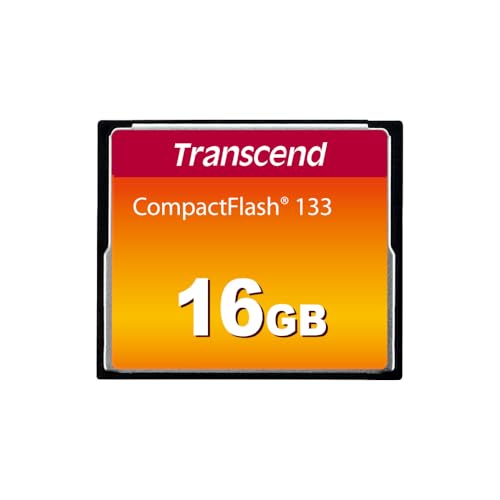
Transcend 128GB CompactFlash 1000x
Transcend’s 1000x card offers read/write speeds up to 160MB/s and 120MB/s respectively, which is solid for most DSLRs. It comes with a lifetime warranty and is known for good value. However, its write speed is slower than top-tier cards, which may limit buffer clearing for continuous bursts.
Pros
- Affordable price per GB
- Good read speed
- Lifetime warranty
Cons
- Write speed lower than premium cards
- Not ideal for high-speed video

Delkin Devices 128GB CFexpress Type B (with CF Adapter)
Delkin Devices offers a CFexpress Type B card that includes a CompactFlash adapter, allowing use in older CF slots. This provides a path to faster CFexpress performance when you upgrade cameras. However, in CF mode, the speed is limited to CF specifications, and the adapter setup may be less reliable than a native CF card.
Pros
- Future-proof for CFexpress cameras
- High-speed performance in CFexpress mode
- Durable build
Cons
- In CF mode, speed is limited to CF specs
- Adapter may not be as seamless as native CF

Sony 128GB Professional XQD (with CF Adapter)
Sony’s XQD card is designed for high-end Sony cameras and includes a CF adapter for use in CF slots. It offers robust performance and durability. However, XQD is a different format, and using it via an adapter may not deliver the same performance as native CF cards in CF slots.
Pros
- High-speed XQD performance
- Trusted brand
- Sturdy build
Cons
- Adapter required for CF slots
- Limited compatibility with non-Sony cameras

SanDisk Extreme 128GB CompactFlash
The SanDisk Extreme is a step below the Extreme Pro but still offers solid performance with read speeds up to 120MB/s and write speeds up to 85MB/s. It is more affordable and works well for general photography and HD video. It lacks the ultra-fast write speeds needed for high-burst professional use.
Pros
- Lower cost than Extreme Pro
- Durable design
- Good for HD video and bursts
Cons
- Write speed too slow for 4K video
- Buffer clearing can be slow in continuous shooting
How to choose
Side by side
| # | Model | Capacity | Best for | Score | Price |
|---|---|---|---|---|---|
| 1 | SanDisk Extreme Pro CompactFlash 128GB | 128GB (up to 512GB available) | Professional photographers needing maximum speed and capacity | 9.4 | Check price |
| 2 | Lexar Professional 128GB CompactFlash 1066x | 128GB (also 64GB, 256GB) | Fast performance at a more accessible price | 8.9 | Check price |
| 3 | ProGrade Digital 128GB CFast 2.0 (with CF Adapter) | 128GB | Hybrid CF/CFast workflows | 8.7 | Check price |
| 4 | Transcend 128GB CompactFlash 1000x | 128GB (also 64GB, 256GB) | Budget-conscious shooters needing decent speed | 8.4 | Check price |
| 5 | Delkin Devices 128GB CFexpress Type B (with CF Adapter) | 128GB | Future-proofing with CFexpress compatibility | 8.2 | Check price |
| 6 | Sony 128GB Professional XQD (with CF Adapter) | 128GB | Sony camera users with XQD support | 8.0 | Check price |
| 7 | SanDisk Extreme 128GB CompactFlash | 128GB (also 64GB, 256GB) | Everyday shooting and hobbyists | 8.3 | Check price |
Frequently asked questions
What is the difference between CompactFlash and SD cards?
CompactFlash (CF) cards are larger and generally offer faster write speeds, making them popular in professional DSLRs. SD cards are smaller and ubiquitous in consumer cameras. CF cards use a parallel interface, while SD uses a serial one. CF cards also support higher capacities and are more durable due to their thicker casing.
Can I use a CompactFlash card in a CFast or CFexpress slot?
No, CFast and CFexpress are different physical formats. CFast is similar in size but uses a different interface. CFexpress Type B is the same size as CFast but not backward compatible. You cannot insert a CF card into a CFast or CFexpress slot without an adapter, and even then, performance may not be optimal.
What does the ‘x’ rating on CF cards mean?
The ‘x’ rating indicates the card’s speed relative to a standard CD-ROM speed of 150KB/s. For example, 1000x means 1000 times that speed, or 150MB/s. This is often a theoretical maximum, and real-world performance may vary.
How do I know which CF card speed my camera supports?
Check your camera’s manual or manufacturer website. Look for support for UDMA (Ultra DMA) modes. UDMA 7 supports speeds up to 167MB/s, while UDMA 6 up to 133MB/s. If your camera only supports UDMA 6, a UDMA 7 card will still work but run at lower speeds.
Is it better to buy one large capacity card or multiple smaller ones?
Many photographers prefer multiple smaller cards to minimize data loss if a card fails. It also allows you to organize shoots by card. However, larger cards are convenient and reduce the chance of losing a card. Consider your workflow and backup habits.
Are expensive CF cards worth the extra cost?
If you shoot fast action or 4K video, a high-speed card with a high sustained write speed is worth it. For general photography, a mid-range card may suffice. The cost difference also reflects build quality and warranty, which can be important for professionals.
How should I format my CF card?
Always format the card in your camera, not on your computer. This ensures the file system is optimized for the camera. Formatting erases all data, so back up first. Some cameras offer low-level format, which can be useful if the card behaves erratically.
Can a CF card be used in a card reader for older computers?
Yes, but you may need a dedicated CF card reader. Many modern card readers support CF, but some only support SD. Check your reader’s specifications. If you have a CFast or CFexpress card, you need a compatible reader.
What is the lifespan of a CompactFlash card?
CF cards have a finite number of program/erase cycles, but modern cards can endure hundreds of thousands of cycles. In practice, the card may become obsolete before it wears out. However, physical damage or extreme conditions can shorten its life. Regular backup is recommended.
Do CF cards come with warranties?
Most reputable brands offer limited lifetime warranties. For instance, SanDisk and Lexar provide warranty periods that vary by product. Check the specific product page for warranty details. Some brands also include data recovery software as a bonus.
The bottom line
For most professional photographers, the SanDisk Extreme Pro is the clear choice for its unmatched speed and reliability, especially if you shoot continuous bursts or 4K video. If budget is a concern, the Lexar Professional 1066x offers excellent performance at a lower cost. For those with a mix of CF and CFast cameras, the ProGrade Digital with adapter provides flexibility. Ultimately, the best card for you is one that matches your camera’s capabilities and your shooting demands. We recommend the SanDisk Extreme Pro for its proven track record and performance.


