Compost Bins That Break Down Scraps Faster, Ranked by Yard
FCMP Outdoor’s IM4000 dual chamber tumbler suits most yards, letting one side cure while the other fills. Tight patios do better with the Envirocycle’s compact base. For cheap high volume composting, the expandable Geobin holds the most for the least.
FCMP Outdoor’s IM4000 tumbler fits the widest range of yards, because its two chambers let one batch cure while you keep adding scraps to the other. Patios and balconies with no room to spin a barrel do better with the Envirocycle, a compact tumbler that also catches liquid fertilizer. Gardeners composting large volumes of leaves and clippings get the most capacity per dollar from the expandable Geobin.
The right bin depends less on brand than on your space, your patience for turning, and how much material you generate. We compared tumbler versus stationary designs, total volume, how each one aerates the pile, and the assembly each demands, then weighed owner reports on speed, sturdiness and pest resistance across a full season.
What we recommend

FCMP Outdoor IM4000 Tumbling Composter
Two 18.5 gallon chambers let you fill one side while the other finishes, so fresh scraps never stall a curing batch. Turning the drum a few times a week aerates the pile without a fork or shovel. Internal fins break up clumps as it spins, and owners report finished compost in weeks during warm weather.
Pros
- Two chambers keep a batch always curing
- Tumbling replaces manual pile turning
- Sealed drum deters rodents and pests
Cons
- Assembly takes patience with many screws
- Full drum grows heavy and harder to spin
Envirocycle The Most Beautiful Composter
This rolling barrel sits on a base that captures liquid runoff you can dilute into plant food. Its compact footprint fits a balcony or small patio where a wide frame will not. The rounded drum rolls on its base to mix, and owners praise the tidy look and lack of exposed metal legs.
Pros
- Compact enough for a patio or balcony
- Base captures usable liquid fertilizer
- Rolls to mix without a frame
Cons
- Smaller capacity than dual chamber bins
- Single chamber mixes fresh with curing
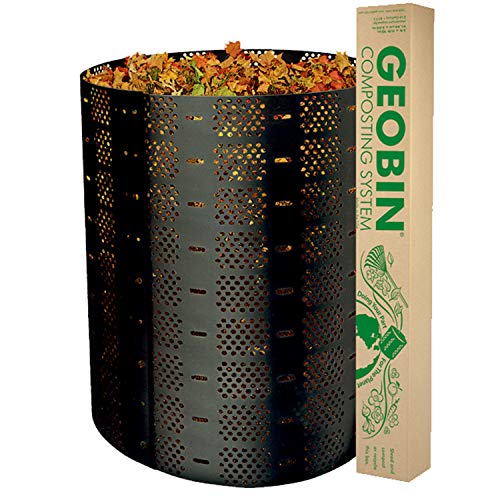
Geobin Compost Bin
A flexible perforated panel wraps into a circle and expands from roughly 80 up to 200 gallons as your pile grows. The open bottom lets worms and microbes move in from the soil below. Gardeners with heavy leaf and clipping loads favor it for holding far more material than any tumbler at a fraction of the cost.
Pros
- Holds far more than any tumbler here
- Adjusts size to your pile
- Lowest cost per gallon of capacity
Cons
- Needs manual turning with a fork
- Open design offers less pest protection

VIVOSUN Outdoor Tumbling Composter
VIVOSUN offers a twin chamber tumbler much like pricier rivals at a lower price. Each side holds 21.7 gallons, and a sliding door makes loading and unloading easy. Aeration holes and internal spikes mix air through the pile as it turns, and owners find it a solid entry point into tumbler composting.
Pros
- Two chambers at a budget price
- Sliding doors ease loading
- Aeration spikes mix air in
Cons
- Plastic feels thinner than premium tumblers
- Latches can stick until broken in

Exaco Aerobin 400 Insulated Composter
Insulated walls hold heat so decomposition continues into cold weather when open bins go dormant. A central aeration core, called the lung, feeds oxygen through the pile without turning. A base reservoir collects leachate for use as liquid feed, and northern gardeners value its steady winter progress.
Pros
- Insulation keeps composting in cold months
- Central core aerates without turning
- Enclosed design resists pests
Cons
- Large footprint needs dedicated space
- Higher price than open stationary bins

Redmon Green Culture Compost Bin
This 65 gallon square bin snaps together from ventilated panels with no tools required. A lift off lid lets you add scraps from the top, while side doors reach finished compost at the bottom. Its modest footprint and quiet appearance suit small suburban yards where a spinning drum would look out of place.
Pros
- Snaps together without tools
- Discreet shape for small yards
- Side doors reach finished compost
Cons
- Requires manual turning to speed up
- No base tray for liquid runoff
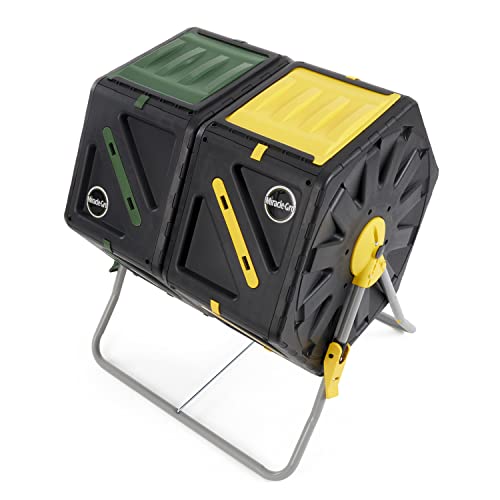
Miracle-Gro Small Composter
A single 18.5 gallon drum on a low frame makes an easy first tumbler for a small household. Its light weight and simple design suit anyone new to composting who wants low effort turning. Owners with modest kitchen scrap volumes describe it as manageable, though its single chamber mixes fresh material with curing.
Pros
- Simple starter for beginners
- Light and easy to spin
- Compact for small households
Cons
- Single chamber blends new and old
- Small volume fills quickly
Before you buy
What to look for in a compost bin Two decisions shape everything else: tumbler or stationary, and how much you produce. Tumblers spin to aerate the pile, so you skip forking it by hand and usually get faster results. Stationary bins hold far more volume for less money but need manual turning. Match the total capacity to your real output of kitchen scraps and yard waste, then add a margin, since an undersized bin fills before the first batch finishes.
Best bins for small spaces and patios Limited space rules out wide frames and large rings. A compact rolling tumbler like the Envirocycle fits a balcony and even catches liquid fertilizer in its base. A snap together stationary bin such as the Redmon Green Culture tucks into a small yard corner without the look of a spinning barrel. Keep the bin near the kitchen door so adding scraps stays a habit rather than a chore.
Composting through cold weather Decomposition slows or stops once temperatures drop, because the microbes that drive it go dormant. Insulated designs like the Exaco Aerobin 400 trap heat and keep the process moving into winter. If your bin is not insulated, expect progress to pause until spring, and simply keep adding material so it is ready to heat up again when the weather warms.
Keeping the pile balanced and pest free A healthy pile needs roughly equal browns and greens: dry leaves, cardboard and paper for carbon, plus food scraps and fresh clippings for nitrogen. Too many greens turn it slimy and sour, while too many browns stall it. Sealed tumblers deter rodents better than open rings, so skip meat, dairy and oils in any bin to avoid drawing pests and odor.
Side by side
| # | Model | Design | Best for | Score | Price |
|---|---|---|---|---|---|
| 1 | FCMP Outdoor IM4000 Tumbling Composter | Dual chamber tumbler | Best overall | 9.4 | Check price |
| 2 | Envirocycle The Most Beautiful Composter | Rolling drum on collector base | Best for patios and balconies | 9.0 | Check price |
| 3 | Geobin Compost Bin | Expandable stationary ring | Best value for high volume | 8.9 | Check price |
| 4 | VIVOSUN Outdoor Tumbling Composter | Dual chamber tumbler | Best budget tumbler | 8.6 | Check price |
| 5 | Exaco Aerobin 400 Insulated Composter | Insulated stationary bin | Best for cold climates | 8.5 | Check price |
| 6 | Redmon Green Culture Compost Bin | Stationary snap together bin | Best stationary for small yards | 8.3 | Check price |
| 7 | Miracle-Gro Small Composter | Single chamber tumbler | Best compact starter | 8.0 | Check price |
Frequently asked questions
Is a tumbler or stationary compost bin better?
Tumblers aerate as you spin them, so they need no forking and often finish faster, but hold less. Stationary bins hold much more for less money yet require manual turning. Small yards lean tumbler, high volume gardens lean stationary.
How long does compost take in a tumbler?
In warm weather with a balanced pile and regular turning, a tumbler can produce finished compost in a few weeks to a couple of months. Cold weather and a wetter pile slow that considerably.
What size compost bin do I need?
Match capacity to your output. A small household with kitchen scraps does fine with an 18 to 40 gallon tumbler, while a garden generating heavy leaf and clipping loads wants an expandable ring like the Geobin.
Can I compost through winter?
Decomposition slows as microbes go dormant in the cold. An insulated bin like the Exaco Aerobin keeps it going, while an open bin usually pauses until spring, then restarts as temperatures rise.
What should I not put in a compost bin?
Skip meat, fish, dairy, oily foods and pet waste, since they cause odor and attract rodents. Also avoid diseased plants and anything treated with herbicide, which can carry over into the finished compost.
Why does my compost smell bad?
A sour or rotten smell usually means too many greens and not enough air, leaving the pile wet and anaerobic. Add dry browns like leaves or shredded cardboard and turn it to reintroduce oxygen.
Do compost bins attract rats and pests?
Open bins can, especially with food scraps. Sealed tumblers like the FCMP IM4000 deter rodents far better, and leaving out meat, dairy and oils removes the smells that draw pests in the first place.
How often should I turn my compost?
A tumbler benefits from a few spins per week. A stationary pile does well turned with a fork once a week or so. More frequent aeration speeds things up, while neglect slows the pile down.
Can I use a compost bin without a yard?
Yes. A compact tumbler like the Envirocycle works on a balcony or patio, and its base collects liquid fertilizer. For indoors, a worm bin or a countertop collector paired with an outdoor bin is another route.
The verdict
For most gardens, the FCMP Outdoor IM4000 earns the top spot because its two chambers keep a batch curing while you keep feeding the other, and the sealed drum deters pests. Patio and balcony owners should choose the compact Envirocycle instead, while anyone composting large volumes of leaves and clippings gets far more capacity per dollar from the expandable Geobin ring.


