Top Portable Drives and USB Sticks for Travelers
The SanDisk Extreme Pro Portable SSD is our top pick for most travelers. It offers fast transfers, high capacity, and rugged durability. Its main limitation is the premium cost compared to standard external drives.
Traveling with a laptop or tablet means you need extra storage for photos, videos, and work files. Cloud storage is convenient, but offline access and backup are essential when you are away from reliable Wi-Fi.
The best computer memory for travel is portable, rugged, and fast. It should fit in your pocket or bag and survive the bumps of the road. We have compared the top options to help you choose.
What matters most
The top picks, ranked
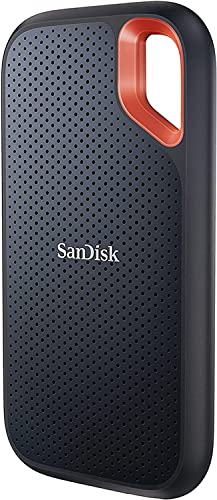
SanDisk Extreme PRO Portable SSD
The SanDisk Extreme PRO is a rugged solid-state drive with fast NVMe performance. It is IP65 water and dust resistant, and it can survive drops from two meters. Owners report transfer speeds that keep up with 4K video editing.
Pros
- Very fast sequential read and write speeds
- Rugged build for travel
- Compact and lightweight
Cons
- More expensive than standard external drives
- Requires a USB-C port for full speed
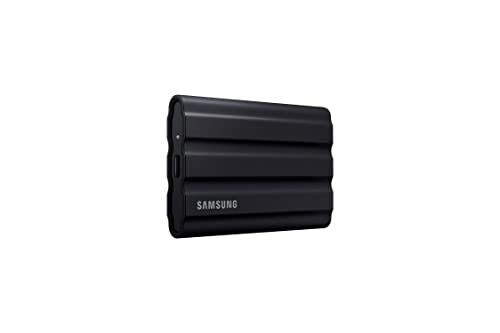
Samsung T7 Shield Portable SSD
The Samsung T7 Shield has a rubberized exterior that resists drops, water, and dust. It offers USB 3.2 Gen 2 speeds and works with Android, Windows, and Mac devices. Travelers appreciate its reliability in hot and cold climates.
Pros
- Excellent shock and weather protection
- Smooth and fast performance
- Software for password protection
Cons
- Slightly larger than the standard T7
- No Wi-Fi or wireless capabilities

SanDisk Ultra Dual Drive Luxe USB Type-C Flash Drive
This flash drive has a rotating design with both USB-C and USB-A connectors. It is perfect for transferring files between modern laptops, tablets, and older computers. The metal body is sturdy and the drive is compact enough for a keychain.
Pros
- Two connectors for maximum compatibility
- Small and easy to carry
- Backed by the SanDisk Memory Zone app
Cons
- Slower than an SSD
- Can get warm during large transfers

Samsung BAR Plus USB 3.1 Flash Drive
The Samsung BAR Plus is an affordable metal flash drive with a key ring. It is waterproof, shock-proof, and magnetic-resistant. It offers reliable performance for everyday file backups and media storage.
Pros
- Very affordable for the capacity
- Durable metal construction
- Compact and easy to attach to keys
Cons
- No USB-C option
- Slower than SSDs for large files

SanDisk iXpand Luxe Drive
The SanDisk iXpand Luxe is designed for Apple devices with a Lightning connector and a USB-C plug. It automatically backs up photos and videos from your iPhone. The swivel design protects the connectors when not in use.
Pros
- Easy automatic photo backup
- Works with both Apple and other devices
- Rugged design
Cons
- No USB-A connector
- Limited to 256GB maximum capacity

G-Technology ArmorATD External Hard Drive
The G-Technology ArmorATD is a rugged portable hard drive with capacities up to 5TB. It features a shock-resistant shell and is water and dust resistant. It is a good choice for travelers who need massive storage for video and photo archives without the cost of an SSD.
Pros
- Large capacities at lower cost per GB
- Rugged enclosure
- No external power needed
Cons
- Slower than SSD drives
- Requires a USB-A port or adapter

RavPower FileHub Plus
The RavPower FileHub Plus is a wireless travel router and file hub. It reads SD cards, USB drives, and external HDDs, then streams content to your phone or tablet. It also has a built-in 6700mAh battery to charge your devices.
Pros
- Wireless streaming to multiple devices
- Backs up SD cards without a computer
- Acts as a power bank
Cons
- Setup can be complex
- Not a storage device by itself
The lineup, side by side
| # | Model | Capacity | Best for | Score | Price |
|---|---|---|---|---|---|
| 1 | SanDisk Extreme PRO Portable SSD | Up to 4TB | Best overall for speed and durability | 9.4 | Check price |
| 2 | Samsung T7 Shield Portable SSD | Up to 2TB | Best for extreme conditions | 9.2 | Check price |
| 3 | SanDisk Ultra Dual Drive Luxe USB Type-C Flash Drive | Up to 1TB | Best for phone and laptop use | 8.8 | Check price |
| 4 | Samsung BAR Plus USB 3.1 Flash Drive | Up to 512GB | Best budget-friendly travel drive | 8.6 | Check price |
| 5 | SanDisk iXpand Luxe Drive | Up to 256GB | Best for iPhone and iPad users | 8.5 | Check price |
| 6 | G-Technology ArmorATD External Hard Drive | Up to 5TB | Best for high-capacity budget storage | 8.3 | Check price |
| 7 | RavPower FileHub Plus | None (host adapter) | Best for wireless sharing and SD card backup | 8.0 | Check price |
Common questions
What is the best type of memory for travel?
It depends on your needs. SSDs are fast and durable, but more expensive. Flash drives are cheap and compact, but slower. External hard drives offer the most capacity for the price, but they are less rugged. For most travelers, a portable SSD is the best balance of speed, durability, and capacity.
Can I use a USB flash drive with my phone?
Yes, if your phone supports USB On-The-Go (OTG) and the drive has the right connector. Many modern phones use USB-C, so a dual-connector drive like the SanDisk Ultra Dual is a good option. For iPhones, look for a Lightning-compatible drive like the iXpand Luxe.
How much storage do I need for travel?
For basic document backup, 128GB is plenty. For photos and videos, consider 512GB or more. If you are a professional photographer or videographer, you may want 1TB or more. Think about the size of your files and how many days you will be away.
Are external SSDs worth the extra cost?
For frequent travelers, yes. SSDs are faster, lighter, and more durable than hard drives. They have no moving parts, so they are less likely to fail when bumped or dropped. The higher cost is a trade-off for peace of mind and speed.
What is the difference between USB 3.0 and USB 3.1?
USB 3.1 Gen 1 is the same speed as USB 3.0, at 5Gbps. USB 3.1 Gen 2 doubles that to 10Gbps, and USB 3.2 Gen 2×2 reaches 20Gbps. To get the fastest speeds, your device and cable must support the same standard.
Can I use a portable drive with my tablet?
Many tablets support external drives via USB-C or Lightning with the right adapter. Some drives have apps that help you manage files. Check your tablet’s specifications to see if it supports OTG or external storage.
How do I keep my data secure while traveling?
Use drives with hardware encryption, like the Samsung T7 Shield. Set a strong password. Avoid leaving your drive in checked luggage. Consider backing up to the cloud as a second layer of protection.
What should I do if my drive gets wet or dropped?
If your drive is not rated for water or shock, dry it gently and do not plug it in until it is completely dry. If it is dropped, check for physical damage. Always keep important data backed up in multiple places.
Are wireless drives better than wired?
Wireless drives offer convenience because you can connect multiple devices without cables. However, they require charging and can be slower. Wired drives are typically faster and more reliable. Choose based on your need for cable-free access.
Can I use a portable SSD with my gaming console?
Yes, if the console supports external storage. For example, PlayStation and Xbox allow you to store games on an external SSD. Check your console’s requirements for capacity and interface.
The bottom line
For most travelers, the SanDisk Extreme Pro Portable SSD is the best choice. It offers top speeds and rugged reliability. If you are on a budget, the Samsung BAR Plus is a solid value. For Apple users, the iXpand Luxe is the way to go. Whichever you choose, ensure it fits your device ports and capacity needs.


