USB C Computer Speakers Worth Your Desk Space
The Creative Pebble Pro is our top pick because it delivers surprisingly robust sound with a compact footprint, ideal for users who want an easy USB C connection and clear audio for calls and media. Its main limitation is a lack of deep bass compared to larger systems.
USB C has become the standard port on many laptops, making speakers with native USB C connectivity a convenient choice. These speakers often provide digital audio and power through a single cable, reducing desk clutter.
We compared several popular models to help you find a set that fits your space and listening habits. Whether you need compact speakers for a home office or a powerful system for gaming, this list covers top options.
The top picks, ranked

Creative Pebble Pro
The Creative Pebble Pro offers a 2.1 stereo system with a down-firing subwoofer in a compact design. It connects via USB C and includes a USB C to USB A adapter for flexibility. Users praise its clear mids and highs, though bass is modest at low volumes.
Pros
- Compact and stylish
- Surprisingly clear audio
- Easy USB C plug and play
Cons
- Bass can distort at max volume
- No Bluetooth

Audioengine A2+ Wireless
Audioengine A2+ Wireless delivers high-fidelity sound with custom drivers and a built-in DAC. It supports USB C input as well as RCA and Bluetooth. The sound is detailed and balanced, making them ideal for critical listening.
Pros
- Excellent clarity and detail
- Multiple input options
- Compact for the sound
Cons
- Pricey for size
- No subwoofer output
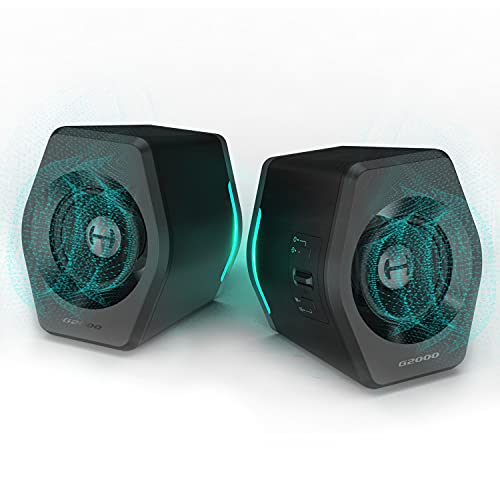
Edifier G2000
The Edifier G2000 is a gaming speaker set with RGB lighting and multiple sound modes. It connects via USB C, USB A, or 3.5mm. The 2.0 channel system offers punchy sound and an immersive gaming experience.
Pros
- RGB lighting adds style
- Multiple EQ modes
- Good stereo separation
Cons
- No Bluetooth
- Some might find RGB distracting

Razer Nommo V2 Pro
Razer Nommo V2 Pro is a premium 2.1 system with wireless subwoofer, THX Spatial Audio, and USB C input. It delivers powerful, room-filling sound with deep bass, ideal for gamers and movie lovers.
Pros
- Powerful, immersive audio
- Wireless subwoofer
- Customizable RGB
Cons
- Very expensive
- Large footprint

PreSonus Eris Studio 5
PreSonus Eris Studio 5 are studio monitors with a USB C audio interface built in. They offer flat frequency response and acoustic tuning controls, making them perfect for editing and mixing.
Pros
- Accurate sound reproduction
- Built in DAC and interface
- Professional tuning options
Cons
- No Bluetooth
- Requires desktop space

Sony SRS-XB100
The Sony SRS-XB100 is a compact wireless speaker that also works via USB C for charging and audio. It is not a traditional desktop speaker but offers portability and 16 hours of battery life.
Pros
- Very portable
- Long battery life
- Water resistant (IP67)
Cons
- Mono sound
- Not a stereo pair
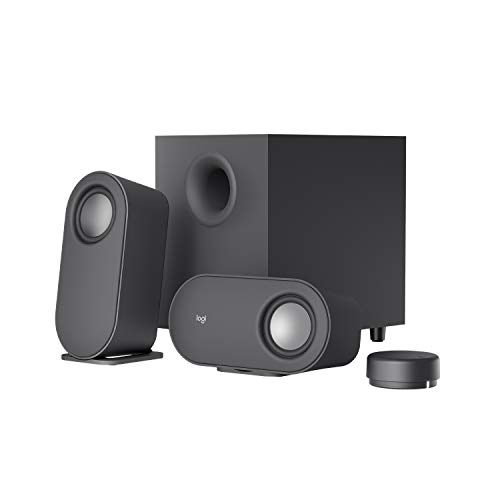
Logitech Z407
Logitech Z407 is a 2.1 speaker system with a wireless control dial. It connects via USB C, 3.5mm, and Bluetooth, offering flexible connectivity and punchy bass.
Pros
- Rich bass
- Multiple connectivity options
- Convenient wireless dial
Cons
- Satellite build feels light
- No AUX output
Compared at a glance
| # | Model | Drivers | Best for | Score | Price |
|---|---|---|---|---|---|
| 1 | Creative Pebble Pro | 2 x 2.5″ full range + 1 x 4″ subwoofer | Compact desk setups | 9.4 | Check price |
| 2 | Audioengine A2+ Wireless | 2.75″ aramid fiber woofers, 0.75″ silk dome tweeters | Audiophiles on a budget | 9.2 | Check price |
| 3 | Edifier G2000 | 2 x 2.5″ full range + 2 x 3″ passive radiators | Gamers | 9.0 | Check price |
| 4 | Razer Nommo V2 Pro | 2 x 3″ full range + wireless 5.5″ subwoofer | Immersive gaming and entertainment | 8.8 | Check price |
| 5 | PreSonus Eris Studio 5 | 5.25″ woven composite woofer, 1″ silk dome tweeter | Content creators and music producers | 8.6 | Check price |
| 6 | Sony SRS-XB100 | 1 x 45mm full range + passive radiator | Portability and travel | 8.4 | Check price |
| 7 | Logitech Z407 | 2 x 2″ satellites + 5.25″ subwoofer | Everyday multimedia with wireless control | 8.2 | Check price |
How to choose
Good to know
Do USB C speakers work with any computer?
Most USB C speakers work with any computer that has a USB C port or a USB A port with an adapter. They are typically plug and play on Windows, macOS, and Chrome OS. Some may require drivers but usually not.
Can I use USB C speakers with a USB A port?
Yes, you can use a USB C to USB A adapter or cable. Most speakers include an adapter or a cable with USB A on the other end. However, check that the speaker’s power requirement is within USB A’s 5V output.
Are USB C speakers better than 3.5mm speakers?
USB C speakers use digital audio which can be cleaner and less prone to interference than analog 3.5mm. They also provide power so you may not need an extra power cord. However, sound quality depends on the speaker’s drivers and amplifier, not just the connection.
Do I need a sound card for USB C speakers?
No, USB C speakers have a built in DAC and amplifier. They act as an external sound card, so you do not need a separate one.
Can I connect USB C speakers to a phone or tablet?
Yes, if your phone or tablet has a USB C port and supports audio output, you can connect USB C speakers. Some may need an OTG adapter. Also, many USB C speakers have Bluetooth for wireless connection to phones.
What is the advantage of USB C over Bluetooth?
USB C provides a stable, low latency connection and charges the speakers simultaneously. Bluetooth offers wireless convenience but may have audio lag, which can be problematic for video editing or gaming.
How do I set up USB C speakers?
Simply plug the USB C cable into your computer and the speakers. Your OS should recognize them as an audio device. You may need to select them in your sound settings. No additional software is usually required.
Can I use USB C speakers with a docking station?
Yes, if the docking station has a USB C port that supports data and audio. Some docking stations share bandwidth, so check that the port delivers enough power and data. It is often better to connect directly to the computer if possible.
What is the difference between USB C and USB A speakers?
The main difference is the connector shape and protocol. USB C supports higher power delivery and faster data rates, but for speakers, both provide digital audio. USB C is reversible and becoming the standard on many devices.
Are there wireless USB C speakers?
Yes, some USB C speakers also have Bluetooth, allowing wireless connection from other devices. They may also be battery powered for portability. These offer the best of both worlds, but battery life and charging must be considered.
The bottom line
For most users, the Creative Pebble Pro offers the best combination of sound, size, and price. If you demand higher fidelity and are willing to spend more, choose the Audioengine A2+ Wireless. Gamers should consider the Edifier G2000 for its style and features, while professionals may prefer the accurate PreSonus Eris Studio 5.


