Coolant Tester Buying Guide: Ball, Refractometer or Digital
Lisle’s 39970 Coolant Test Kit reads both ethylene and propylene glycol on one ball float scale, making it the pick for most garages. Multi-fluid households do better with the Amproad 3-in-1 refractometer, which also checks battery electrolyte. Budget shoppers should grab the Cal-Van Tools 216 antifreeze tester.
Antifreeze protection reads differently depending on tester design. Ball float, manual refractometer and digital refractometer types each report that number in their own way. Lisle’s 39970 Coolant Test Kit covers both ethylene and propylene glycol on one ball float scale. Households juggling coolant, battery and washer fluid lean toward the Amproad 3-in-1 refractometer instead.
Ethylene glycol and propylene glycol antifreeze carry different refractive indexes, so a tester calibrated for one type can misread the other. We compared stated freeze point ranges, glycol compatibility and owner reports on calibration drift and readability to rank these seven.
The top picks, ranked

Lisle 39970 Coolant Test Kit
Weighted balls float against a freeze scale calibrated for both ethylene and propylene glycol. A dip tube pulls a sample straight from the radiator or overflow tank. Shop techs use it as a fast pass or fail step before deeper diagnostics.
Pros
- Rated for both ethylene glycol and propylene glycol coolant
- Housing holds up to repeated shop use
- Ball count reading skips batteries and light sources entirely
Cons
- Bulkier than pocket sized ball testers
- Reading is less granular than an optical refractometer scale

Amproad 3-in-1 Antifreeze Coolant Tester Refractometer
One eyepiece reads ethylene glycol, propylene glycol and battery electrolyte on this refractometer. Automatic temperature compensation adjusts the scale as ambient heat shifts. Owners keep the included pipette and hard case ready on a shop bench.
Pros
- No batteries needed for the manual optical design
- Covers ethylene glycol, propylene glycol and battery electrolyte in one body
- Calibration screwdriver included for periodic zero adjustment
Cons
- Needs a light source to read the eyepiece scale clearly
- Calibration drifts occasionally and needs rechecking

Cal-Van Tools 216 Battery and Antifreeze Tester
A squeeze bulb draws coolant into a floating ball chamber for a quick freeze check. This tester targets ethylene glycol rather than propylene glycol blends. No calibration step is needed, and it stores in a small tube.
Pros
- Low cost entry point for a basic freeze check
- Squeeze bulb operation skips any calibration step
- Compact enough to store in a door pocket
Cons
- Rated for ethylene glycol only, not propylene glycol mixes
- Floating balls can stick together and understate protection
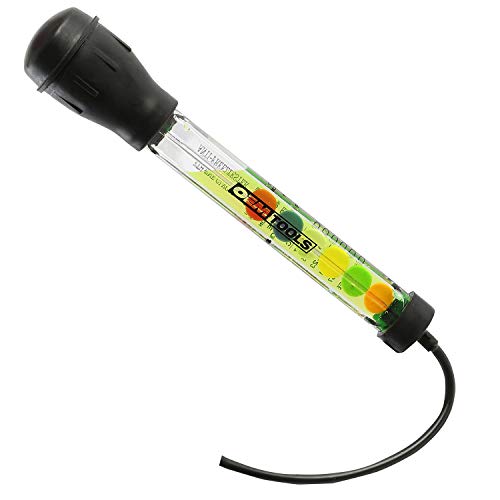
OEMTOOLS 25501 Antifreeze Tester
This compact ball float tester suits occasional home checks rather than daily shop use. Its 5 ball scale is calibrated around ethylene glycol coolant. Bulb and dip tube need no batteries or calibration.
Pros
- Pocket sized and easy to store in a glovebox
- Inexpensive way to check freeze protection at home
- Squeeze bulb design skips calibration entirely
Cons
- Ethylene glycol focus limits accuracy on propylene glycol coolant
- Small floating balls are hard to read in dim light
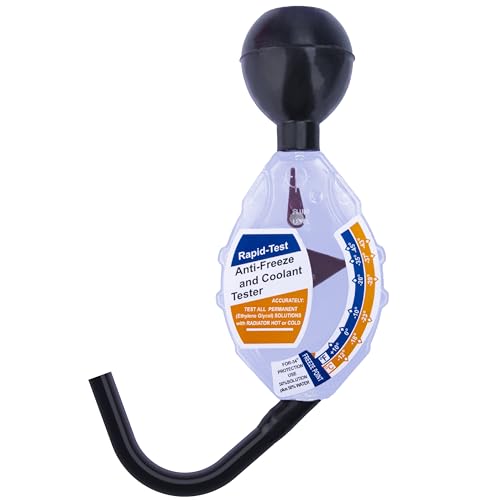
ATE Pro USA 70075 Antifreeze Tester
Repeated shop use shaped this ball tester, down to its reinforced dip tube and storage case. Both ethylene glycol and propylene glycol read on the same ball scale. Technicians running several vehicles a day get a quick pass or fail reading between jobs.
Pros
- Reinforced tube holds up to daily shop use
- Dual glycol rating covers most vehicles on one lot
- Storage case keeps the tester clean between checks
Cons
- Larger footprint than a glovebox tester
- Ball scale still needs a steady hand to read

Mityvac MV4536 Coolant Test Kit
Propylene glycol antifreeze, common in RV and pet-safe coolant, gets its own scale on this tester. Ethylene glycol mixes read on the same floating ball chamber. A printed reference card cross-checks freeze point against outside temperature.
Pros
- Dedicated propylene glycol scale suits RV and pet-safe coolant
- Also reads standard ethylene glycol mixes
- Printed reference card simplifies freeze point lookup
Cons
- Narrower glycol focus than dual-purpose testers
- Ball float reading still trails refractometer precision

Robinair 75700 Digital Coolant Refractometer
A digital sensor replaces the manual eyepiece here, showing freeze point on an LCD screen. Automatic temperature compensation adjusts the reading as shop conditions change. Battery electrolyte concentration also reads on the same digital scale.
Pros
- Digital LCD removes the guesswork of lining up an optical scale
- Automatic temperature compensation keeps readings consistent across shop temperatures
- Reads both coolant glycol types and battery electrolyte
Cons
- Costs more than single purpose ball testers
- Depends on a battery that needs periodic replacement
How to pick the right one
How Do Coolant Testers Read Antifreeze Protection? Three basic designs dominate this category. A ball float tester, like the Lisle 39970, floats weighted balls in a coolant sample, and the count that floats shows freeze protection. A manual refractometer, such as the Amproad 3-in-1, reads a drop of coolant through a prism and eyepiece scale. Digital units, including the Robinair 75700, swap that eyepiece for an electronic sensor and LCD readout.
Ethylene Glycol vs Propylene Glycol: Which Testers Cover Both? Most vehicles run ethylene glycol antifreeze, while some RVs and pet-safe blends use propylene glycol instead. Budget ball testers, like the Cal-Van Tools 216 and OEMTOOLS 25501, read ethylene glycol only. Lisle’s 39970 and the Mityvac MV4536 add a propylene glycol scale, so one tool covers both fluids without a second purchase.
Is a Refractometer More Accurate Than a Ball Float Tester? Refractometers read a refractive index directly, and automatic temperature compensation offsets shop temperature swings that would otherwise skew the number. Ball float testers rely on balls that can stick together or sit at odd angles, making borderline readings harder to trust. Close calls near a freeze point cutoff favor a refractometer like the Robinair 75700 or Amproad 3-in-1 over counting balls.
Which Coolant Tester Fits Shop Use vs a Quick Glovebox Check? Shops running several vehicles a day benefit from a reinforced tester such as the ATE Pro USA 70075, built for repeated dip tube use without cracking. A single vehicle owner typically only needs an occasional check, so a compact tester like the OEMTOOLS 25501 stored in the glovebox covers that case. Between those extremes, the Lisle 39970 balances durability with a low enough cost for occasional DIY use.
Side by side
| # | Model | Type | Best for | Score | Price |
|---|---|---|---|---|---|
| 1 | Lisle 39970 Coolant Test Kit | Ball float tester | Best overall | 9.4 | Check price |
| 2 | Amproad 3-in-1 Antifreeze Coolant Tester Refractometer | Manual optical refractometer | Best value | 9.2 | Check price |
| 3 | Cal-Van Tools 216 Battery and Antifreeze Tester | Squeeze bulb ball float tester | Best budget | 9.0 | Check price |
| 4 | OEMTOOLS 25501 Antifreeze Tester | Ball float tester | Best for quick DIY checks | 8.8 | Check price |
| 5 | ATE Pro USA 70075 Antifreeze Tester | Ball float tester, shop grade | Best for shop and professional use | 8.6 | Check price |
| 6 | Mityvac MV4536 Coolant Test Kit | Ball float tester | Best for propylene glycol RV and pet-safe coolant checks | 8.3 | Check price |
| 7 | Robinair 75700 Digital Coolant Refractometer | Digital optical refractometer | Best for precise digital reading | 8.0 | Check price |
Good to know
What does a coolant tester actually check?
A coolant tester measures how much freeze protection antifreeze still provides in a cooling system. Ball float, refractometer and digital designs report this differently, but each confirms whether the mix will hold up in cold weather.
How do ball float coolant testers work?
A coolant sample fills a chamber holding several weighted balls. The number of balls that float corresponds to a freeze point range printed on the tester body, similar to the Lisle 39970 scale.
Is a refractometer more accurate than a ball tester for coolant?
Refractometers read refractive index directly and use automatic temperature compensation, giving a steadier number than counting floating balls. Ball testers still work for a quick pass or fail check between refractometer readings.
Can a coolant tester check propylene glycol antifreeze?
Not every tester covers propylene glycol. Budget ball testers like the Cal-Van Tools 216 read ethylene glycol only, while the Lisle 39970 and Mityvac MV4536 add a propylene glycol scale.
Do coolant refractometers need calibration?
Manual refractometers like the Amproad 3-in-1 include a calibration screwdriver, since the zero point can drift over time. Digital units such as the Robinair 75700 use automatic temperature compensation to cut down how often manual calibration is needed.
Which coolant tester also checks battery electrolyte?
Several refractometers cover both fluids on separate scales. The Amproad 3-in-1 and Robinair 75700 both read battery electrolyte specific gravity alongside coolant freeze point.
What freeze point range should a coolant tester cover?
Look for a tester rated to at least -34F for standard 50/50 antifreeze mixes, though heavier concentrations can reach -60F. The Robinair 75700 lists a -60F to 32F range on its digital scale.
Are ball float coolant testers accurate enough for routine checks?
Ball float testers give a usable estimate for routine checks, though sticking balls can understate protection slightly. A refractometer offers a more precise second opinion for a borderline reading near a freeze point cutoff.
Which coolant tester works best for a home garage?
A basic ball float tester like the Lisle 39970 or OEMTOOLS 25501 suits most home garages, since neither needs batteries or calibration. Multi-vehicle households with mixed glycol types get more use from a dual scale design.
Ball tester or refractometer: which should I buy?
A ball tester covers a quick pass or fail check without extra steps. A refractometer costs more but gives a tighter number, which matters more for shops or borderline readings near a freeze cutoff.
Our pick
A ball float tester such as the Lisle 39970 suits most driveways without batteries or calibration fuss. Shops and multi-fluid households gain more from a refractometer like the Amproad 3-in-1 or the digital Robinair 75700. Match glycol coverage and freeze point range to your actual coolant before buying.



