Hard Sided vs Soft Sided Coolers for Camping Trips
The YETI Tundra 45 leads on multi-day ice retention and a near indestructible rotomolded build. The RTIC 52 QT delivers close to that performance for less money. The Coleman Xtreme is the value pick owners recommend for casual weekend trips.
Multi-day ice retention and thick rotomolded walls put the YETI Tundra 45 at the top of most camping cooler shortlists. Close behind sit the RTIC 52 QT and the budget-friendly Coleman Xtreme, proof that overspending isn’t required to keep food cold through a weekend.
Choosing a camping cooler gets tricky because the specs that matter most, insulation thickness, gasket seal and latch quality, rarely show up clearly in a product photo. A cooler that fails on day two means spoiled food far from home. We compared published specifications, insulation type, capacity, weight and warranty coverage, then weighed those against what long-term owners consistently report about real-world ice life and handling.
The shortlist, ranked

YETI Tundra 45
Most other coolers get measured against this one. A rotomolded shell and up to 3 inches of PermaFrost insulation give it the multi-day ice retention owners consistently report. T-Rex latches and rubber feet feel built to survive years of rough campsite use.
Pros
- Excellent multi-day ice retention reported by owners
- Extremely rugged rotomolded construction
- Bear-resistant certified design
Cons
- Heavy to carry when fully loaded
- Sits at the top of the price range

RTIC 52 QT
Rotomolded performance close to premium coolers comes at a noticeably lower price here. Thick closed-cell foam insulation earns strong multi-day ice life reports from owners, and the 52 quart capacity swallows enough food and drinks for a family weekend.
Pros
- Premium-style performance at a lower price
- Roomy 52 quart family capacity
- Heavy-duty T-latches and non-slip feet
Cons
- Bulky and heavy to move alone
- Shorter warranty than some rivals

Coleman Xtreme
Casual campers keep coming back to this one. An injection-molded design rather than rotomolded keeps weight down, yet an insulated lid and thick walls hold ice well for weekend trips at a fraction of the cost of premium boxes.
Pros
- Very affordable for the capacity
- Light enough for one person to load
- Cup holders molded into the lid
Cons
- Ice life trails rotomolded coolers
- Latch and hinges feel less rugged

Pelican Elite 50QT
Pelican built its reputation on protective cases, and that ethos carries into this cooler. Press-and-pull latches and a reinforced body draw praise from owners for shrugging off abuse, and a lifetime guarantee backs the shell.
Pros
- Lifetime guarantee on the cooler
- Secure press-and-pull latches
- Molded-in ruler and bottle openers
Cons
- One of the heavier coolers here
- Latches take some effort to open

ORCA 58 Quart
A rotomolded body pairs with an integrated cargo net and flex-grip handles, making longer expeditions more comfortable to haul. Large capacity and thick insulation make this a favorite among owners packing for multi-day base camps.
Pros
- Large capacity for extended trips
- Cargo net adds handy storage
- Comfortable flex-grip handles
Cons
- Big footprint eats trunk space
- Empty weight is significant
Igloo BMX 52 Quart
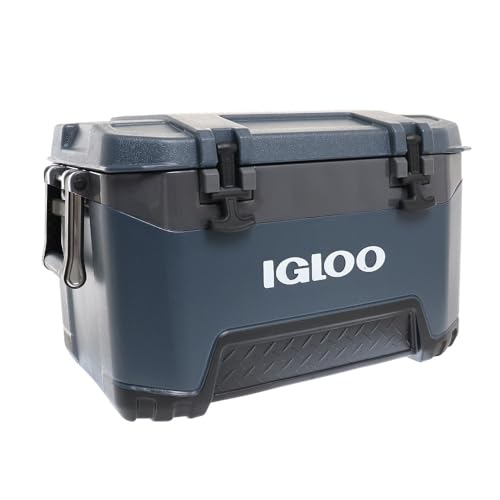
This one bridges the gap between basic coolers and pricey rotomolded boxes. A reinforced base, blow-molded body and rubberized latches give it a tougher feel than standard Igloo coolers, and steel handles suit two-person carries.
Pros
- Tougher build than basic coolers
- Sturdy tie-down and steel handles
- Reasonable price for the toughness
Cons
- Ice life below true rotomolded units
- Heavier than plain Igloo models

Lifetime High Performance 55 Quart
Rotomolded-style cold retention shows up here in a large family cooler that undercuts premium brands on price. A freezer-grade gasket seals well, and padded, foldable handles make loading a full box more manageable.
Pros
- Big capacity at a modest price
- Freezer-grade gasket seals well
- Comfortable folding side handles
Cons
- Large size is awkward to store
- Latches feel less refined than premium
How to choose
What actually separates one camping cooler from another? Ice retention is the single biggest performance gap between models, and it comes down to insulation thickness and gasket quality. Rotomolded coolers with two to three inches of foam and a full-perimeter seal, like the YETI Tundra and RTIC, routinely outlast injection-molded boxes. Trips longer than a weekend should prioritize insulation over almost everything else.
What size cooler fits your group and trip length? Capacity is usually listed in quarts or can count, but ice takes up roughly a third of that space. A 45 to 50 quart cooler suits a couple or small family for a weekend, while 55 quarts and up makes sense for larger groups or multi-day trips. Buying too large just means hauling dead weight and wasting ice.
How much does portability matter against raw performance? Thicker insulation and rugged shells add weight, so the toughest coolers are also the hardest to carry when full. Comfortable handles, whether padded rope grips or molded steel, help here, and a wheeled model suits a long walk from the car. Backcountry sites may call for a lighter injection-molded cooler instead.
Do latches, gaskets and warranty length actually signal longevity? Latches and hinges usually fail first, so rubberized T-latches and reinforced hinge pins are good signs of a longer-lasting cooler. A quality freezer-style gasket directly improves ice life too. Warranty length matters as a signal: a five-year or lifetime guarantee, like those from Pelican and ORCA, reflects manufacturer confidence in the build.
Compared at a glance
| # | Model | Type | Best for | Score | Price |
|---|---|---|---|---|---|
| 1 | YETI Tundra 45 | Rotomolded hard-side | Best overall | 9.4 | Check price |
| 2 | RTIC 52 QT | Rotomolded hard-side | Best value rotomolded | 9.2 | Check price |
| 3 | Coleman Xtreme | Injection-molded hard-side | Best budget pick | 9.0 | Check price |
| 4 | Pelican Elite 50QT | Rotomolded hard-side | Best for durability | 8.8 | Check price |
| 5 | ORCA 58 Quart | Rotomolded hard-side | Best for long trips | 8.6 | Check price |
| 6 | Igloo BMX 52 Quart | Blow-molded hard-side | Best rugged value | 8.4 | Check price |
| 7 | Lifetime High Performance 55 Quart | Rotomolded-style hard-side | Best big-capacity value | 8.2 | Check price |
Good to know
How long will a good camping cooler hold ice?
Based on specifications and owner reports, a quality rotomolded cooler can hold ice for several days when pre-chilled and kept out of direct sun, while a basic injection-molded cooler typically holds ice for one to two days. Actual results depend on ambient temperature, how often the lid opens and the ice-to-contents ratio.
Are rotomolded coolers worth it over standard coolers?
Frequent or multi-day campers get real value from rotomolded coolers through longer ice life and much tougher construction. Occasional weekend use often gets enough performance from a well-insulated model like the Coleman Xtreme without the premium price, so match the cooler to how often camping actually happens.
What size cooler do I need for camping?
A 45 to 52 quart cooler suits most couples and small families for a weekend, since ice occupies roughly a third of the interior. Larger groups or trips longer than two days generally benefit from 55 quarts or more. A second small cooler for drinks keeps the main box closed more often.
How should I pack a cooler to keep food cold longest?
Pre-chill the cooler and its contents, then use block ice on the bottom with cubed ice filling the gaps. Pack food in the order it gets used, keep the cooler in shade, and open it as little as possible. A full cooler holds cold better than a half-empty one.
Can these coolers double as extra seating or a table?
Most hard-side rotomolded and blow-molded coolers here have flat, reinforced lids that comfortably support an adult sitting or standing. Brands like YETI and Pelican design their lids to bear weight, but always confirm the lid is fully latched first, and avoid using lightweight injection-molded lids as seats.
Are any of these coolers bear resistant?
The YETI Tundra 45 carries a bear-resistant certification when used with the correct locks, making it a strong choice for camping in bear country. Other rotomolded models offer padlock points but may not be formally certified, so verify current certification and local regulations before relying on a cooler for food storage.
How do I clean and prevent odors in a camping cooler?
Empty and rinse the cooler after each trip, then wash the interior with warm water and mild soap, paying attention to the drain and gasket. A baking soda solution helps with lingering odors. Drying the cooler fully with the lid open before storage prevents mildew from forming.
Do more expensive coolers keep ice longer in hot weather?
Generally yes. Thicker insulation and tighter seals make a bigger difference in hot conditions than they do in mild weather. Owners in warm climates consistently report that rotomolded models like the Tundra and RTIC noticeably outperform basic coolers when temperatures climb, though smart packing still matters.
Should I get a cooler with wheels for camping?
Wheels help most when a long walk separates the parking area from the campsite, or when heavy loads get carried alone. The tradeoff is added weight and a tighter fit in a packed vehicle. Drive-up campsites with the car close by usually work fine with a standard cooler and sturdy handles.
The bottom line
The YETI Tundra 45 remains the top pick for camping given its long ice retention and near indestructible build, trustworthy on the most demanding trips. Budget-conscious campers get most of that performance for less from the RTIC 52 QT, while the Coleman Xtreme stands as the honest value choice for casual weekend outings.