Cordless Drills That Sink Screws Without Stalling
The DeWalt DCD777 kit is the pick for most homeowners, a light brushless drill with enough torque for everyday building and repairs. Milwaukee’s M18 FUEL 2804 pulls ahead for heavy work with more torque and a metal chuck. On a budget, the Ryobi ONE Plus HP delivers strong value.
Torque and battery platform matter more than a big number on the box. The DeWalt DCD777 kit suits most homeowners and DIY users, a light brushless drill that handles furniture, drywall and light building, though it lacks the raw grunt for constant heavy drilling. Milwaukee’s M18 FUEL 2804 steps up for pros and remodelers. Anyone starting a tool collection cheaply should weigh the Ryobi ONE Plus HP.
The battery platform you buy into locks you in more than the drill itself, since chargers and packs rarely cross brands. We compared peak torque against real fastening and drilling tasks, checked weight and chuck size for control and bit range, and read owner reports on runtime, clutch consistency and how each brand’s wider tool lineup fits future projects.
Our top picks
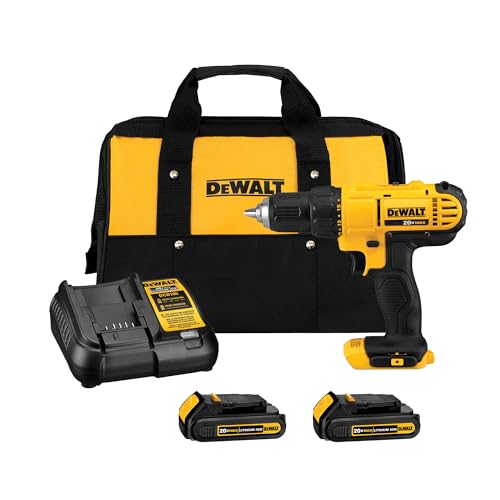
DeWalt DCD777C2 20V Max Cordless Drill
A brushless motor delivers efficient power in a compact body that fits between studs and inside cabinets. The kit ships with two compact batteries and a charger, ready to work out of the box. Its half inch chuck accepts common bits and spade bits for household tasks.
Pros
- Brushless motor extends runtime
- Compact and light for tight spaces
- Kit includes two batteries and charger
Cons
- Lacks torque for constant heavy drilling
- Plastic chuck less durable than metal

Milwaukee M18 FUEL 2804-20 Hammer Drill
A powerful brushless motor and a metal ratcheting chuck drive large fasteners and bore through hardwood without stalling. A hammer mode adds masonry drilling into brick and concrete. Sold as a bare tool, it fits owners already invested in the M18 battery platform.
Pros
- High torque for demanding tasks
- Metal chuck grips bits securely
- Hammer mode drills masonry
Cons
- Bare tool needs a battery and charger
- Heavier than compact DIY drills

Makita XFD131 18V LXT Cordless Drill
A brushless drill that pairs a usable torque figure with a compact, well balanced body many owners find comfortable over long sessions. A two speed transmission and a variable clutch cover fastening and drilling. The kit includes a battery, charger and a hard case.
Pros
- Well balanced and comfortable to hold
- Two speed transmission adds control
- Kit includes a hard carry case
Cons
- Ships with a single battery
- Torque trails the dedicated heavy duty picks

Bosch GSR12V-300 12V Cordless Drill
A 12V brushless drill built for reach and control in tight, overhead or detailed work where a full size drill tires the wrist. Its short head length gets into cabinets and corners. Lower voltage limits it to lighter drilling and fastening rather than heavy boring.
Pros
- Very light and easy to control
- Short head reaches tight spots
- Brushless motor despite small size
Cons
- 12V limits heavy drilling power
- Smaller chuck restricts large bits

Ryobi ONE Plus HP P252 Cordless Drill
A brushless drill on the ONE Plus platform, which shares one 18V battery across a large affordable tool range. Torque suits most home projects from decking to furniture. Buyers building a first cordless collection gain from the low cost of adding matching tools later.
Pros
- Batteries fit a huge tool lineup
- Strong value for the power offered
- Brushless motor at a budget price
Cons
- Clutch feel less refined than pro brands
- Often sold as a bare tool

Craftsman V20 CMCD700C1 Cordless Drill
A brushed 20V drill aimed at homeowners tackling occasional repairs, shelf hanging and flat pack furniture. A two speed gearbox and a variable clutch cover the basics. The kit bundles a battery and charger, making it ready to use straight away.
Pros
- Affordable ready to use kit
- Two speed gearbox for control
- Comfortable grip for occasional tasks
Cons
- Brushed motor is less efficient
- Not suited to heavy repeated use

Black and Decker LDX120C 20V Cordless Drill
A basic 20V drill for the lightest household jobs like assembling furniture and driving small screws at the lowest price here. An 11 position clutch helps avoid stripping screws. Modest torque and a single battery mark it as an occasional use tool rather than a daily driver.
Pros
- Lowest price for light home tasks
- 11 position clutch limits stripping
- Light and simple to operate
Cons
- Limited torque for tougher materials
- Smaller chuck and brushed motor
What matters most
What to look for in a cordless drill Torque decides whether a drill drives long screws and bores wide holes without stalling, so it matters more than voltage alone. A brushless motor runs cooler and stretches runtime versus an older brushed design. Chuck size sets the largest bit you can fit, with half inch handling more than three eighths. Weight affects control on overhead work and long sessions.
Why the battery platform matters most The drill is often the cheapest part of a system you keep expanding. Once you own a brand’s batteries and charger, adding a matching saw, sander or impact driver costs less. DeWalt 20V Max, Milwaukee M18, Makita LXT and Ryobi ONE Plus each span dozens of tools. Choose the platform whose wider lineup fits the projects you expect to take on.
Brushless versus brushed motors Brushless motors adjust power to the load, running longer per charge and lasting longer overall. Brushed motors cost less and suit occasional light use, as on the Craftsman and Black and Decker picks here. For anyone drilling weekly or driving many fasteners, brushless pays back in runtime and heat. Casual users saving money lose little with a brushed drill.
Drill driver versus hammer drill A standard drill driver covers wood, metal, drywall and fastening, which is most home work. A hammer drill adds a pulsing action for masonry, letting the Milwaukee M18 FUEL bore into brick and concrete. If you never touch masonry, the added weight and cost of hammer function is wasted. Buy it only when concrete anchors are on your list.
Compared at a glance
| # | Model | Voltage | Best for | Score | Price |
|---|---|---|---|---|---|
| 1 | DeWalt DCD777C2 20V Max Cordless Drill | 20V Max | Best overall | 9.3 | Check price |
| 2 | Milwaukee M18 FUEL 2804-20 Hammer Drill | 18V M18 | Best for heavy duty | 9.1 | Check price |
| 3 | Makita XFD131 18V LXT Cordless Drill | 18V LXT | Best balance | 8.9 | Check price |
| 4 | Bosch GSR12V-300 12V Cordless Drill | 12V | Best compact | 8.6 | Check price |
| 5 | Ryobi ONE Plus HP P252 Cordless Drill | 18V ONE Plus | Best value | 8.4 | Check price |
| 6 | Craftsman V20 CMCD700C1 Cordless Drill | 20V | Best for light DIY | 8.1 | Check price |
| 7 | Black and Decker LDX120C 20V Cordless Drill | 20V Max | Best budget | 7.8 | Check price |
Common questions
What torque do I need in a cordless drill?
For general home tasks, a drill with moderate torque handles furniture, drywall and light building. Boring large holes or driving long lag screws calls for a high torque model like the Milwaukee M18 FUEL that resists stalling under load.
Is a brushless drill worth the extra money?
For regular use, yes. Brushless motors run longer per charge, stay cooler and last longer. For occasional light jobs a brushed drill like the Craftsman V20 saves money without a meaningful downside.
What is the difference between 12V and 18V or 20V drills?
Lower 12V drills are lighter and reach tight spaces but offer less power. The 18V and 20V Max classes drive larger fasteners and bore wider holes. Note that 20V Max and 18V describe nearly the same battery, labeled differently by brand.
Should I buy a drill as a kit or bare tool?
Buy the kit if you own no batteries yet, since it includes a pack and charger. Choose the bare tool only when you already own compatible batteries, as with the Milwaukee M18 FUEL, to avoid paying for duplicates.
Do I need a hammer drill for home use?
Only if you drill into brick, block or concrete. A standard drill driver covers wood, metal and drywall. The hammer function on the Milwaukee M18 FUEL matters for masonry anchors and little else in typical home work.
Can I use one brand’s battery in another brand’s drill?
No. Batteries and chargers are proprietary to each platform, so a DeWalt pack will not fit a Makita drill. This is why choosing a battery ecosystem early affects the cost of every future tool you add.
What chuck size should a home drill have?
A half inch chuck suits most homeowners, accepting larger bits and hole saws. A three eighths inch chuck, as on some compact drills, is fine for lighter fastening but limits the biggest bits you can mount.
How long do cordless drill batteries last?
Runtime depends on the task and battery capacity, but lithium ion packs typically hold up for years of home use. Brushless drills stretch each charge further, and storing packs at a partial charge preserves their long term life.
Which cordless drill is best for beginners?
The DeWalt DCD777 kit suits most beginners with two batteries and enough power for everyday tasks. On a tighter budget the Ryobi ONE Plus HP gives strong value plus access to a large affordable tool range.
The bottom line
The DeWalt DCD777 kit is the pick for most homeowners, pairing a light brushless drill with two batteries and enough power for everyday building and repairs. Choose the Milwaukee M18 FUEL 2804 if you drill heavily or need masonry capability and already own M18 batteries. Beginners building a cheap tool collection should lean toward the Ryobi ONE Plus HP for its wide ecosystem.


