7 Cordless Shop Vacuums Compared for Garage and Jobsite Use
DEWALT’s DCV581H balances suction and portability for most garages. Milwaukee’s M18 FUEL 0940-20 adds pro-grade power for jobsite crews, and CRAFTSMAN’s CMCW020C1 covers basic wet and dry cleanup on a tighter budget. Tank size, filtration type and battery runtime separate these seven models most.
Garages, workshops and vehicle interiors all create different vacuum jobs, and cordless models trade a power cord for battery limits. DEWALT’s DCV581H, Milwaukee’s M18 FUEL 0940-20 and CRAFTSMAN’s CMCW020C1 cover most of that range, from daily driveway debris to wet spills after a pressure wash. Buyers who already own a battery platform often value compatibility over raw suction numbers.
Picking one is tricky because tank capacity, runtime and filter type all trade off against each other. Larger tanks add weight, and finer filters can slow airflow. We compared listed specifications, owner feedback on runtime and how each model handles debris, sawdust and liquid spills to separate real use cases from marketing claims.
How to choose
How Does a Cordless Shop Vacuum Compare to a Corded Model? A cordless shop vacuum trades an unlimited cord for battery runtime, typically 10 to 25 minutes per charge depending on suction mode. Motor wattage usually runs lower than corded shop vacuums to conserve that battery life. Owners who already carry a battery platform like DEWALT 20V MAX or RYOBI ONE+ skip buying a separate charger and pack.
What Tank Size and Filtration Should You Look For? Tank capacity ranges from under half a gallon in handheld models to 3 gallons in the RIDGID R860910. Larger tanks suit workshop debris and wet spills, but they add weight to carry. HEPA filters, found on the Milwaukee 0940-20 and Makita XCV11Z, matter most when fine dust comes from sanding or drywall work.
Which Cordless Vacuum Works Best for Woodworking Dust Collection? Woodworkers connecting a vacuum directly to a sander or circular saw need a hose that matches common tool ports. Suction also has to keep up with continuous dust output instead of tapering off. Makita’s XCV11Z addresses both with Automatic Speed Control, while standalone wet/dry models without that feature can bog down under steady dust flow.
When Does a Handheld Vacuum Beat a Full Shop Vacuum? Car interiors, garage shelves and small spills rarely need a multi-gallon tank. BLACK+DECKER’s BDCV1208B and RYOBI’s P770 stay under 4 pounds, so they store easily and come out quickly for daily messes. Once debris includes sawdust, standing water or bigger construction cleanup, a full-size shop vacuum still wins.
The top picks, ranked
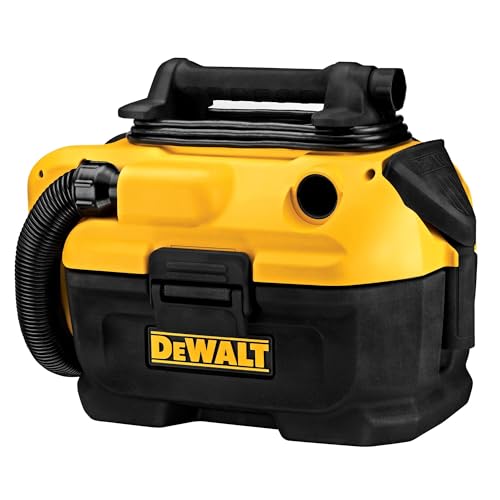
DEWALT DCV581H
DEWALT’s DCV581H runs on a 20V MAX battery and holds 2 gallons of wet or dry debris in a poly tank. A pleated filter captures fine dust, and a separate foam filter handles wet pickup. It ships tool-only, so runtime depends on which amp-hour battery you install.
Pros
- Fits existing DEWALT 20V MAX battery collection
- Handles both wet spills and dry debris
- Compact enough for one-handed use
Cons
- Sold as tool only, battery and charger extra
- Small tank needs frequent emptying on big jobs

Milwaukee M18 FUEL 0940-20
Milwaukee built the 0940-20 around a brushless motor and a 2.5-gallon tank for heavier debris loads. A HEPA filter traps fine dust, and a stair-climbing base keeps the unit steady on uneven surfaces. The same charge handles wet extraction and dry cleanup, according to Milwaukee’s specifications.
Pros
- Brushless motor sustains suction under load
- HEPA filtration suited to fine construction dust
- Stable base reduces tipping on stairs or ramps
Cons
- Heavier than compact handheld options
- Higher cost of entry than baseline 18V models

Makita XCV11Z
Two 18V LXT batteries wire together for 36V output on the XCV11Z, built to connect directly to sanders and saws. Its 2-gallon container includes a HEPA filter rated for silica dust collection. Automatic Speed Control adjusts suction to match whichever tool is attached.
Pros
- Automatic speed control syncs with power tools
- HEPA filtration suited to silica dust rules
- Runs on batteries most Makita owners already have
Cons
- Requires two batteries for full 36V output
- Not built for heavy wet pickup

RYOBI ONE+ P770
RYOBI built the P770 as a small wet/dry vacuum on its ONE+ 18V platform. Its compact tank suits quick cleanups rather than full workshop duty, and a crevice tool reaches tight corners in a truck bed or trunk. Low weight keeps it easy to carry one-handed between rooms.
Pros
- Shares batteries with the broad RYOBI ONE+ lineup
- Light enough for one-handed spot cleaning
- Low price of entry for occasional use
Cons
- Small tank limits continuous run time
- Not suited to heavy construction debris
BLACK+DECKER BDCV1208B
This 20V MAX handheld targets car interiors, garages and small spills rather than full shop duty. A washable filter sits behind a wide nozzle that pulls in crumbs and light debris. Its compact body stores easily in a glovebox or garage shelf between uses.
Pros
- Small size fits in a car or truck cab
- Washable filter avoids ongoing bag costs
- Quick to grab for small spills
Cons
- Not built for wet pickup or heavy dust
- Limited suction for larger garage cleanups
CRAFTSMAN CMCW020C1
CRAFTSMAN bundles a V20 battery and charger with this wet/dry vacuum for basic garage tasks. Debris pulls into a 1-gallon container through a foam filter rated for both wet and dry use. It works as an entry point for owners trying cordless cleanup for the first time.
Pros
- Kit includes battery and charger at purchase
- Handles both wet spills and dry debris
- Lighter weight than larger shop vac models
Cons
- Smaller tank than dedicated shop vacuums
- Suction trails premium brushless models

RIDGID R860910
RIDGID pairs its 18V platform with a 3-gallon tank on the R860910, larger than most cordless competitors. A locking hose connection reduces suction loss during wet pickup, and an included crevice tool handles corners and vehicle seats. Registering the vacuum unlocks RIDGID’s lifetime service agreement.
Pros
- Largest tank capacity in this lineup
- Locking hose reduces suction leaks
- Lifetime service agreement available on registration
Cons
- Sold as tool only, battery purchased separately
- Bulkier than compact handheld models
How they compare
| # | Model | Battery platform | Best for | Score | Price |
|---|---|---|---|---|---|
| 1 | DEWALT DCV581H | DEWALT 20V MAX | Best overall | 9.4 | Check price |
| 2 | Milwaukee M18 FUEL 0940-20 | Milwaukee M18 | Best for professional power | 9.2 | Check price |
| 3 | Makita XCV11Z | Makita 18V X2 LXT (36V) | Best for dust extraction and woodworking | 8.9 | Check price |
| 4 | RYOBI ONE+ P770 | RYOBI ONE+ 18V | Best for compact jobsite cleanup | 8.6 | Check price |
| 5 | BLACK+DECKER BDCV1208B | BLACK+DECKER 20V MAX | Best for handheld and car cleanup | 8.4 | Check price |
| 6 | CRAFTSMAN CMCW020C1 | CRAFTSMAN V20 | Best budget | 8.2 | Check price |
| 7 | RIDGID R860910 | RIDGID 18V | Best value for larger capacity | 8.0 | Check price |
Frequently asked questions
What is the difference between a cordless and corded shop vacuum?
Cordless models run on removable batteries and skip a power cord. They typically offer shorter continuous runtime and slightly lower suction than corded units plugged into an outlet.
Which cordless shop vacuum is best for wet and dry cleanup?
DEWALT’s DCV581H and RIDGID’s R860910 both include foam filters rated for wet pickup alongside dry debris. That makes them suited to garage spills and workshop dust.
How long does a cordless shop vacuum run on one charge?
Runtime depends on battery amp-hours and suction setting. Across the models compared here, listed specifications put that range between 10 and 25 minutes per charge.
Can a cordless shop vacuum handle sawdust from power tools?
Makita’s XCV11Z is built for this job. Automatic Speed Control and a HEPA filter keep suction steady when the vacuum connects directly to a sander or saw.
Is a cordless shop vacuum worth it for a garage?
For occasional cleanup and spill response, yes. Owners avoid dragging a cord across the floor, though a corded shop vacuum still suits daily heavy-duty use.
What is the best cordless shop vacuum for a car interior?
BLACK+DECKER’s BDCV1208B and RYOBI’s ONE+ P770 stay compact and lightweight. Both fit into a glovebox or trunk for quick crumb and debris pickup.
DEWALT DCV581H vs Milwaukee M18 FUEL 0940-20, which is better?
The DCV581H is lighter and more compact for general use. Milwaukee’s 0940-20 offers a larger 2.5-gallon tank and brushless motor suited to heavier professional debris.
Do cordless shop vacuums come with a battery included?
Some do and some do not. CRAFTSMAN’s CMCW020C1 ships as a kit with battery and charger, while the DEWALT DCV581H and RIDGID R860910 sell as tool only.
Are cordless shop vacuums as powerful as corded shop vacuums?
Not quite. Battery limits cap motor wattage compared with corded shop vacuums, so cordless models suit quick jobs better than hours of continuous heavy debris.
What size tank do I need in a cordless shop vacuum?
Match tank size to the job. Half a gallon covers car interiors and quick spills, while 2 to 3 gallons like the RIDGID R860910 suits full garage or workshop cleanup.
Our pick
DEWALT’s DCV581H suits most owners who want balanced size and suction in one package. Jobsite crews get more from the Milwaukee M18 FUEL 0940-20, and woodworkers connecting directly to power tools should look at the Makita XCV11Z. Anyone on a tighter budget can start with the CRAFTSMAN CMCW020C1.