Countertop RO Systems That Skip the Plumbing Work
AquaTru Classic delivers the most complete no-plumbing filtration for most kitchens, cutting TDS by up to 90 percent. Waterdrop N1 adds strong value through instant tankless delivery at 400 gallons per day. Bluevua’s RO100ROPOT-LITE suits budget shoppers, reducing TDS by up to 96 percent.
Countertop reverse osmosis units filter tap water without drilling into a sink or adding new plumbing. Seven models here range from pump-driven tankless designs to reservoir-based purifiers. TDS reduction spans 90 to 96 percent, and flow speed varies by design.
Filtration stages, NSF certifications, and filter costs vary widely between brands, which makes picking one tricky. We compared listed specifications, certification numbers, and owner-reported filter life to narrow this list. Certification numbers matter more than marketing claims when contaminant removal is the goal.
What matters most
How Countertop RO Filtration Stages Work Countertop reverse osmosis units typically run water through four to five stages. A sediment pre-filter strips rust and particles first, then a carbon block reduces chlorine taste. Next, a semi-permeable RO membrane forces water through microscopic pores to remove dissolved solids. Some systems add a post-carbon or remineralization step at the end. Look for NSF/ANSI 42, 53, 58, or 401 certification, since independent testing verifies chlorine, lead, TDS, and emerging contaminant claims.
No-Plumbing Setup vs a Faucet Adapter Most countertop RO systems here need no plumbing at all. Owners fill an internal reservoir or feed the unit from a pitcher, then plug it into a standard outlet. A few models, including the Waterdrop N1 and M5, offer an optional faucet adapter for continuous fill from the tap. Renters and anyone avoiding drilling tend to prefer no-plumbing designs. High-volume households often choose adapter-based setups instead, since they cut down on manual refilling.
How Often Do You Need to Replace RO Filters Filter life depends on the stage and the brand. Sediment and carbon pre-filters usually need replacement every six months. RO membranes last one to three years, depending on incoming water hardness. Membrane Solutions extends this further with extended-capacity cartridges, spacing out replacements and lowering long-term costs. Check each manufacturer’s gallon rating instead of relying on a calendar estimate alone.
Is Countertop RO Water Wasteful Reverse osmosis always sends some water to the drain during filtration. Pressure forces clean water through the membrane while concentrate carries rejected solids away. Tankless pump models like the Waterdrop N1 and M5 improve this ratio over older gravity-fed designs through electric pressure boosting. Waste ratios on newer countertop units commonly range from roughly 1:1 to 3:1, filtered to waste. That marks a major improvement over decade-old RO designs.
What we recommend

AquaTru Classic Countertop Reverse Osmosis Purifier
AquaTru Classic runs water through four reverse osmosis stages without any faucet or drain connection. A 3-liter reservoir holds finished water, and manufacturer testing shows TDS reduction up to 90 percent. NSF/ANSI 42, 53, 58, and 401 certifications back its contaminant reduction claims.
Pros
- No drilling or plumbing hookup required
- Removes lead, chlorine, and fluoride per NSF testing
- Digital filter change indicator on the display
Cons
- Reservoir requires manual refilling
- Initial unit cost is higher than faucet filters

Waterdrop N1 Countertop Reverse Osmosis System
Waterdrop N1 skips a storage tank, using an internal pump to filter on demand at up to 400 gallons per day. Five filtration stages, including an RO membrane, cut TDS by up to 93 percent. A built-in digital meter displays real-time TDS readings.
Pros
- Tankless design delivers filtered water without waiting
- Built-in digital TDS meter tracks performance
- Five-stage filtration reduces TDS by up to 93 percent
Cons
- Requires an electrical outlet for the pump
- Faucet adapter kit sold separately in some bundles

Bluevua RO100ROPOT-LITE Countertop RO System
Bluevua’s RO100ROPOT-LITE packs four RO stages into a compact tankless unit rated at 100 gallons per day. TDS reduction reaches up to 96 percent according to the manufacturer. Its smaller housing fits tight counters without cutting core filtration steps.
Pros
- Lower upfront cost than most countertop RO systems
- Compact tankless footprint fits tight counters
- Reduces TDS by up to 96 percent, among the highest here
Cons
- RO membrane needs replacement more often than higher-end models
- No digital display for filter tracking
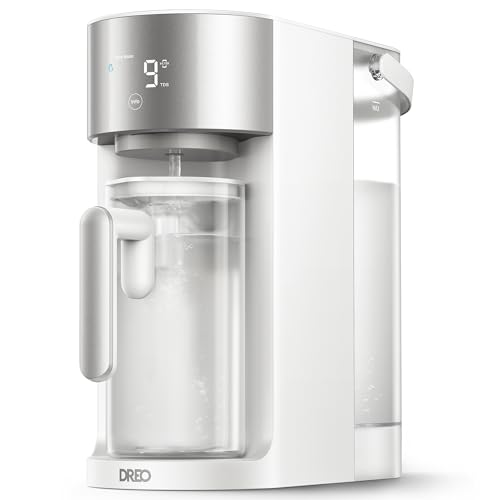
Clearly Filtered Countertop RO System
Clearly Filtered pairs a standard 4-stage RO membrane with its own Affinity Filtration media. Together they target over 300 contaminants, including lead, chromium-6, and PFAS. TDS reduction reaches up to 95 percent, and filter sets need replacement roughly every six months.
Pros
- Tested against 300 plus contaminants including PFAS
- Targets heavy metals beyond standard RO reduction
- Reduces TDS by up to 95 percent alongside broader contaminant coverage
Cons
- Filter sets cost more to replace than competitors
- Slower fill time than tankless pump models

Waterdrop M5 Countertop RO System
Waterdrop M5 plugs into any outlet and fills from a pitcher or faucet without permanent installation. An internal pump pushes water through five filtration stages fast enough to fill a glass in under a minute. TDS reduction reaches up to 92 percent.
Pros
- Fills a glass in under a minute using the internal pump
- Works anywhere near an outlet, including offices
- Five-stage filtration needs no permanent plumbing connection
Cons
- Pump generates audible noise during operation
- Still needs an outlet, so it is not fully portable

Brondell H2O+ Cypress Countertop RO System
Brondell’s H2O+ Cypress fits narrow counters thanks to a housing under 10 inches wide. Four RO stages include an optional remineralization step and cut TDS by up to 90 percent. Its smaller reservoir suits households of one or two people.
Pros
- Slim housing fits narrow counter spaces
- Optional remineralization stage adds calcium and magnesium back
- Compact design suits one or two person households
Cons
- Smaller reservoir means more frequent refills
- Slower flow rate than tankless pump systems
Membrane Solutions Countertop Reverse Osmosis System
Membrane Solutions builds its countertop unit around extended-capacity cartridges rated for longer service than most competitors. Four RO stages cut TDS by up to 90 percent. Pre-filters last about 12 months, and the RO membrane is rated for up to 36 months.
Pros
- Extended-capacity cartridges reduce replacement frequency
- Lower long-term filter costs based on gallon rating
- Pre-filters last twice as long as typical 6-month cartridges
Cons
- Brand offers less name recognition than established competitors
- Customer support response times vary per owner reports
How they stack up
| # | Model | Filtration stages | Best for | Score | Price |
|---|---|---|---|---|---|
| 1 | AquaTru Classic Countertop Reverse Osmosis Purifier | 4-stage reverse osmosis | Best overall | 9.4 | Check price |
| 2 | Waterdrop N1 Countertop Reverse Osmosis System | 5-stage reverse osmosis | Best value | 9.1 | Check price |
| 3 | Bluevua RO100ROPOT-LITE Countertop RO System | 4-stage reverse osmosis | Best budget | 8.8 | Check price |
| 4 | Clearly Filtered Countertop RO System | 4-stage plus Affinity filtration | Best for lead and TDS reduction | 8.6 | Check price |
| 5 | Waterdrop M5 Countertop RO System | 5-stage reverse osmosis | Best fast fill, no plumbing needed | 8.4 | Check price |
| 6 | Brondell H2O+ Cypress Countertop RO System | 4-stage reverse osmosis with remineralization | Best compact for small kitchens | 8.2 | Check price |
| 7 | Membrane Solutions Countertop Reverse Osmosis System | 4-stage reverse osmosis | Best filter longevity | 8.0 | Check price |
Common questions
Does a countertop RO system need plumbing?
Most countertop RO systems need no plumbing. They plug into a standard outlet and fill from a reservoir or pitcher, and some brands add an optional faucet adapter for a direct tap feed.
How often do RO filters need replacing?
Sediment and carbon pre-filters typically last about six months. RO membranes last one to three years, depending on water quality and daily usage.
What TDS reduction percentage counts as good for drinking water?
Most countertop RO systems reduce TDS by 90 to 96 percent. A finished reading under 50 parts per million generally counts as good drinking water.
Can a countertop RO system remove lead?
Yes. Membranes rated to NSF/ANSI 53 or 58 are certified to reduce lead along with other heavy metals, provided filters stay on their replacement schedule.
Is reverse osmosis water safe to drink every day?
Yes, RO water is safe for daily drinking. Some systems, like the Brondell H2O+ Cypress, add a remineralization stage to restore calcium and magnesium afterward.
How much water does a countertop RO system waste?
Waste ratios on current countertop units commonly run from about 1:1 to 3:1, filtered to waste. Tankless pump models generally waste less than older gravity-fed designs.
Which countertop RO system works best in a small kitchen?
The Brondell H2O+ Cypress has one of the slimmest footprints in this lineup, fitting narrow counters near an outlet more easily than bulkier reservoir models.
Do countertop RO systems strip out essential minerals?
Standard RO membranes strip most minerals along with contaminants. Systems with a remineralization stage, like the Brondell H2O+ Cypress, add some minerals back afterward.
Is a tankless RO system better than a reservoir model?
Tankless models like the Waterdrop N1 and M5 deliver water on demand without a reservoir to refill. Reservoir models like the AquaTru Classic store a batch of filtered water, so no pump runs each time you pour a glass.
The bottom line
AquaTru Classic remains the strongest all-around pick for anyone wanting certified lead and chlorine reduction without plumbing. Buyers on a tighter budget can rely on the Bluevua RO100ROPOT-LITE, while the Membrane Solutions system suits owners who prioritize long filter life over brand recognition.