Top CPU Processors for Gaming, Work, and Everything Else
For most gamers, the AMD Ryzen 7 7800X3D stands out as the top pick, offering exceptional gaming performance with its 3D V-Cache technology, but it comes at a premium price and is less suited for heavy productivity workloads.
Choosing a CPU is the most critical decision for any PC build. It determines how fast your games run, how smoothly you multitask, and how quickly you render videos.
We compared the leading processors from AMD and Intel to help you find the right balance of performance and value for your needs.
What we recommend

AMD Ryzen 7 7800X3D
The Ryzen 7 7800X3D uses AMD’s 3D V-Cache technology to deliver outstanding gaming performance, often beating more expensive chips. Owners report it runs cool and efficient, though it costs more than standard CPUs and its productivity performance is not as strong as similarly priced alternatives.
Pros
- Exceptional gaming performance
- Very power efficient
- Easy to cool
Cons
- Premium price for gamers
- Productivity performance lags behind Intel

Intel Core i9-14900K
Intel’s flagship 14900K offers 24 cores and 32 threads, making it a beast for both gaming and heavy workloads. It can hit high boost clocks, but it runs hot and demands a strong cooling solution and a quality power supply.
Pros
- Top-tier multi-core performance
- High boost clocks for gaming
- Unlocked for overclocking
Cons
- Runs very hot
- High power consumption

AMD Ryzen 9 7950X
With 16 cores and 32 threads, the Ryzen 9 7950X is a productivity powerhouse. It excels in video editing, 3D rendering, and software compilation. Users note it runs hot under load, but its multi-core performance is outstanding.
Pros
- Excellent multi-core performance
- Great for content creation
- Efficient for its performance
Cons
- Expensive
- Requires good cooling

AMD Ryzen 5 7600
The Ryzen 5 7600 offers solid 6-core performance for 1080p gaming and everyday tasks at a reasonable price. It comes with a stock cooler, but owners recommend an aftermarket cooler for quieter operation.
Pros
- Great price-to-performance
- Efficient and cool
- Good for 1080p gaming
Cons
- Not as powerful for heavy multitasking
- Requires AM5 motherboard

Intel Core i5-14600K
The Core i5-14600K balances price and performance, with 14 cores and 20 threads. It handles gaming and streaming well, but it can run hot under sustained loads, so a good cooler is essential.
Pros
- Strong single-core performance
- Good for gaming and productivity
- Unlocked for overclocking
Cons
- Runs hot under load
- Power hungry compared to AMD

AMD Ryzen 5 5600X
The Ryzen 5 5600X remains a popular choice for budget builds, offering solid gaming performance at 1080p. It works with affordable AM4 motherboards, but it lacks the upgrade headroom of newer platforms.
Pros
- Very affordable
- Good gaming performance
- Low power consumption
Cons
- Older architecture
- Limited upgrade path
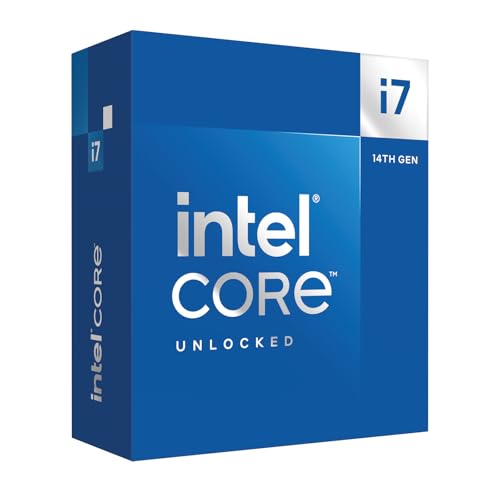
Intel Core i7-14700K
The Core i7-14700K offers a great mix of gaming and productivity performance with 20 cores and 28 threads. It is a step down from the i9 but delivers nearly the same gaming experience at a lower price, though it still runs hot.
Pros
- Excellent multi-core performance
- Great for gaming
- Good value vs i9
Cons
- Requires robust cooling
- Power consumption high
How they compare
| # | Model | Cores/Threads | Best for | Score | Price |
|---|---|---|---|---|---|
| 1 | AMD Ryzen 7 7800X3D | 8/16 | Gamers seeking maximum frame rates | 9.6 | Check price |
| 2 | Intel Core i9-14900K | 24/32 | Enthusiasts who need top productivity and gaming | 9.4 | Check price |
| 3 | AMD Ryzen 9 7950X | 16/32 | Content creators and multi-threaded tasks | 9.2 | Check price |
| 4 | AMD Ryzen 5 7600 | 6/12 | Budget builds without sacrificing much | 9.0 | Check price |
| 5 | Intel Core i5-14600K | 14/20 | Mid-range gaming and streaming | 8.9 | Check price |
| 6 | AMD Ryzen 5 5600X | 6/12 | Budget builds on a mature AM4 platform | 8.6 | Check price |
| 7 | Intel Core i7-14700K | 20/28 | Gamers who also do productivity work | 9.1 | Check price |
How to pick the right one
How to Choose a CPU First, determine your primary use. Gaming CPUs like the Ryzen 7 7800X3D prioritize single-core speed and cache, while productivity CPUs like the Ryzen 9 7950X offer more cores for multitasking. Consider your budget for the CPU and motherboard together, as newer sockets often cost more. Also, check if the CPU includes a cooler; many K-series Intel chips do not.
Understanding Cores and Threads More cores and threads allow your CPU to handle multiple tasks simultaneously. For gaming, six to eight cores is plenty. For video editing or 3D rendering, eight to sixteen cores will significantly reduce render times. Threads are virtual cores that help with multitasking, but they are not as powerful as physical cores.
Socket and Motherboard Compatibility Ensure the CPU fits your motherboard. AMD uses AM4 for older Ryzen chips and AM5 for the latest. Intel uses LGA 1700 for 12th, 13th, and 14th gen. Check your motherboard’s BIOS version to ensure it supports the CPU out of the box. Newer CPUs may require a BIOS update.
Power and Cooling Considerations High-end CPUs draw a lot of power and generate heat. You will need a quality power supply with enough wattage and a robust cooling solution. For unlocked K-series Intel chips, a 240mm or larger liquid cooler is recommended. Stock coolers are fine for budget CPUs but often insufficient for high-performance models.
Frequently asked questions
What is the best CPU for gaming?
The AMD Ryzen 7 7800X3D is widely considered the best gaming CPU due to its 3D V-Cache technology, which significantly boosts frame rates in many games.
Is Intel or AMD better for CPUs?
Both offer excellent options. Intel tends to lead in productivity performance with its high core counts, while AMD’s X3D chips excel in gaming. Your choice depends on your primary use and budget.
How many cores do I need in a CPU?
For gaming, six to eight cores is sufficient. For content creation, video editing, or heavy multitasking, consider eight to sixteen cores to handle demanding workloads.
What is the difference between a CPU and a GPU?
The CPU (Central Processing Unit) handles general computing tasks and logic. The GPU (Graphics Processing Unit) is specialized for rendering images and video. For gaming, both are important, but the CPU is often the bottleneck at lower resolutions.
Should I overclock my CPU?
Overclocking can give extra performance, but it increases heat and power consumption and may void your warranty. If you have a K-series Intel or AMD ‘X’ series CPU, you can overclock, but it is not necessary for most users.
Does the CPU come with a cooler?
Many AMD CPUs include a stock cooler, but Intel K-series chips and some high-end AMD chips do not. Always check the product listing. For high-performance CPUs, you will likely need an aftermarket cooler.
What is a good CPU for budget builds?
The AMD Ryzen 5 5600X is a great budget option for 1080p gaming, offering solid performance at a low price. Alternatively, the Ryzen 5 7600 provides better future-proofing on the AM5 platform.
How important is CPU cache size?
Cache size affects how quickly the CPU can access frequently used data. Larger cache can improve gaming performance, as seen in AMD’s X3D chips. However, for most tasks, cache size is less critical than core count and clock speed.
Can I use an Intel CPU in an AMD motherboard?
No, CPUs and motherboards are not interchangeable between brands. Intel CPUs require LGA 1700 boards, and AMD CPUs require AM4 or AM5 boards.
What is the best CPU for video editing?
For video editing, the AMD Ryzen 9 7950X is excellent due to its 16 cores, which significantly speed up rendering. The Intel Core i9-14900K is also a strong choice with its high core count and boost clocks.
The bottom line
If you are building a gaming rig and want the absolute best frame rates, choose the AMD Ryzen 7 7800X3D. For a balance of gaming and productivity, the Intel Core i7-14700K is the smart choice. Budget builders should grab the AMD Ryzen 5 5600X, while content creators will love the AMD Ryzen 9 7950X.