Top CPUs for Professionals: Power and Precision
For professionals who demand maximum performance, the AMD Ryzen 9 7950X stands out as the top pick. It offers 16 cores and 32 threads, delivering exceptional multi-core performance for rendering and compilation. However, it requires a powerful cooling solution and draws significant power.
Selecting the right CPU is critical for professional work. Whether you handle video editing, 3D rendering, or complex simulations, the processor dictates your workflow speed. We compared current models based on benchmarks and user feedback.
Our roundup covers 7 top CPUs for professionals. Each excels in specific tasks, from high core counts to strong single-thread performance. Read on to find the best match for your work.
How to choose
The best picks, ranked

AMD Ryzen 9 7950X
The Ryzen 9 7950X is a 16-core, 32-thread powerhouse. It delivers top-tier performance in rendering, video encoding, and code compilation. Users report excellent productivity gains, but it runs hot and demands a robust cooling solution.
Pros
- Exceptional multi-core performance
- High boost clock for snappy single-thread
- Supports PCIe 5.0 and DDR5
Cons
- High power consumption
- Requires high-end cooling
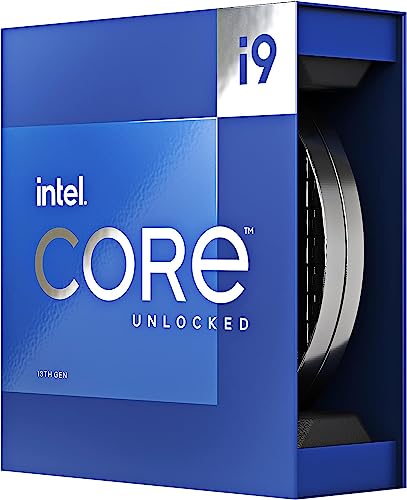
Intel Core i9-13900K
Intel’s Core i9-13900K combines 8 performance cores and 16 efficient cores. It offers strong single-thread performance and impressive multi-core capability. Owners praise its versatility, but it also runs hot and requires a good cooler.
Pros
- Excellent single-thread performance
- Great for gaming and productivity
- Overclocking potential
Cons
- Power hungry
- High heat output
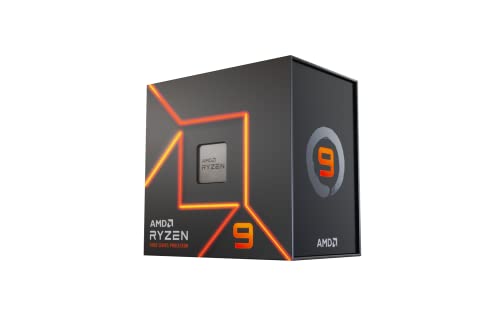
AMD Ryzen 9 7900X
The Ryzen 9 7900X offers 12 cores and 24 threads, providing excellent performance for professional tasks without the extreme power draw of its bigger sibling. It is a favorite among content creators for its price-performance ratio.
Pros
- Strong multi-core performance
- Lower power consumption than 7950X
- Supports DDR5 and PCIe 5.0
Cons
- Not as fast as 7950X in heavy rendering
- Requires cooling for sustained load

Intel Core i7-13700K
The Core i7-13700K features 16 cores (8P+8E) and 24 threads. It delivers near-flagship performance at a lower price. Users find it excellent for video editing and software development, offering great value.
Pros
- Excellent price-to-performance
- Strong multi-core for the price
- Good for gaming and work
Cons
- Fewer cores than top models
- Requires adequate cooling
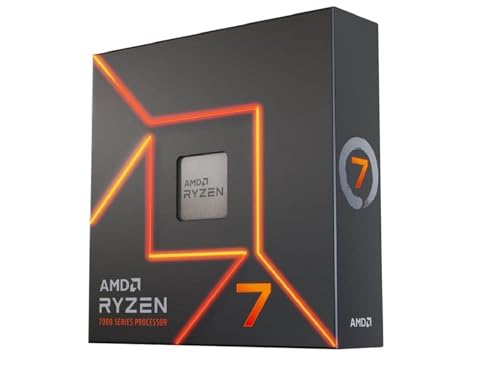
AMD Ryzen 7 7700X
With 8 cores and 16 threads, the Ryzen 7 7700X offers solid performance for professional tasks. It is more power-efficient than its higher-core counterparts, making it a good choice for compact workstations.
Pros
- Efficient power consumption
- Good single-thread performance
- Supports DDR5 and PCIe 5.0
Cons
- Fewer cores for heavy multitasking
- Not as fast as 7900X in multi-core

Intel Core i5-13600K
The Core i5-13600K provides 14 cores (6P+8E) and 20 threads, offering impressive performance for the price. It handles most professional tasks well, including light rendering and programming.
Pros
- Great value for performance
- Strong single-thread speed
- Overclocking support
Cons
- Limited multi-core for heavy workloads
- Requires aftermarket cooler for best performance

AMD Ryzen 5 7600X
The Ryzen 5 7600X is a 6-core, 12-thread processor that offers solid performance for everyday professional tasks. It is a great option for those who do not need extreme multi-core power but want modern platform features.
Pros
- Very efficient
- Good for 1080p gaming and light work
- Cheaper platform (B650 boards)
Cons
- Not enough cores for heavy multitasking
- Less future-proof
How they stack up
| # | Model | Cores | Best for | Score | Price |
|---|---|---|---|---|---|
| 1 | AMD Ryzen 9 7950X | 16 | Best overall for demanding multi-threaded work | 9.4 | Check price |
| 2 | Intel Core i9-13900K | 24 (8P+16E) | Best for gaming and productivity hybrid workloads | 9.2 | Check price |
| 3 | AMD Ryzen 9 7900X | 12 | Best for balanced power and efficiency | 9.0 | Check price |
| 4 | Intel Core i7-13700K | 16 (8P+8E) | Best for professionals on a budget | 8.8 | Check price |
| 5 | AMD Ryzen 7 7700X | 8 | Best for efficient productivity | 8.6 | Check price |
| 6 | Intel Core i5-13600K | 14 (6P+8E) | Best for entry-level professional work | 8.4 | Check price |
| 7 | AMD Ryzen 5 7600X | 6 | Best for light professional tasks | 8.0 | Check price |
Questions worth asking
What CPU is best for video editing?
For video editing, a CPU with high multi-core performance, like the AMD Ryzen 9 7950X or Intel Core i9-13900K, is ideal. They handle rendering and encoding faster.
Is Intel or AMD better for professional work?
Both offer excellent options. Intel’s 13th gen provides strong single-thread performance, while AMD’s Ryzen 7000 series offers high core counts and efficiency. The choice depends on your specific tasks and budget.
Do I need a dedicated GPU for professional tasks?
Some tasks like 3D rendering and video editing benefit from a powerful GPU. However, the CPU is still crucial for overall system responsiveness. Many professional workflows require both.
How many cores do I need for programming?
For general programming, 6 to 8 cores are sufficient. For heavy compilation or running virtual machines, consider 12 cores or more, such as the Ryzen 9 7900X.
What is the difference between base clock and boost clock?
Base clock is the minimum speed at which the CPU runs under normal load. Boost clock is the maximum speed it can reach under certain conditions, like when only a few cores are active. Higher boost clocks improve single-thread performance.
Should I buy the latest generation CPU?
Latest generation CPUs offer improved performance and features, but previous generations can be more affordable. For professionals, the latest often provides significant gains, but consider your budget and workload.
What is TDP?
TDP stands for Thermal Design Power, indicating the maximum heat a CPU generates under load. It helps you choose an appropriate cooler. High TDP CPUs require robust cooling solutions.
Can I overclock my professional CPU?
Yes, if you have a motherboard that supports overclocking (Intel K series and AMD ‘X’ series). Overclocking can boost performance but increases heat and power consumption. Ensure adequate cooling.
What is the best CPU for 3D rendering?
For 3D rendering, prioritize core count. The AMD Ryzen 9 7950X with 16 cores is excellent. The Intel Core i9-13900K is also strong. GPU rendering may also be used, but the CPU handles physics and scene preparation.
Are more threads always better?
Not always. Some software does not utilize many threads effectively. However, for multi-tasking and multi-threaded applications, more threads help. Check your software’s optimization.
Our take
For professionals requiring the best performance, the AMD Ryzen 9 7950X is the clear choice. Its 16 cores and 32 threads accelerate rendering, compiling, and data analysis. If your work is more varied and you also game, the Intel Core i9-13900K offers a fantastic balance. For those on a tighter budget, the Intel Core i7-13700K provides excellent multi-core performance without breaking the bank.


