Crampons for Winter Hiking and Technical Ice Climbs
The Petzl Vasak is the strongest all round mountaineering crampon, with twelve points and a binding system that fits most boots. The Black Diamond Contact suits general winter hiking on a lighter frame, while the Grivel G12 remains a proven choice for classic alpine routes.
The Petzl Vasak is the crampon most winter mountaineers should own, with the Black Diamond Contact for lighter hiking use and the Grivel G12 for classic alpine terrain.
Crampons are one of the few pieces of outdoor gear where a wrong purchase is a safety problem rather than an inconvenience, because the binding must match your boot’s welt and the frame must match its stiffness. We compared binding types, point configuration, steel versus aluminium construction and anti balling plates, then weighed those specifications against what owners report about fit, durability and front point performance on steep ice.
What we recommend

Petzl Vasak Crampons
The Vasak is the classic general mountaineering crampon, with twelve points including horizontal front points that give secure purchase on snow slopes and moderate ice. Petzl offers it in multiple binding versions so it fits everything from a semi rigid hiking boot with a heel welt to a full technical boot. Owners report the anti balling plates are among the more effective at shedding wet snow.
Pros
- Versatile across snow slopes and moderate ice
- Binding versions for most boot types
- Effective anti balling plates
Cons
- Heavier than aluminium hiking crampons
- Horizontal front points are less precise on steep ice
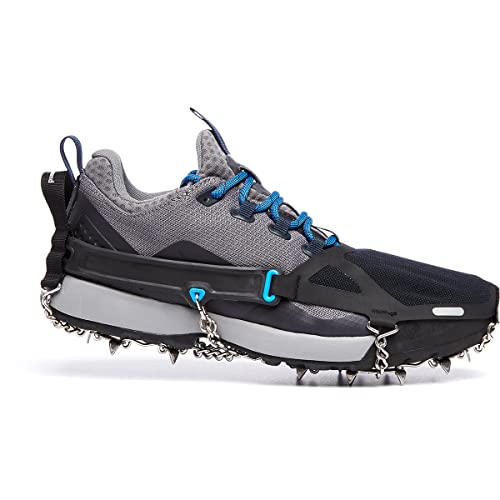
Black Diamond Contact Crampons
The Contact is built for glacier travel and general winter walking rather than steep technical ground, with a simple strap binding that fits a wide range of boots including many that lack welts. Its lighter frame is noticeably easier to carry on a long approach. Based on specifications it is the most accessible crampon here for hikers moving into winter terrain.
Pros
- Fits a wide range of boots including flexible ones
- Light enough for long approaches
- Simple binding is easy with cold hands
Cons
- Not suited to steep technical ice
- Strap binding is slower to fit than step in

Grivel G12 Crampons
The G12 has been a standard alpine crampon for decades, with twelve points and a robust steel frame that handles mixed rock and ice without deforming. Its secondary points are angled to bite well on the descent as well as the ascent. It is a straightforward, durable crampon that many guides still carry.
Pros
- Durable across mixed rock and ice
- Angled secondary points help on descent
- Multiple binding versions available
Cons
- Heavier than modern lightweight designs
- Adjustment bar needs a tool on some versions

Petzl Irvis Hybrid Crampons
The Irvis Hybrid combines a steel front section for bite where it matters with an aluminium heel section to cut weight for touring and long approaches. That construction gives most of the security of a steel crampon at a fraction of the pack weight. It is not the crampon for sustained rocky mixed ground, where the aluminium heel wears faster.
Pros
- Very light for the security offered
- Steel front points keep real bite
- Fast step in binding
Cons
- Aluminium heel wears on rock
- Requires boots with a heel welt

Kahtoola KTS Steel Hiking Crampons
Kahtoola designed the KTS around flexible hiking boots and even trail shoes, using a hinged flex bar that moves with the sole rather than fighting it. That makes them the right answer for shoulder season hikes on frozen trails where a rigid mountaineering crampon would be unstable. They are not intended for technical alpine climbing.
Pros
- Works with flexible boots and trail shoes
- Comfortable over long trail miles
- Packs relatively flat
Cons
- Not rated for technical climbing
- Straps need retightening during a day

Camp USA Stalker Universal Crampons
Camp builds the Stalker Universal with a strap binding that fits almost any boot, which makes it a practical first crampon when your footwear is not yet decided. Twelve steel points cover general mountaineering and snow slope work. Owners report the strap system takes a little practice but holds securely once set.
Pros
- Fits nearly any boot including flexible soles
- Twelve points at a moderate price
- Anti balling plates included
Cons
- Strap binding takes time to fit correctly
- Heavier than premium alternatives

Hillsound Trail Crampon Ultra
This sits between traction devices and true mountaineering crampons, using a chain and elastomer harness with substantial spikes for frozen trails and packed snow. It slips on quickly over hiking boots and packs down small. It is a trail traction device rather than a climbing crampon, so it does not belong on steep alpine ground.
Pros
- Very fast to put on and take off
- Excellent on frozen and packed trails
- Packs small enough for a day pack
Cons
- Not a substitute for real crampons on steep ground
- Elastomer harness perishes over years
What matters most
Match the binding to your boot, not the other way round Crampons come in three broad binding types. Strap or universal bindings wrap over any boot including flexible ones. Hybrid or semi automatic bindings need a heel welt and use a toe strap. Fully automatic step in bindings need both a toe and heel welt and only fit stiff technical boots. Fitting a step in crampon to a boot without welts is not a compromise, it is a failure waiting to happen, so establish your boot type first.
Point configuration follows the terrain Ten point crampons cover glacier travel and snow slopes and are lighter to carry. Twelve point designs add front points for kicking into moderate ice and are the standard general mountaineering choice. Horizontal front points give stability on snow and moderate ice, while vertical mono or dual points are for steep technical ice and drytooling, where precision beats surface area. Choose for the hardest ground you will realistically cover.
Steel, aluminium and where each belongs Steel crampons bite hard ice and survive rock contact, which is why they dominate mountaineering. Aluminium saves substantial weight for ski touring and glacier travel but blunts fast on rock and is not recommended for hard water ice. Hybrid designs put steel where the load and abrasion are and aluminium where they are not, which is a good compromise for anyone counting pack weight.
Fitting, anti balling and safe use Fit crampons to your boots at home in daylight, adjust the centre bar to the correct length and check nothing shifts when you shake the boot. Anti balling plates matter more than people expect, since wet snow packing under the frame turns a crampon into a platform with no grip at all. Learn flat footing and front pointing technique, carry an ice axe on any ground steep enough to need crampons, and keep the points covered in your pack to protect gear and hands.
Side by side
| # | Model | Points | Best for | Score | Price |
|---|---|---|---|---|---|
| 1 | Petzl Vasak Crampons | 12, horizontal front points | Best overall | 9.4 | Check price |
| 2 | Black Diamond Contact Crampons | 10, horizontal front points | Best for winter hiking | 9.2 | Check price |
| 3 | Grivel G12 Crampons | 12, horizontal front points | Best for classic alpine routes | 9.0 | Check price |
| 4 | Petzl Irvis Hybrid Crampons | 10, hybrid construction | Best for ski touring | 8.8 | Check price |
| 5 | Kahtoola KTS Steel Hiking Crampons | 10 | Best for flexible boots | 8.6 | Check price |
| 6 | Camp USA Stalker Universal Crampons | 12 | Best value | 8.3 | Check price |
| 7 | Hillsound Trail Crampon Ultra | 18 stainless steel spikes | Best for icy trails | 8.0 | Check price |
Good to know
What is the difference between crampons and microspikes?
Microspikes are traction devices with short chain mounted spikes for icy trails and packed snow. Crampons have longer steel points on a rigid or semi rigid frame that penetrate hard snow and ice, and they are designed for slopes steep enough that a slip has serious consequences.
Do crampons fit any hiking boot?
No. Strap and universal binding crampons fit most boots including flexible ones, but semi automatic and step in bindings require heel and toe welts found only on stiffer mountaineering boots. Always check the binding type against your specific boot before buying.
How many points do I need?
Ten points cover glacier travel and snow slopes. Twelve points are the general mountaineering standard and add usable front points for moderate ice. Vertical front point designs are for steep technical ice climbing and are less comfortable for walking.
Are aluminium crampons safe?
For snow travel and ski touring, yes, and they save meaningful weight. They blunt quickly on rock and do not bite hard water ice reliably, so they are not the right choice for technical climbing or mixed terrain.
What are anti balling plates for?
They stop wet snow packing into the frame and forming a solid platform under the boot, which eliminates grip entirely. They are essential in warmer snow conditions and most quality crampons include them as standard.
Do I need an ice axe with crampons?
On any terrain steep enough to warrant crampons, yes. Crampons stop you slipping and an axe is what stops you if you do slip. Learning self arrest before relying on either is standard advice from every mountaineering instructor.
How should crampons be maintained?
Dry them thoroughly after every use to prevent rust, check the centre bar, bindings and rivets before each trip, and sharpen points with a hand file rather than a grinder, which overheats and softens the steel.
Can crampons be used with trail running shoes?
True crampons should not be. Some hiking specific models work with flexible footwear, but a soft sole flexes so much that the frame can detach or the points can twist. For trail shoes on icy paths, a traction device is the safer option.
The verdict
The Petzl Vasak is the crampon that covers the widest range of winter mountaineering safely, with twelve points, effective anti balling plates and binding versions to suit most boots. Take the Black Diamond Contact if you are stepping into winter hiking with flexible boots, or the Grivel G12 if you want a proven alpine workhorse.
