Crayon Sets That Survive Toddlers and Detailed Coloring
Crayola Crayons, 120 Count Coloring Set wins on color range and classroom durability. Filana 100% Non-Toxic Soy Crayons fit toddlers who still mouth objects. Crayola Ultra-Clean Washable Crayons handle stray marks on walls and clothing. Wax material, age labeling, and washability separated these seven picks.
Crayola Crayons, 120 Count Coloring Set gives families the widest color range for school projects, but its paraffin wax formula will not wash off walls or fabric.
Cleanup needs and choking risk shift with a child’s age, so specs compared here include documented wax materials, ASTM D-4236 labeling, color counts, and washability claims measured against owner feedback.
What we recommend

Crayola Crayons, 120 Count Coloring Set
A two-tier caddy holds 120 uniquely colored crayons plus a built-in sharpener. Paraffin wax glides smoothly across paper but resists soap and water once pressed into walls or fabric. Detailed coloring books and school art projects benefit most from the wide color spread.
Pros
- 120 unique colors cover fine shade variation for detailed coloring books
- Two-tier caddy with built-in sharpener keeps crayons organized and short
- Sturdy paraffin wax holds a point longer than softer soy-based sticks
Cons
- Does not wash off walls or fabric once pressed in
- Paraffin sticks can snap if dropped on a hard floor

Filana 100% Non-Toxic Soy Crayons, Jumbo, 8 Count
Each jumbo stick measures a wider diameter than standard crayons, built for toddlers still working on a full-hand grip. Soybean oil wax replaces paraffin, and rounded blunt ends soften any sharp edge from a broken piece. Eight colors ship in the set, fewer than most mainstream boxes.
Pros
- Wide jumbo barrel suits toddlers still using a fist grip
- Soybean oil wax lowers ingestion risk compared to paraffin
- Blunt rounded tips reduce sharp edges if a stick breaks
Cons
- Only 8 colors limits variety for older kids’ projects
- Costs more per crayon than mainstream 24 count boxes

Crayola Ultra-Clean Washable Crayons, 24 Count
A reformulated wax binder in this 24 count box washes off skin, most painted walls, and washable fabric with soap and water. Standard cylindrical shape fits common sharpeners and crayon boxes. Owners comparing the two lines report slightly lighter color payoff than Crayola’s non-washable sticks.
Pros
- Washable formula lifts off most walls and washable fabric
- Standard cylindrical shape fits common sharpeners and boxes
- Reformulated binder still glides similarly to standard crayons
Cons
- Color payoff runs lighter than Crayola’s non-washable line
- Formula does not fully remove from unsealed wood or porous surfaces
Prang Crayons, 24 Count
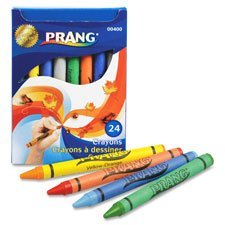
A soybean oil base sets Prang apart from paraffin-based competitors, and owners say it spreads more evenly during shading and blending. Recycled paperboard packaging houses the 24 count box. Nothing on the label markets these sticks as washable off walls or clothing.
Pros
- Soybean oil base spreads more evenly for shading and blending
- Recycled paperboard packaging reduces plastic use
- Bold single-stroke pigment payoff reported by owners
Cons
- Not washable from walls or clothing
- Softer wax wears down faster than paraffin sticks

Honeysticks Natural Beeswax Crayons, 12 Count
Pure beeswax sourced in New Zealand replaces synthetic dye with plant-based pigment across this set. Short, rounded sticks fit children as young as 12 months. Twelve colors cover primary and basic secondary shades, not detailed shading work.
Pros
- Beeswax and plant dyes avoid petroleum-derived paraffin
- Short rounded shape lowers puncture risk if dropped
- Marketed safe for children as young as 12 months
Cons
- 12 color set limits range for older kids’ detailed work
- Priced higher per crayon than synthetic dye alternatives
Faber-Castell Jumbo Triangular Crayons, 10 Count
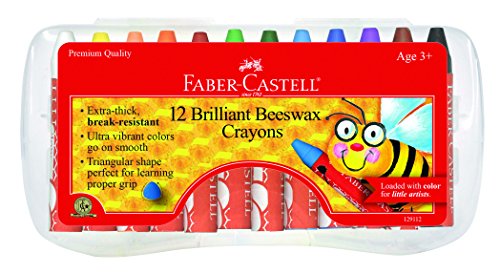
A triangular barrel stops each crayon from rolling off a desk and nudges kids toward a three-finger grip similar to holding a pencil. Jumbo diameter resists snapping under a toddler’s grip pressure. Ten core colors ship in the set, fewer than standard-sized boxes.
Pros
- Triangular barrel teaches a pencil-style three-finger grip
- Wide diameter resists snapping under toddler grip pressure
- Shape stays put on angled desks instead of rolling away
Cons
- 10 color count limits variety for detailed drawings
- Bulky shape does not fit standard crayon sharpeners
Cra-Z-Art Crayons, 24 Count
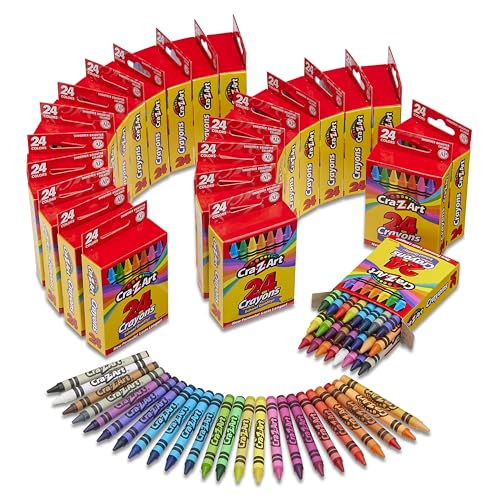
Standard paraffin wax fills this 24 count box in a cylindrical shape compatible with most sharpeners. Per-crayon pricing runs lower than name-brand sets, useful for replacing lost pieces often. Owner feedback notes color consistency between production batches varies more than premium brands.
Pros
- Lower price per crayon eases replacing lost or broken pieces
- Standard cylindrical size fits typical sharpeners and boxes
- Adequate pigment payoff for everyday coloring pages
Cons
- Batch to batch color consistency varies, per owner reports
- Wax breaks more easily under pressure than heavier-bodied brands
Compared at a glance
| # | Model | Count | Best for | Score | Price |
|---|---|---|---|---|---|
| 1 | Crayola Crayons, 120 Count Coloring Set | 120 crayons | Best overall | 9.4 | Check price |
| 2 | Filana 100% Non-Toxic Soy Crayons, Jumbo, 8 Count | 8 jumbo crayons | Best for toddlers | 9.1 | Check price |
| 3 | Crayola Ultra-Clean Washable Crayons, 24 Count | 24 crayons | Best washable | 8.8 | Check price |
| 4 | Prang Crayons, 24 Count | 24 crayons | Best for blending and pigment quality | 8.6 | Check price |
| 5 | Honeysticks Natural Beeswax Crayons, 12 Count | 12 crayons | Best non-toxic natural | 8.3 | Check price |
| 6 | Faber-Castell Jumbo Triangular Crayons, 10 Count | 10 jumbo crayons | Best for small hands and grip | 8.1 | Check price |
| 7 | Cra-Z-Art Crayons, 24 Count | 24 crayons | Best budget | 8.0 | Check price |
What to look for
What to look for in a crayon set Wax material and safety labeling matter more than color count for most buyers. Paraffin wax dominates the market for its smooth glide and low cost. Soybean oil and beeswax formulas trade some hardness for lower petroleum content, a draw for parents avoiding synthetic byproducts. Nearly every mainstream US brand carries an ASTM D-4236 label confirming compliance with the voluntary art materials safety standard, so checking that label matters most for imported or handmade sets.
Best crayons for toddlers who still mouth objects Kids under three explore objects by mouth, so blunt jumbo barrels and soy or beeswax formulas lower ingestion risk versus standard pointed sticks. Filana and Honeysticks both market toward children as young as one year, built from plant oils instead of paraffin. Triangular barrels, like Faber-Castell’s jumbo line, resist rolling and encourage a three-finger grip earlier than round sticks. None of these shapes replace supervision, since small pieces can still snap off under heavy pressing.
Washable crayons for walls, skin, and fabric Painted drywall and cotton fabric resist soap and water once a standard wax crayon presses in. Crayola’s Ultra-Clean Washable line reformulates the binder so marks lift with a damp cloth or a normal laundry cycle. That convenience trades off against pigment strength, since owners report slightly lighter color than standard Crayola sticks. Households with wall-drawing toddlers gain more from washable formulas than households buying mainly for older kids’ schoolwork.
Color count and pigment quality for detailed work Older kids matching specific shades for shading benefit from sets above 100 colors, like Crayola’s 120 count box. Prang’s soybean-oil crayons lay down pigment more evenly than paraffin sticks, useful for blending techniques taught in early art classes. Bulk-buying classrooms often favor lower per-crayon cost over color range, since 24 count boxes cover basic assignments. Breakage resistance matters too, since thinner shared-classroom sticks snap faster than jumbo shapes under group use.
Common questions
Are crayons safe for toddlers to put in their mouth?
Most mainstream crayons meet ASTM D-4236 safety standards and stay non-toxic in small amounts, though broken pieces still pose a choking risk. Soy and beeswax formulas from Filana and Honeysticks skip petroleum-derived paraffin for parents preferring plant-based ingredients.
What crayons wash off walls easily?
Crayola Ultra-Clean Washable Crayons lift off painted walls and most fabric with soap and water or a standard laundry cycle. Standard paraffin crayons, including Crayola’s non-washable line, tend to leave residue on painted surfaces.
How many colors do kids need in a crayon set?
Toddlers and preschoolers typically use 8 to 24 colors for basic scribbling and shape recognition. Older kids working on detailed drawings benefit from 100 plus color sets like Crayola’s 120 count box for shade matching.
Crayola vs Prang crayons, which blends better?
Prang’s soybean-oil formula spreads more evenly for shading and blending, according to product listings and owner feedback. Crayola’s paraffin-based crayons glide smoothly but layer less evenly when blending two colors together.
Are soy crayons better than paraffin crayons?
Soy-based crayons skip petroleum-derived paraffin and often blend more smoothly, though they wear down faster and cost more per crayon. Paraffin crayons stay harder, cheaper, and more widely available in large color sets.
What is the best crayon shape for small hands?
Jumbo triangular barrels, like Faber-Castell’s Jumbo Triangular Crayons, suit toddlers and preschoolers still developing a pincer grip. Wider diameter resists snapping, and the triangular sides keep the crayon from rolling off a table.
Do washable crayons work as well as regular crayons?
Washable crayons glide similarly to standard crayons but often lay down slightly lighter pigment, based on owner comparisons. That tradeoff favors households dealing with frequent wall or clothing marks from young children.
What age can babies start using crayons?
Honeysticks markets beeswax crayons for children as young as 12 months, using rounded shapes and non-toxic plant dyes. Most mainstream brands, including Crayola’s standard sets, recommend starting around age 3 or 4.
Is beeswax or soy wax better for a first crayon set?
Beeswax sticks like Honeysticks stay firmer and resist melting in warm cars, while soy wax like Filana’s stays softer and easier for small hands to press down. Both skip petroleum-derived paraffin found in standard sticks.
Do jumbo crayons help toddlers learn to hold a crayon?
Jumbo barrels give toddlers more surface area to grip with a fist before fine motor skills develop. Triangular jumbo shapes, like Faber-Castell’s, add a second benefit by nudging an early three-finger grip.
Final word
Families needing wide color range and classroom-ready durability get the most from Crayola Crayons, 120 Count Coloring Set. Parents of toddlers under three should pick Filana 100% Non-Toxic Soy Crayons instead, since the soy wax and blunt jumbo shape cut ingestion and breakage risk. Anyone dealing with frequent wall or clothing marks gets more practical value from Crayola Ultra-Clean Washable Crayons, even at the cost of slightly lighter pigment.