Rolling Creeper vs Creeper Seat: Which Suits Your Garage?
Pro-Lift’s C-9100 Z-Creeper Seat is the top pick, since it folds between a flat creeper and a rolling seat. The Traxion 1-100 ProGear rolls over cracked concrete better than smaller-wheeled models. Lisle’s 92102 keeps the lowest deck height, best for tight clearance under lowered vehicles.
Pro-Lift’s C-9100 Z-Creeper Seat earns its place by folding into a seat for brake and wheel work. Traxion’s 1-100 ProGear handles cracked concrete better than anything else here. Lisle’s 92102 slides under vehicles that leave almost no clearance at all.
Creepers look interchangeable in listings but behave very differently on a real garage floor. Small hard casters catch on expansion joints and bolt heads, which listings rarely mention. We compared deck height, caster diameter and material, padding and headrest design, stated weight capacity and whether the frame converts to a seat, then weighed that against what owners report about wheels loosening over time.
What we recommend
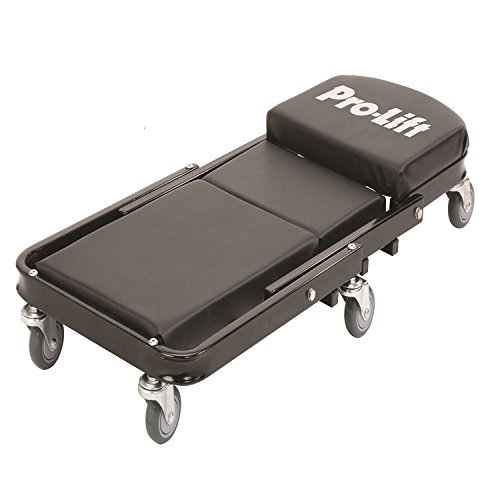
Pro-Lift C-9100 Z-Creeper Seat
This creeper folds flat for under-car work, then locks upright into a rolling seat for wheel and fender jobs. Conversion takes seconds, so most owners actually use both modes instead of buying a second stool. The padded steel deck holds up on long brake jobs. Hinge pins are the one part worth checking every few months.
Pros
- Folds into a rolling seat in seconds
- Padded deck holds up on long jobs
- Replaces a separate shop stool
Cons
- Taller deck than dedicated low-profile creepers
- Hinge pins need occasional tightening
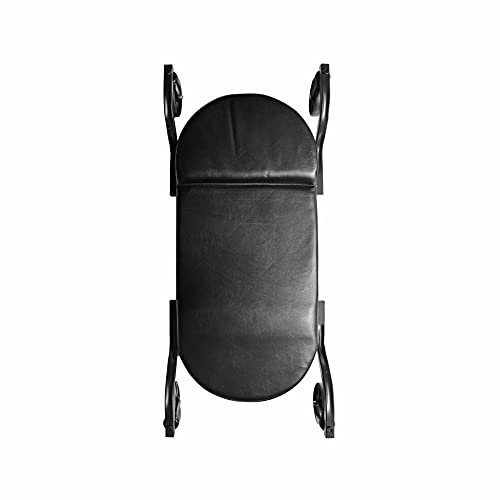
Traxion 1-100 ProGear Creeper
Oversized casters roll straight over cracks, cords and dropped bolts instead of stalling on them. Traxion moulds the deck with built-in tool trays, so sockets stay within reach instead of rolling away. An angled headrest supports the neck during longer jobs. Many owners say it fixed every complaint they had about cheaper creepers.
Pros
- Oversized casters clear cracks and debris easily
- Integrated trays keep tools within reach
- Angled headrest supports the neck
Cons
- Taller than low profile creepers
- Moulded body is bulky to store upright

Lisle 92102 Low Profile Creeper
Lisle keeps the deck lower than almost any creeper here, which matters under a lowered car or one on ramps rather than a lift. Moulded plastic wipes clean of oil instead of soaking it up like fabric padding does. Comfort takes a back seat to clearance on this one, and that tradeoff is the whole point.
Pros
- Fits under low vehicles and ramps
- Wipes clean of oil and grease
- Light enough to carry one-handed
Cons
- Thin padding on long sessions
- Small casters catch on rough concrete
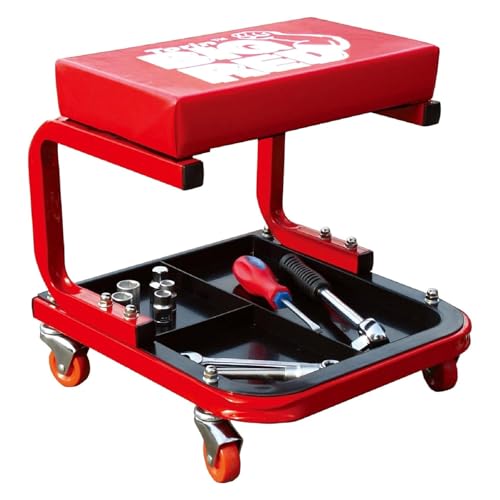
Torin Big Red Rolling Garage Creeper
Torin builds the classic padded steel frame that has stocked garages for decades, with a raised headrest and six swivel casters. It rolls well on smooth concrete and costs little enough to keep a spare. Owners note the vinyl pad wears faster than the frame underneath it.
Pros
- Comfortable padded surface for the price
- Widely stocked and inexpensive
- Raised headrest cuts neck strain
Cons
- Small casters struggle on rough concrete
- Vinyl pad absorbs oil over time
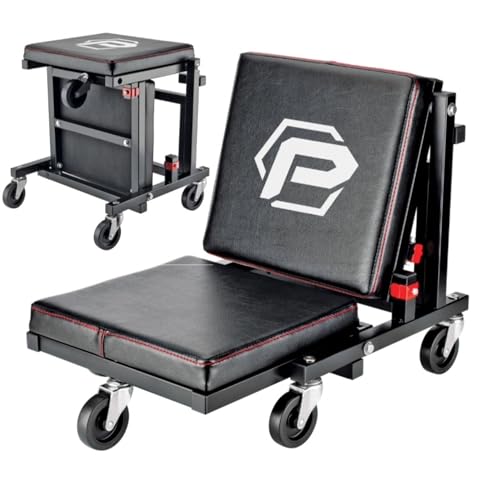
Powerbuilt Ultra Low Profile Mechanics Creeper
Powerbuilt chases the lowest working height in this lineup, suited to sports cars and modest jack stands. A shallow moulded contour keeps you centered instead of rolling off sideways. Every ultra-low creeper trades comfort and caster size for that clearance, and this one is no exception.
Pros
- Clears genuinely low vehicles
- Contoured deck keeps you centered
- Wipes clean with a hose or rag
Cons
- Firm surface on longer jobs
- Small wheels need a smooth floor

Sunex Comfort Padded Creeper
Sunex prioritizes thick padding and headrest support over clearance, which pays off during long stretches under a vehicle. That extra cushioning raises the deck, so it suits taller vehicles better than low ones. Owners say it is noticeably easier on the lower back than thin plastic creepers.
Pros
- Comfortable for extended jobs
- Supportive headrest position
- Sturdy frame construction
Cons
- Padding adds overall height
- Fabric surface stains with fluids

OMEGA Lift Equipment Low Profile Creeper
OMEGA keeps things basic, aimed at occasional weekend use rather than daily shop duty. One hand is enough to lift and store it upright against a wall. Standard casters handle a smooth garage slab fine but struggle once the floor gets rough.
Pros
- Inexpensive for occasional use
- Light and easy to store
- Non-absorbent surface resists oil
Cons
- Basic casters struggle on rough floors
- Limited padding for comfort
How to pick the right one
What should you look for in a mechanic’s creeper? Caster diameter decides how the ride feels more than any other spec. Small hard wheels stop dead at expansion joints, cords and dropped bolts, forcing you to shuffle along with your heels. Larger diameter casters roll over the same obstacles without effort. Deck padding, headrest support and rated weight capacity matter too, but caster size is worth paying extra for on anything but smooth sealed concrete.
How low a deck do you actually need? Measure the clearance under the vehicle while it sits on jack stands or ramps, not while it is parked flat. Subtract a comfortable margin for your chest before comparing deck heights. Thick padding adds comfort but also adds inches, and those inches decide whether the creeper fits under the car at all. Buying a plush creeper that will not slide underneath is a common, frustrating mistake.
Is a convertible creeper seat worth the space it saves? A creeper that folds into a rolling seat covers brake jobs, wheel work and bumper-height tasks without a separate shop stool. That consolidation matters most in a one-car garage with limited storage. The tradeoff is a higher deck and more moving parts to maintain. Dedicated shops with room for both tools often prefer keeping them separate.
Which surface material handles oil and fluids best? Padded vinyl and fabric decks feel better under your back but soak up oil, coolant and brake fluid over months of use. Moulded plastic wipes clean in seconds and never smells. Anyone doing regular fluid changes should weigh easy cleanup against extra cushioning. Most professional shops lean toward plastic for exactly this reason.
The lineup, side by side
| # | Model | Type | Best for | Score | Price |
|---|---|---|---|---|---|
| 1 | Pro-Lift C-9100 Z-Creeper Seat | Convertible creeper and seat | Best overall | 9.4 | Check price |
| 2 | Traxion 1-100 ProGear Creeper | Moulded body creeper | Best for rough floors | 9.2 | Check price |
| 3 | Lisle 92102 Low Profile Creeper | Low profile moulded creeper | Best low profile | 9.0 | Check price |
| 4 | Torin Big Red Rolling Garage Creeper | Padded frame creeper | Best value | 8.7 | Check price |
| 5 | Powerbuilt Ultra Low Profile Mechanics Creeper | Ultra low profile creeper | Best for lowered vehicles | 8.5 | Check price |
| 6 | Sunex Comfort Padded Creeper | Padded frame creeper | Best for comfort | 8.2 | Check price |
| 7 | OMEGA Lift Equipment Low Profile Creeper | Moulded creeper | Best budget | 8.0 | Check price |
Common questions
What height creeper do I need?
Measure clearance under the vehicle while it rests on stands or ramps, then subtract room for your chest. Low-profile creepers suit lowered cars and modest stand heights. Taller padded creepers work fine under trucks and SUVs with more ground clearance.
Are plastic or padded creepers better?
Padded creepers feel better on long jobs but absorb fluids and sit higher off the floor. Plastic creepers stay low, wipe clean and resist oil damage. Many home mechanics keep one of each and pick based on the job.
Why does my creeper keep catching on the floor?
Small casters meeting an uneven surface cause most of the snagging. Larger diameter wheels help immediately. Clearing loose debris and sweeping the work area first also makes a noticeable difference.
Can I use a creeper on gravel or asphalt?
Not effectively. Creeper casters need a hard, reasonably flat surface, and gravel stops them outright. A foam mat or folded moving blanket works better on a driveway.
Do creeper seats fit under a car like a flat creeper?
No. A creeper seat’s wheelbase is taller and wider than a flat creeper, so it will not slide under most sedans. Convertible models like the Pro-Lift fold flat for under-vehicle work, then unfold into the seat for everything else.
How much weight can a creeper hold?
Most consumer models are rated for typical adult weight plus a margin, and manufacturers publish the figure. Check the stated capacity rather than assuming, especially on lightweight plastic models. Tools left on the deck count toward that limit too.
Do creeper wheels need maintenance?
Occasionally, yes. Casters collect hair, thread and metal shavings that wrap around the axle over time. Checking the wheels and tightening fasteners a few times a year keeps the ride smooth.
Should I get a creeper with a headrest?
Yes, if you spend more than a few minutes at a time under a vehicle. Holding your head up unsupported causes neck strain quickly. Even a shallow raised section makes a real difference on longer jobs.
Creeper vs creeper seat: which do mechanics use more?
Flat creepers still dominate for pure under-car work because the low profile clears more vehicles. Rolling seats win for wheel, brake and bumper-height jobs where sitting upright is easier. A convertible model like the Pro-Lift Z-Creeper avoids choosing between them.
The bottom line
The Pro-Lift C-9100 Z-Creeper Seat suits most home garages best, since it covers both flat under-car work and seated jobs without a second tool. Rough concrete floors call for the Traxion 1-100 ProGear and its oversized casters. Tight clearance work still belongs to the Lisle 92102, measured in inches rather than feet.