Find a Boom Arm Your Desk and Mic Can Actually Handle
Rode’s PSA1+ leads for creators running heavy studio condensers, thanks to internal cable routing and a locking spring joint. The Elgato Wave Mic Arm suits cramped desks needing quick tension changes. Anyone starting a first voiceover setup gets solid value from the InnoGear boom arm.
A lightweight spring arm sags within days under a heavy studio condenser. Rode’s PSA1+ fixes that with a locking joint and internal cable routing. Streamers on a shallow desk lean toward the Elgato Wave Mic Arm instead, since its low profile clears monitor stands. First time podcasters on a budget still get a full boom setup from the InnoGear stand.
Desk space and mic weight decide this purchase more than shoppers expect. A heavy dynamic mic on a light spring arm droops within a week. We compared load ratings, clamp designs and owner reports on sag, wobble and cable noise to rank these seven stands.
Our top picks
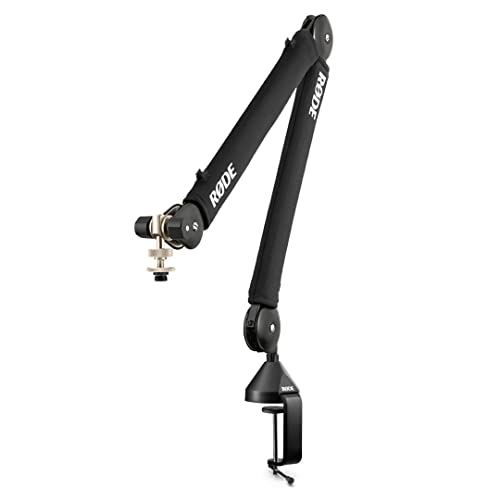
Rode PSA1+ Professional Studio Boom Arm
Cable routing sits entirely inside the arm, so no dangling XLR cord crosses the desk or camera frame. A redesigned spring joint locks in place and holds heavier condenser and dynamic mics without slow drift downward. Podcasters and streamers report it staying put through months of daily repositioning.
Pros
- Internal routing keeps cables off the desk
- Locking spring joint resists sag under heavy mics
- Includes both clamp and through hole mounting
Cons
- Full 32 inch reach exceeds small desk needs
- Priced above basic spring arms

Elgato Wave Mic Arm Low Profile
A low sitting base clears monitor arms and keyboard trays that taller booms knock into. Tension adjusts through a single tool free knob, so height changes take seconds between takes. Owners running Shure and Rode mics confirm the clamp fits any standard threaded microphone, not just Elgato’s own line.
Pros
- Low base clears monitor arms and trays
- Tool free knob adjusts height and tension fast
- Clamps desks up to 2 inches thick
Cons
- Reach falls short of full size boom arms
- Cable runs external, clipped rather than hidden

Gator Frameworks Deluxe Desktop Mic Boom Stand
A heavy round base sits flat on the desk instead of clamping, which suits rented offices and thin tabletops. The telescoping boom swivels through a wide arc for camera framing. Many owners also mount a small light or webcam on the same boom alongside the mic.
Pros
- Freestanding base works on any flat desk
- Weighted base resists tipping under mic weight
- Boom doubles as a light or webcam mount
Cons
- Round base takes up real desk footprint
- Heavier to relocate than a clamp style arm

Blue Compass Premium Boom Arm
A wide channel runs the full arm length and snaps shut over the XLR or USB cord. Spring tension adjusts smoothly without exposed screws catching on sleeves. Owners of Blue’s Yeti and Yeticaster mics report the clamp fitting those bodies without extra adapters.
Pros
- Snap channel hides cable along the full arm
- Fits both 5/8 and 3/8 inch mic threads
- Smooth tension adjustment with no exposed hardware
Cons
- Clamp needs a firm desk edge to bite
- Heavy condensers push near the top of its rating

Neewer NB-35 Adjustable Microphone Suspension Arm
A metal frame paired with a shock mount costs far less than name brand arms while matching their reach. Two clamp types in the box fit both thick and thin desk edges. Owners recording voiceover and podcast work call it enough arm for a home setup without studio pricing.
Pros
- Shock mount and windscreen included in the box
- Two clamp styles cover most desk edges
- Long reach relative to its price point
Cons
- Spring tension needs occasional retightening over time
- Finish shows wear sooner than premium arms

InnoGear Adjustable Microphone Boom Arm Stand
A simple screw clamp and boom cover the core job for a first voiceover or Discord setup. Foam windscreen and shock mount ship in the box, so nothing extra to buy right away. Owners who later upgrade often keep this one as backup for a second mic.
Pros
- Low entry cost for a complete boom setup
- Shock mount and windscreen included
- Clamp fits most standard desk edges
Cons
- Tension loosens under heavier mics over time
- Cable management relies on an external clip only

Samson MBA38 Microphone Boom Arm
A compact broadcast style arm suits multi mic tables where several arms share one surface. Spring loaded tension holds mid weight dynamic mics steady through long recording sessions. Owners running two or three arms side by side cite the slim footprint as the deciding factor.
Pros
- Slim footprint suits multi mic podcast tables
- Broadcast styling matches studio aesthetics
- Holds mid weight dynamic mics without drift
Cons
- Shorter reach limits single desk versatility
- Heavier condenser mics exceed its comfort zone
What to look for
What to look for in a desktop mic stand Load rating matters more than reach for anyone running a heavy condenser mic. Clamp type decides whether the stand survives a thin rental desk or a thick studio table. Cable routing separates a tidy desk from cords crossing the camera frame. Reach only matters once those three fit the setup.
Clamp arm or weighted base A clamp arm frees desk space and lets the mic swing fully out of frame when idle. Glass desks and rented offices favor a weighted base instead, since it skips the clamp screw. That flexibility costs more desk footprint. Choose the clamp option unless the desk edge cannot take one.
Best setup for streaming and camera work Streamers want a mic that swings fully out of frame between takes. Low profile arms like the Elgato Wave clear nearby ring lights and monitor arms with room to spare. Internal routing on the Rode PSA1+ keeps cords out of frame entirely. Clearance around other desk gear matters more here than raw reach.
Handling heavy condenser microphones Spring tension has to match mic weight, or the arm sags within days. Studio condensers often outweigh USB mics, so check the stated load rating first. Both the Rode PSA1+ and Gator Deluxe handle heavier bodies without drift. A budget arm rated for light mics will visibly droop under a heavy condenser.
How they stack up
| # | Model | Reach | Best for | Score | Price |
|---|---|---|---|---|---|
| 1 | Rode PSA1+ Professional Studio Boom Arm | Up to 32 inches extended | Best overall | 9.4 | Check price |
| 2 | Elgato Wave Mic Arm Low Profile | Up to 15.7 inches extended | Best for small desks | 9.1 | Check price |
| 3 | Gator Frameworks Deluxe Desktop Mic Boom Stand | Telescoping boom, adjustable angle | Best for stability | 8.8 | Check price |
| 4 | Blue Compass Premium Boom Arm | Up to 24 inches extended | Best for cable management | 8.6 | Check price |
| 5 | Neewer NB-35 Adjustable Microphone Suspension Arm | Up to 33 inches extended | Best value | 8.3 | Check price |
| 6 | InnoGear Adjustable Microphone Boom Arm Stand | Up to 31.8 inches extended | Best budget | 8.1 | Check price |
| 7 | Samson MBA38 Microphone Boom Arm | Up to 19 inches extended | Best for podcast racks | 8.0 | Check price |
Frequently asked questions
What is the best microphone stand for streaming?
The Elgato Wave Mic Arm suits most streaming desks since its low profile clears monitor arms and ring lights. Anyone running a heavier studio mic alongside a camera rig should look at the Rode PSA1+ instead.
Do desktop mic arms fit any microphone?
Most use a standard 5/8 inch thread with a 3/8 adapter included, covering the majority of XLR and USB mics. Check the mic’s own mount thread first, since a few models rely on proprietary clips.
Can a boom arm hold a heavy condenser mic?
Only arms rated for that weight class handle it well. Light spring arms sag under mics built for studio vocal work. Both the Rode PSA1+ and Gator Frameworks Deluxe list higher load capacities for this reason.
Clamp mount or through hole mount, which is better?
A clamp suits desks that might get rearranged or rented, since it leaves no hole behind. Through hole mounting locks the arm permanently and resists tipping better under a heavy mic. Several stands here include both options.
How do you hide a microphone cable on a boom arm?
Arms with an internal channel, like the Rode PSA1+, route the cable inside the tubing completely. External clip channels on cheaper arms still tidy the cord but leave it visible along the arm.
Will a mic arm fit a glass or thin desk?
A clamp needs a solid edge to bite into, so glass and very thin desks often need a freestanding weighted base instead. The Gator Frameworks Deluxe skips the clamp for exactly that reason.
How much desk space does a boom arm need when stowed?
Low profile designs fold down close to the desk surface. Full reach studio arms like the PSA1+ need more clearance to swing out of the way. Measure desk depth before choosing a long reach arm.
Is a desktop stand better than a floor mic stand?
A desktop arm keeps the mic close without taking floor space, which suits gaming and streaming desks. A floor stand suits shared studio spaces where the desk itself gets moved or swapped between sessions.
How much weight can a typical mic boom arm hold?
Load ratings vary by design, and spring arms built for USB mics often struggle past a heavier studio condenser. Check the manufacturer’s stated rating, since owner reports of sag usually trace back to mismatched mic weight.
The verdict
Running a heavy studio condenser and want it rock solid on camera? The Rode PSA1+ handles that weight with room to spare. Tight on desk space but still want fast height changes, the Elgato Wave Mic Arm fits better under a monitor arm. Anyone starting a first voiceover setup on a budget should grab the InnoGear stand and upgrade later if the mic gets heavier.


