Dice Game Starter Kits That Actually Get Replayed
Hasbro’s Yahtzee Classic remains the easiest starter pick for mixed-age families who already know its scorecard rules. Gamewright’s Qwixx suits groups wanting faster rounds with less downtime between turns. Tenzi fits younger kids best, since its speed-based matching needs no reading or scoring at all.
Hasbro’s Yahtzee Classic tops this list for mixed-age families, since almost every adult already knows its scorecard rules. Full rounds still run 30 to 45 minutes, longer than the quicker rivals here.
We compared player counts, included components, and average round length across seven current dice game kits. That comparison matched each title to a group size, age range, and how much time a game night allows.
What we recommend

Hasbro Yahtzee Classic Dice Game
Five dice, a dice cup, and score pads cover the standard 13-category system in this Yahtzee set. Four players typically finish a round in 30 to 45 minutes, longer once more people join. Categories like full houses and straights introduce basic probability without feeling like a math lesson.
Pros
- Familiar scorecard rules speed up teaching new players
- Every player stays involved through the full scorecard round
- Compact box packs easily for travel or visits
Cons
- Full rounds run longer than the quicker games on this list
- Younger players need help totaling scoring categories
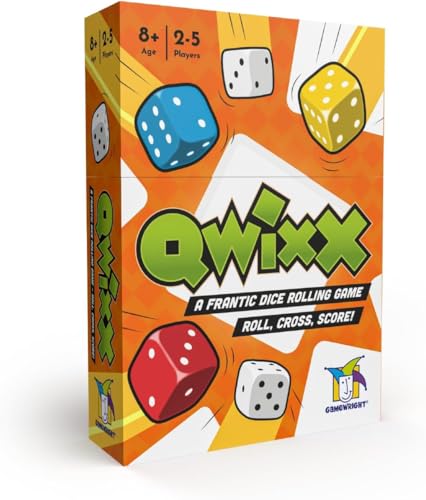
Gamewright Qwixx Dice Game
Every player marks their own scorecard the moment dice land, so nobody waits through individual turns. Six dice and a scorecard pad fit in a small box priced below most starter kits. A full round wraps in about 15 minutes, short enough to replay right away.
Pros
- Simultaneous marking removes downtime between players
- Small box and low price suit budget-focused buyers
- Quick rounds encourage replaying several times in one sitting
Cons
- Scorecards run low and need reordering with frequent use
- Fewer max players than Left Center Right or Yahtzee support

Tenzi Dice Party Game
Forty dice across ten colors let up to four players race to match numbers first. No reading or scorekeeping is required, just spotting matching faces, so kids as young as six can join. A variation card included in the box adds forty alternate ways to play as skills grow.
Pros
- No reading or math needed, suiting the youngest players
- Ten dice colors let large groups race at once
- Included variation card keeps the game fresh over time
Cons
- Rounds end in under five minutes, so repeat play is needed for a full night
- Small dice can scatter and roll under furniture

Left Center Right Dice Game
Three dice marked L, C, R, and dot symbols decide how chips pass between players until one holds them all. New players learn the rules in under two minutes. A drawstring bag keeps 36 included chips and dice together between games.
Pros
- Rules explain in under two minutes for first-time players
- Scales comfortably to eight or more players at once
- Drawstring bag keeps chips and dice from getting lost
Cons
- Little strategic decision-making, since outcomes rely on luck
- Chip passing turns chaotic with very large groups

Front Porch Classics Farkle Dice Game
Six dice, a wooden rolling tray, and scorepads come packaged in a sturdy wooden case built for repeated use. Players bank points as they go, risking an entire turn’s total on one bad roll. That wooden case adds durability over cardboard-boxed rivals but also adds bulk on a shelf.
Pros
- Wooden case and tray outlast typical cardboard packaging
- Push-your-luck scoring adds tension missing from simpler dice games
- Sturdy build still fits comfortably on a shelf
Cons
- Bulkier case travels less easily than boxed alternatives
- Scoring rules take longer to learn than Left Center Right

Steve Jackson Games Zombie Dice
Thirteen custom dice marked with brains, footprints, and shotguns push players to decide when to stop rolling. Most rounds finish in under 10 minutes, so several fit into one game night. Its zombie theme and risk-based decisions land better with teens than with younger kids.
Pros
- Custom dice symbols add thematic appeal for teens
- Fast rounds slot easily into a longer game rotation
- Cup and dice setup packs small for travel
Cons
- Theme and risk decisions suit older kids more than young children
- Thirteen dice cap how many players can roll simultaneously

Winning Moves Pass the Pigs
Two pig-shaped dice replace standard cubes, scoring points based on which position each pig lands in after a toss. That novelty shape draws in kids who find plain dice less exciting. A travel tin holds the small pigs more securely than a typical box insert.
Pros
- Pig-shaped dice bring novelty that appeals to younger players
- Travel tin prevents small pieces from getting lost
- Short rounds work well as a filler between longer games
Cons
- Only two dice ship in the box, limiting simultaneous play
- Novelty fades faster than games with deeper scoring systems
How they compare
| # | Model | Players | Best for | Score | Price |
|---|---|---|---|---|---|
| 1 | Hasbro Yahtzee Classic Dice Game | 2 to 10 | Best overall | 9.2 | Check price |
| 2 | Gamewright Qwixx Dice Game | 2 to 5 | Best value | 9.0 | Check price |
| 3 | Tenzi Dice Party Game | 2 to 8 | Best for young kids | 8.6 | Check price |
| 4 | Left Center Right Dice Game | 3 or more | Best for large groups | 8.7 | Check price |
| 5 | Front Porch Classics Farkle Dice Game | 2 to 6 | Best for classic push-your-luck scoring | 8.8 | Check price |
| 6 | Steve Jackson Games Zombie Dice | 2 or more | Best for older kids and teens | 8.9 | Check price |
| 7 | Winning Moves Pass the Pigs | 2 to 8 | Best for family party nights | 8.5 | Check price |
How to pick the right one
What to Look for in a Dice Game Starter Kit Player count sets the ceiling on group size, so check the box before assuming a game scales past four or five. Average round length matters most for younger kids, since anything under 15 minutes holds attention better than a 45-minute scorecard game. Included pieces, like a dice cup, wooden tray, or travel tin, affect how well parts survive repeated use. Cardboard boxes wear out faster than wooden cases or tins under regular travel.
Which Dice Games Work Best for Young Kids Tenzi skips reading and math entirely, relying on matching dice faces, which suits six-year-olds. Pass the Pigs adds a novelty pig shape that holds younger attention longer than standard cubes. Scorecard-heavy games like Yahtzee generally work better once kids reach eight and can add scores on their own. Simpler rules mean less parent involvement during play.
Best Dice Games for Large Groups or Parties Left Center Right scales past eight players easily, since the only requirement is passing chips based on a roll. Tenzi’s forty dice let a big group roll simultaneously instead of waiting through turns. Yahtzee slows down as player count grows, because each person’s scorecard turn takes real time. Groups mixing ages tend to do better with Left Center Right’s two-minute rule explanation.
Fast Rounds vs Longer Scorecard Games Qwixx and Zombie Dice both wrap up in under 15 minutes, so replaying several rounds fits into one evening easily. Yahtzee and the wooden Farkle set run closer to 30 to 45 minutes, rewarding players who want to settle in. Pairing one quick game with a longer one keeps a game night varied. Families short on time should lean toward the faster titles first.
Questions worth asking
What is a good starter dice game for family game night?
Yahtzee works as a reliable starting point, since most adults already know its rules and its scorecard format keeps every age group engaged through a full round.
Which dice game is best for young kids?
Tenzi suits young kids well, since matching dice faces requires no reading or scorekeeping at all.
What dice games work for large groups?
Left Center Right and Tenzi both scale past six or eight players, since neither depends on a slow, individual turn structure.
How long does a typical dice game take to play?
Length varies a lot. Qwixx and Zombie Dice finish in under 15 minutes, while Yahtzee or Farkle can run 30 to 45 minutes with a full group.
Is Farkle the same game as Yahtzee?
No. Farkle uses a push-your-luck system where players risk banking points each turn, while Yahtzee scores fixed categories like full houses and straights.
What age is Zombie Dice appropriate for?
Zombie Dice fits players 10 and up best, since its risk-based decisions and zombie theme suit older kids and teens more than young children.
Do dice games require reading skills?
Not always. Tenzi and Pass the Pigs rely on visual matching or shape recognition instead of reading, making them accessible to non-readers.
What comes in a typical dice game starter kit?
Most kits ship with the dice, a scorepad or scorecard, a storage tin or bag, and a rules sheet, though contents vary by title.
Qwixx vs Yahtzee, which one plays faster?
Qwixx plays much faster. Its simultaneous scoring wraps a round in about 15 minutes, while Yahtzee typically runs 30 to 45 minutes for four players.
Final word
Hasbro’s Yahtzee Classic earns the overall pick here, since its familiar rules and wide player-count range suit a mixed-age family collection best. Households with kids under eight should reach for Tenzi instead, since its no-reading format works for six-year-olds where Yahtzee’s scorecards do not. Groups wanting fast, repeatable rounds get more out of Gamewright’s Qwixx than any longer scorecard game on this list.


