Digital Thermal Cameras That Make Heat Visible
The FLIR One Edge Pro is our top pick for most people. It attaches to your smartphone and offers a thermal resolution of 160 x 120, a measurement range from -4°F to 752°F, and a rugged design. Its main advantage is portability and ease of use. Its main limitation is that it relies on your phone for display and battery.
Thermal cameras let you see heat. They help find energy leaks, electrical faults, and moisture problems. This guide compares seven models that are currently available on Amazon.
We looked at specifications and owner feedback. We focused on image quality, measurement range, and ease of use. The right camera depends on your budget and how you plan to use it.
The best picks, ranked
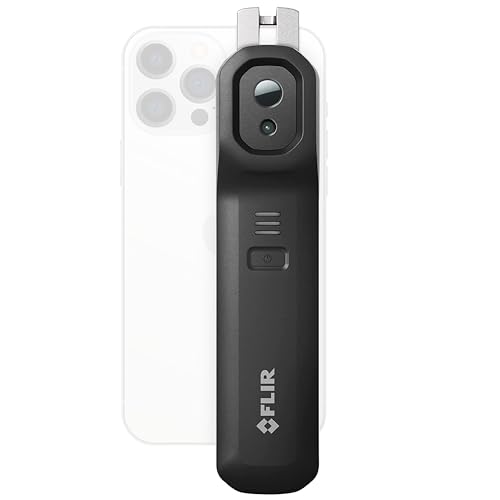
FLIR One Edge Pro
The FLIR One Edge Pro connects wirelessly to your phone, so you can scan without touching hot surfaces. It has a 160 x 120 thermal sensor and a visible light camera for blending images. Owners report it is accurate and easy to use.
Pros
- Wireless connectivity allows safe distance scanning
- Rugged design with IP54 rating
- Works with iOS and Android
Cons
- Requires a smartphone for display
- Battery life is about 2 hours

FLIR C5
The FLIR C5 is a compact thermal camera with a 3.5-inch touchscreen. It offers 160 x 120 resolution and a temperature range of -4°F to 752°F. It includes FLIR Ignite cloud storage for instant sharing.
Pros
- Standalone design with touchscreen
- Cloud storage included
- Accurate temperature measurement
Cons
- More expensive than smartphone models
- Battery is non-removable

Seek Thermal CompactPRO
The Seek Thermal CompactPRO connects directly to an Android phone via USB-C. It offers a high 320 x 240 thermal resolution and a wide temperature range of -40°F to 626°F. Users report good image clarity for the price.
Pros
- High resolution for the price
- No battery to charge, powered by phone
- Compact and lightweight
Cons
- Only works with Android and USB-C
- May drain phone battery quickly

FLIR TG267
The FLIR TG267 combines a thermal camera and laser targeting. It has a 160 x 120 sensor with a temperature range of -4°F to 1022°F. The built-in laser helps pinpoint hot spots for accurate measurements.
Pros
- High maximum temperature for electrical work
- Laser pointer for precise targeting
- Durable with IP54 rating
Cons
- No visible light camera for blending
- Field of view is relatively narrow

Hti-Xintai HT-18
The Hti-Xintai HT-18 is an affordable thermal camera with a 2.4-inch display and 32 x 32 thermal resolution. It offers basic thermal imaging and temperature measurement. It is suitable for simple home checks.
Pros
- Very affordable price point
- Simple to operate
- Built-in rechargeable battery
Cons
- Low thermal resolution produces pixelated images
- No wireless connectivity or app

FLIR E5 Pro
The FLIR E5 Pro is a professional thermal camera with a 160 x 120 sensor and a 3-inch LCD. It features MSX® technology that blends visible light with thermal for sharper images. It offers a temperature range of -4°F to 752°F.
Pros
- MSX enhances image detail
- Durable design for field use
- Accurate spot temperature readings
Cons
- Higher price point
- Limited connectivity compared to newer models
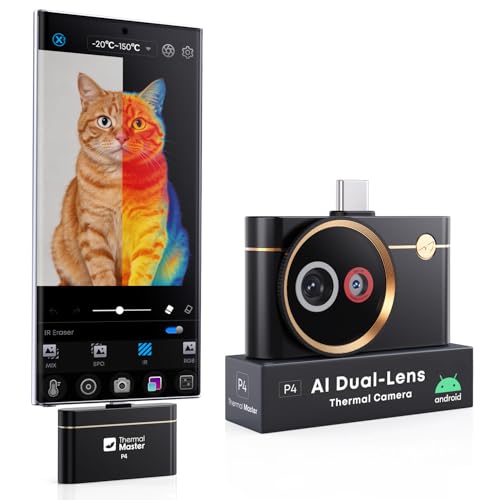
Thermal Master P2 Pro
The Thermal Master P2 Pro is a USB-C thermal camera for Android devices. It boasts a 256 x 192 thermal resolution and a 25 Hz refresh rate for smooth video. It measures temperatures from -4°F to 1022°F.
Pros
- High resolution and refresh rate
- Wide temperature range
- Compact design
Cons
- Android only
- No built-in battery, uses phone power
What matters most
Side by side
| # | Model | Thermal Resolution | Best for | Score | Price |
|---|---|---|---|---|---|
| 1 | FLIR One Edge Pro | 160 x 120 | Smartphone users who want a portable thermal camera | 9.4 | Check price |
| 2 | FLIR C5 | 160 x 120 | Professionals needing a standalone camera | 9.2 | Check price |
| 3 | Seek Thermal CompactPRO | 320 x 240 | Android and USB-C users on a budget | 8.9 | Check price |
| 4 | FLIR TG267 | 160 x 120 | HVAC and electrical troubleshooting | 9.0 | Check price |
| 5 | Hti-Xintai HT-18 | 32 x 32 | Budget-minded DIYers | 8.2 | Check price |
| 6 | FLIR E5 Pro | 160 x 120 | Building inspections and energy audits | 9.1 | Check price |
| 7 | Thermal Master P2 Pro | 256 x 192 | Smartphone users wanting high resolution | 9.0 | Check price |
Frequently asked questions
What is the difference between thermal resolution and visible resolution?
Thermal resolution refers to the number of pixels in the thermal sensor. Higher thermal resolution gives a clearer heat image. Visible resolution is for the regular camera used to blend with thermal.
Can a thermal camera see through walls?
No, thermal cameras cannot see through walls. They detect surface temperatures. They can find heat patterns that may indicate issues behind walls, but they cannot directly see through them.
What is the typical accuracy of a thermal camera?
Most thermal cameras have an accuracy of around +/- 2% or +/- 2°C. Higher-end models may be more accurate, but this is generally sufficient for most applications.
How do I measure temperature with a thermal camera?
You point the camera at the object and read the temperature on the screen. Some models have a spot meter or area measurement. You can also set emissivity for different materials.
Are thermal cameras safe to use?
Yes, thermal cameras are passive devices that detect infrared radiation. They are safe and do not emit any radiation.
Can I use a thermal camera in the rain?
Some thermal cameras have an IP rating that indicates water resistance. Check the specifications. Most professional models are weather-resistant, but smartphone attachments may not be.
Do thermal cameras work in the dark?
Yes, thermal cameras work in complete darkness because they detect heat, not light.
What is emissivity and why does it matter?
Emissivity is a measure of how well a material emits thermal radiation. Different materials have different emissivities. Most cameras have an adjustable emissivity setting to improve accuracy when measuring reflective surfaces.
Can I use a thermal camera for medical purposes?
Some thermal cameras are used for fever screening, but they are not medical devices. For medical use, you need a camera with high accuracy and proper calibration.
How do I maintain and care for my thermal camera?
Keep the lens clean and avoid exposing the camera to extreme temperatures. Store it in a protective case when not in use. Charge the battery regularly if it is not used for a long time.
Final word
For most homeowners and DIYers, the FLIR One Edge Pro is the best choice because it is portable, works with your phone, and has enough resolution for common tasks. If you are a professional who needs a standalone camera, the FLIR C5 offers excellent image quality and cloud storage. For a budget option, the Hti-Xintai HT-18 is affordable, but you will sacrifice image clarity. Consider your budget and primary use before buying.