Top DIY Drills for Home Projects
The DEWALT 20V MAX Cordless Drill is our top pick for most DIYers because it balances power, runtime, and ease of use. Its main advantage is the high-performance brushless motor that delivers efficient power for drilling and driving in wood, metal, and plastic. The main limitation is its price, which is higher than some comparable models, but the durability and performance justify the cost for frequent DIY projects.
Whether you are hanging shelves, assembling furniture, or building a deck, a reliable drill is a must-have. With so many options on the market, choosing the right one can be overwhelming. We compared top models to help you find the perfect match for your projects.
Our selection includes cordless and corded drills, each with unique strengths. From compact drivers for tight spaces to heavy-duty machines for tough materials, we cover it all. Read on to discover which drill fits your needs and budget.
Our top picks
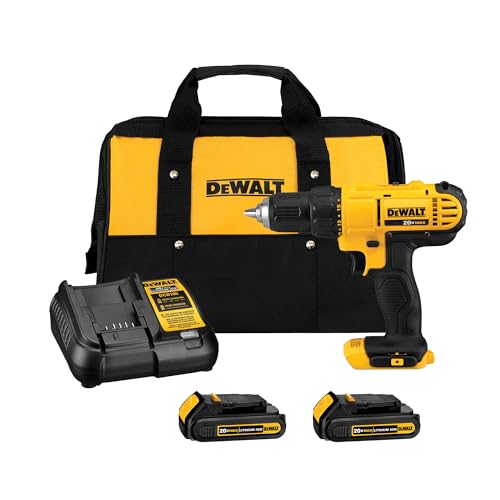
DEWALT 20V MAX Cordless Drill
This drill features a high-performance brushless motor that delivers up to 57% more runtime than brushed motors. It is compact and lightweight, yet powerful enough for drilling into wood and metal. The LED light illuminates dark workspaces, and the ergonomic handle ensures comfort during extended use.
Pros
- Brushless motor for longer runtime
- Compact and lightweight design
- High torque for demanding tasks
Cons
- Price is higher than some competitors
- Battery and charger sold separately

BLACK+DECKER 20V MAX Cordless Drill
An affordable option that still delivers reliable performance for everyday drilling and driving. It comes with a 20V MAX lithium-ion battery that holds a charge for up to 18 months. The 11-position clutch helps prevent stripping screws, and the keyless chuck makes bit changes quick and easy.
Pros
- Very affordable price point
- Battery life is impressive
- Comfortable grip
Cons
- Less power for heavy-duty tasks
- Chuck is smaller (3/8 inch)

Bosch 12V Max Cordless Drill
This 12V drill is perfect for working in confined areas where larger drills won’t fit. It offers a 2-speed transmission and a 20+1 clutch setting for precise control. The built-in LED light and belt clip add convenience. Despite its size, it delivers enough power for most home projects.
Pros
- Extremely compact and light
- Great for overhead work
- High-quality build
Cons
- Lower voltage means less power
- Battery included but charger sold separately (depending on kit)

Makita 18V LXT Cordless Drill
Makita is known for its rugged tools, and this drill is no exception. It features a brushless motor and a variable speed trigger for smooth control. The all-metal chuck adds durability. With a 2-speed transmission, it can handle a variety of drilling applications. Owners report it stands up to daily job site use.
Pros
- High torque output
- Rugged construction
- Excellent battery life
Cons
- Price is on the higher end
- Heavier than some competitors

PORTER-CABLE 20V MAX Cordless Drill
This drill comes with two 20V MAX batteries, so you can keep working while one charges. It has a high-performance motor that delivers enough power for most DIY jobs. The 3/8 inch keyless chuck and built-in LED light are handy features. It’s a solid choice for beginners on a budget.
Pros
- Two batteries included
- Affordable price
- Easy to use
Cons
- Not as powerful as more expensive drills
- Clutch settings are limited

Ryobi 18V ONE+ Cordless Drill
If you already own Ryobi tools or plan to expand your collection, this drill is a smart buy. It uses the 18V ONE+ battery system, which is compatible with over 300 tools. The drill offers comfortable grip and reliable performance. It also features a built-in LED light and belt clip.
Pros
- Compatible with many Ryobi tools
- Decent power for most tasks
- Good value for money
Cons
- Build quality is not as premium as others
- Battery may drain quickly under heavy use

SKIL 20V Cordless Drill
The SKIL drill is one of the lightest in its class, making it ideal for extended use without fatigue. It offers a variable speed trigger and a 3/8 inch keyless chuck. The built-in LED light illuminates dark areas. It comes with a battery and charger, ready to use out of the box.
Pros
- Very light and compact
- Great for beginners
- Battery and charger included
Cons
- Lower torque for heavy jobs
- Battery life is average
Side by side
| # | Model | Voltage | Best for | Score | Price |
|---|---|---|---|---|---|
| 1 | DEWALT 20V MAX Cordless Drill | 20V MAX | Overall best for most DIYers | 9.4 | Check price |
| 2 | BLACK+DECKER 20V MAX Cordless Drill | 20V MAX | Budget-friendly for basic tasks | 8.6 | Check price |
| 3 | Bosch 12V Max Cordless Drill | 12V MAX | Compact and lightweight for tight spaces | 8.8 | Check price |
| 4 | Makita 18V LXT Cordless Drill | 18V LXT | Professional-grade power and durability | 9.2 | Check price |
| 5 | PORTER-CABLE 20V MAX Cordless Drill | 20V MAX | Value with two batteries | 8.4 | Check price |
| 6 | Ryobi 18V ONE+ Cordless Drill | 18V ONE+ | Versatile with a huge battery platform | 8.7 | Check price |
| 7 | SKIL 20V Cordless Drill | 20V | Lightweight and easy to handle | 8.3 | Check price |
How to choose
Questions worth asking
What is the best drill for a beginner DIYer?
For a beginner, the BLACK+DECKER 20V MAX Cordless Drill is an excellent choice. It is affordable, easy to use, and has enough power for basic tasks like assembling furniture and drilling into drywall. The lightweight design reduces fatigue, and the battery holds a charge for months.
Is a brushless motor worth the extra cost?
Yes, for frequent use. Brushless motors are more efficient, providing longer runtime and more power. They also last longer because there are no brushes to wear out. If you plan to use your drill often or for demanding projects, investing in a brushless model like the DEWALT 20V MAX is worth it.
Can a 12V drill handle most home projects?
A 12V drill can handle light to moderate tasks such as driving screws and drilling small holes in wood. However, for drilling into masonry or using large hole saws, a higher voltage is better. The Bosch 12V is compact and convenient for tight spaces, but for heavy work, consider an 18V or 20V model.
What is the difference between 18V and 20V drills?
The difference is mostly marketing. Both use similar battery cells, but 20V is the maximum voltage under load, while 18V is the nominal voltage. In practice, drills labeled 20V and 18V offer comparable performance. Many manufacturers use the 20V label to signify a newer generation.
How important is the clutch setting?
The clutch is very important for driving screws. It allows you to adjust the torque so you don’t overdrive screws and strip the head. More clutch settings give you finer control. For general DIY, 10 to 20 settings are sufficient. The DEWALT and Makita drills offer multiple clutch positions.
Can I use my drill as a screwdriver?
Yes, most drills have a screwdriving mode and a clutch that adjusts torque. When driving screws, set the clutch to a lower number to prevent stripping. You can also use a screwdriver bit in the chuck. Many drills come with a bit set, but you can buy additional bits separately.
What safety features should I look for?
Look for a drill with a lock-on button to prevent accidental starts. Some drills have an electric brake that stops the chuck quickly after releasing the trigger, which is a nice safety feature. Always wear safety glasses and follow the manufacturer’s instructions.
How do I maintain my drill?
Keep your drill clean and dry. Wipe off dust and debris after use. Check the chuck for any signs of wear. If your drill is cordless, store the battery in a cool, dry place and avoid extreme temperatures. Charge the battery before it is completely drained to prolong its life.
Which drill is best for drilling into concrete?
For concrete, you need a hammer drill function. None of the drills in our list have a hammer mode, so for concrete, consider a dedicated hammer drill like the DEWALT 20V MAX Hammer Drill. If you only have a regular drill, you can use masonry bits with low speed and moderate pressure, but it will be slow.
Can I use a drill for mixing paint?
Some drills can be used with a paint mixing paddle, but only for small batches. The drill’s torque may be insufficient for thick paint, and you risk overheating. It is better to use a dedicated drill mixer or a low-speed drill. If you do use your drill, keep the speed low and take breaks.
The bottom line
For most DIYers, the DEWALT 20V MAX Cordless Drill is the best choice because it offers a great balance of power, durability, and features. If you are on a tight budget, the BLACK+DECKER 20V MAX is a reliable entry-level option. For professionals or heavy users, the Makita 18V LXT is worth the investment. No matter which drill you pick, make sure it fits your hand and your typical projects. Happy drilling!


