DJ Mixers Compared: Club, Scratch, and Bedroom Setups
Most DJs get the best balance from the Pioneer DJ DJM-450, which pairs a club-standard layout with a built-in sound card. Scratch DJs should look at the Rane Seventy-Two MKII instead. Multi-deck analog fans want the Allen & Heath Xone:96. Budget shoppers can start with the Behringer DJX750.
Pioneer DJ’s DJM-450 pairs a 3-band EQ per channel with Rekordbox compatibility and a built-in sound card. It mirrors the layout found in Pioneer club installs, so skills transfer directly to venue gigs. That combination makes it the strongest all-around pick for most working DJs.
Club mixers, scratch mixers, and multi-channel analog boards solve different problems, which makes mixer choice tricky. We grouped these seven by channel count, fader feel, and connectivity, then compared specs against owner feedback before ranking them.
Our top picks

Pioneer DJ DJM-450
Club installs from Pioneer often run this exact two-channel layout, so skills transfer straight to venue gigs. A built-in sound card handles input and output over one USB cable, skipping extra hardware. Beat FX and Sound Color FX add texture to live sets without outboard gear.
Pros
- Layout matches Pioneer club booths
- Built-in sound card removes extra hardware
- Compatible with Rekordbox and Serato DJ Pro
Cons
- Two channels limit multi-deck sets
- Faders are fixed, not swappable

Numark M101USB
A replaceable crossfader and phono/line switching on both channels define this straightforward two-channel scratch mixer. Its built-in audio interface works directly with Serato DJ Lite. DJs stepping up from an all-in-one controller find it an easy first upgrade.
Pros
- Replaceable crossfader extends its lifespan
- Compact footprint fits small booths
- Works with Serato DJ Lite out of the box
Cons
- No onboard effects
- EQ is 2-band, not 3-band

Behringer DJX750
Five input channels and a built-in BPM counter suit mobile DJs juggling multiple sources. Talkover and a sampler section cover basic MC duties without extra gear. Build quality falls short of the Pioneer and Allen & Heath units here.
Pros
- Most channels for the price
- Sampler and talkover built in
- Compact given the input count
Cons
- Plastic housing feels less durable
- Crossfader curve is less precise than dedicated scratch mixers
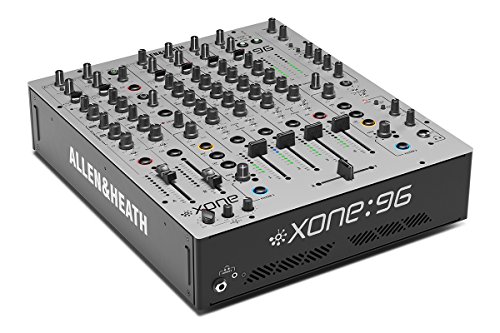
Allen & Heath Xone:96
Six channels of true analog sound with dual filters per channel suit DJs running four decks or blending in live instruments. Rotary and fader configurations both ship in the box. Touring and residency DJs get the most from this heavier, deeper investment.
Pros
- True analog signal path
- Handles four-deck sets comfortably
- Swappable fader configurations
Cons
- Bulky for mobile setups
- Steeper learning curve for beginners

Rane Seventy-Two MKII
A magnetic Pro FX Fader with adjustable curve controls gives scratch DJs the feel turntablism demands. Dual 7-inch touchscreens speed up track browsing without a laptop in view. Serato DJ Pro ships included, offsetting the higher entry cost.
Pros
- Fader feel built for scratching
- Touchscreens reduce laptop dependence
- Serato DJ Pro license included
Cons
- Premium price for a two-channel mixer
- Overkill for simple house party use

Pioneer DJ DJM-250MK2
Bedroom producers rather than venues are the target for this smaller, quieter sibling to the DJM-450. Sound Color FX and a built-in sound card keep its feature set close to the bigger model. Reduced size trades away some effects depth.
Pros
- Smaller footprint for home desks
- Shares Pioneer’s club-style layout
- Quiet operation for apartments
Cons
- Fewer effects than the DJM-450
- Not designed for heavy venue use

American Audio Q-Spand Pro
A four-channel mixer combines with dual USB media players here, so a laptop becomes optional. Mobile and wedding DJs benefit from the all-in-one design when travel weight matters. Sound quality is solid but doesn’t match dedicated club mixers.
Pros
- No laptop required for basic sets
- Four channels for varied sources
- One unit replaces mixer and players
Cons
- Heavier than a standalone mixer
- Effects are more limited than Pioneer or Rane
Side by side
| # | Model | Channels | Best for | Score | Price |
|---|---|---|---|---|---|
| 1 | Pioneer DJ DJM-450 | 2 | Best overall | 9.4 | Check price |
| 2 | Numark M101USB | 2 | Best value | 8.7 | Check price |
| 3 | Behringer DJX750 | 5 | Best budget | 8.0 | Check price |
| 4 | Allen & Heath Xone:96 | 6 | Best for multi-deck analog setups | 9.1 | Check price |
| 5 | Rane Seventy-Two MKII | 2 | Best for battle and scratch DJs | 9.2 | Check price |
| 6 | Pioneer DJ DJM-250MK2 | 2 | Best for home practice | 8.5 | Check price |
| 7 | American Audio Q-Spand Pro | 4 | Best for mobile DJs needing playback built in | 8.2 | Check price |
What to look for
What separates a club mixer from a battle mixer Club mixers like the DJM-450 favor smooth EQ curves for blending house and techno sets. Battle mixers such as the Seventy-Two MKII prioritize crossfader feel and cut precision for scratching. Match the mixer to the style you actually play, not the one that looks most professional.
How many channels does a DJ mixer need Two-channel mixers cover most bedroom and small-venue needs. Mobile DJs juggling a laptop, a backup player, and a microphone benefit from four or more channels, like the Q-Spand Pro offers. Extra channels add cost and size, so unused inputs waste money.
Analog vs digital-style signal paths The Xone:96 runs a fully analog path, prized for warmth in techno and house circles. Pioneer’s digital-style mixers integrate more tightly with Rekordbox and streaming-based workflows. Genre and existing gear, not raw quality, should drive this choice.
Software bundles and licensing to check before buying Mixers bundled with Serato DJ Pro, like the Seventy-Two MKII, save buyers a separate software purchase. Others, including the DJX750, require a standalone license or free software like Serato DJ Lite. Confirm what’s included before comparing price tags.
Frequently asked questions
What is the difference between a DJ mixer and a DJ controller?
A mixer blends audio from external decks or players. A controller adds playback control and jog wheels into one unit. Mixers like the DJM-450 assume the DJ already owns turntables or media players.
How many channels do I need for a DJ mixer?
Two channels handle most house parties and practice setups. Mobile or wedding DJs running a laptop, backup deck, and microphone usually need four or more, similar to the Q-Spand Pro.
Are analog mixers better than digital ones?
Neither wins outright. Analog mixers such as the Xone:96 are valued for warmth and low latency. Digital-style units like Pioneer’s line integrate more smoothly with software libraries.
Can a DJ mixer work without a laptop?
Yes. Units with built-in media players, like the Q-Spand Pro, play directly from USB drives. Standard mixers such as the DJM-450 still need a connected source.
Is the Rane Seventy-Two MKII worth it for beginners?
It’s built for scratch DJs who already know crossfader technique. Beginners usually get more value from a simpler two-channel mixer like the Numark M101USB first.
What is the best DJ mixer for small bedroom setups?
Compact two-channel units like the Pioneer DJM-250MK2 suit tight spaces and quieter practice sessions. They keep the core Pioneer layout without the bulk.
Do DJ mixers need a separate sound card?
Some don’t. The DJM-450 and DJM-250MK2 include a built-in USB audio interface, which removes the need for an external sound card.
DJ mixer vs battle mixer, what should a scratch DJ pick?
A dedicated battle mixer, such as the Seventy-Two MKII, offers a faster crossfader curve and cut precision that general club mixers don’t prioritize.
Which DJ mixer works best for mobile and wedding gigs?
Four-channel units with built-in media players, like the American Audio Q-Spand Pro, let mobile DJs skip a laptop and run more sources at once.
Is a six-channel mixer overkill for most DJs?
For bedroom or two-deck setups, yes. Touring DJs running four decks or live instruments, like Xone:96 owners, actually use the extra channels.
The bottom line
The Pioneer DJ DJM-450 remains the safest pick for DJs who want a club-standard layout and reliable software support. Scratch-focused buyers should skip straight to the Rane Seventy-Two MKII rather than compromise on fader feel. Anyone building a mobile rig on a tight budget will get more use from the Behringer DJX750’s extra channels than from a flashier two-channel mixer.



