Which Dock Line Actually Holds Up at a Busy Marina
New England Ropes’ double braid line offers the strongest stretch recovery and chafe resistance for nightly mooring. Attwood’s twisted nylon rope suits calmer marinas on a tighter budget. Extreme Max BoatTector adds a reinforced sleeve at the eye for lines that rub against rough pilings.
Overnight chafe against a chock is the top reason dock lines fail before a boat ever leaves the slip. New England Ropes, Attwood and Extreme Max BoatTector span three budgets while meeting the same core requirement: rope that stretches under surge and springs back rather than staying stretched out. A line that stays rigid transfers wave shock straight into a cleat instead of absorbing it.
Stretch and recovery matter more here than raw breaking strength, since a stiff rope passes every surge directly to deck hardware. We compared braid construction, diameter ranges, pre-spliced eye quality and any built-in chafe protection, then checked those specs against owner reports about fraying near cleats and pilings.
The shortlist, ranked

New England Ropes Premium Nylon Double Braid Dock Line
Double braid construction lets this rope stretch under surge, then recover its original length instead of staying permanently elongated. Tight cover weave shrugs off abrasion at chocks better than single braid alternatives. Each line ships with a factory pre-spliced eye, so strength stays consistent at the loop rather than depending on a hand-tied knot.
Pros
- Stretch recovers fully after heavy surge
- Tight cover weave resists chock abrasion
- Factory splice holds full rated strength
Cons
- Costs more than twisted nylon rope
- Stiffer to coil than thinner lines

Attwood Nylon Dock Line
Twisted nylon keeps cost down for owners mooring runabouts and pontoons in calm water. A pre-spliced eye skips a splicing step for anyone rigging a new boat. Smaller diameter options match lighter recreational hulls rather than offshore cruisers.
Pros
- Budget friendly for routine recreational use
- Pre-spliced eye ready straight out of the bag
- Enough stretch for calm marina conditions
Cons
- Wears faster than double braid at chocks
- Not rated for heavier offshore boats

Extreme Max BoatTector Double Braid Dock Line
A reinforced sleeve wraps the eye where rope rubs hardest against a piling. Double braid nylon underneath handles repeated surge loads without stiffening over seasons. Reflective thread woven into select lengths makes the line easier to spot at night.
Pros
- Reinforced sleeve extends life at wear points
- Reflective thread helps nighttime visibility
- Priced below premium double braid rivals
Cons
- Fewer color choices than competing brands
- Sleeve adds slight bulk near the eye

Amarine Made Double Braided Nylon Dock Line
A softer braid finish coils easily by hand, which helps owners tying up solo. Diameter options lean lighter, matching pontoons and small cruisers rather than heavy displacement hulls. Several color choices let buyers match rope to boat trim.
Pros
- Soft finish makes coiling simple
- Multiple color options available
- Solid stretch for calm water mooring
Cons
- Smaller diameters unsuited to heavier boats
- Less chafe protection than reinforced lines

SeaSense Double Braided Nylon Dock Line
This double braid line skips added chafe sleeves or reflective thread to keep the basics affordable. Mildew resistance holds up reasonably well when stored slightly damp between trips. Shorter length options fit boats kept on a lift rather than tied along a long dock run.
Pros
- Lower cost than reinforced double braid lines
- Resists mildew during damp storage
- Shorter lengths suit lift stored boats
Cons
- No dedicated chafe protection
- Limited length options for larger docks
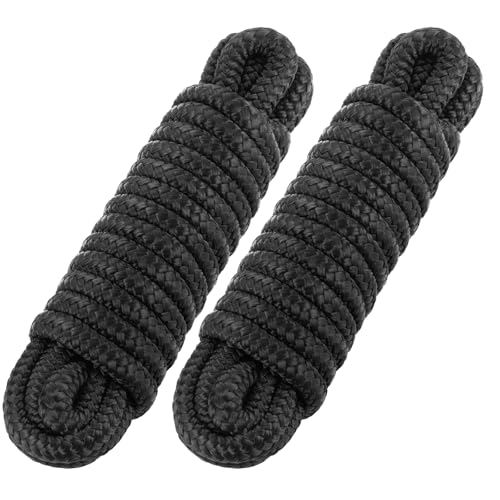
Norestar Premium Double Braided Dock Line
Larger diameter options push into heavier line sizes built for bigger cruisers and sailboats. Consistent stretch runs the full length thanks to double braid construction. A tight weave sheds rainwater fast instead of staying saturated.
Pros
- Larger diameters suit heavier boats
- Sheds water quickly after rain
- Longer lengths cover bigger docks
Cons
- Overkill for small runabouts
- Heavier to handle and stow

Better Boat Premium Dock Lines
Smaller diameter rope suits kayaks, canoes and very small powerboats rather than larger cruisers. A matched pair simplifies bow and stern tie ups without buying separate spools. Compact coils tuck into a small storage locker with room to spare.
Pros
- Sized correctly for small craft
- Sold as a matched pair for bow and stern
- Compact enough for tight storage
Cons
- Too light for boats over about 20 feet
- Limited length options beyond 15 feet
What to look for
Why does nylon stretch matter more than strength? A dock line’s real job is absorbing shock from wave surge and wind gusts, not just holding static weight. Nylon stretches under load, then recovers its shape, spreading that force over time instead of slamming it into a cleat. Stiffer rope, even rope rated stronger, risks a cracked cleat or a line that snaps during a sudden gust.
Twisted vs double braid: which construction fits your boat? Twisted nylon costs less and handles calm marina conditions on smaller boats without issue. Double braid resists abrasion better and keeps its shape longer under repeated rubbing at a chock. Exposed or rough marinas justify the extra cost of double braid construction.
What size dock line do you actually need? A rough sizing rule calls for one eighth inch of diameter per 9 feet of boat length, sizing up in windier or heavier conditions. Spring lines typically run close to the boat’s full length, while bow and stern lines run shorter, around two thirds of that length. Marina cleat spacing can also dictate exact length, so check before cutting anything short.
How do you spot a dock line that needs replacing? Rope that rubs against a chock, piling or rail wears faster than the rest of the line. A reinforced sleeve or chafe guard at that spot adds meaningful life to the rope. Visible fraying, or a stiff, glazed feel from sun and salt exposure, both signal it’s time to replace the line.
How they stack up
| # | Model | Material | Best for | Score | Price |
|---|---|---|---|---|---|
| 1 | New England Ropes Premium Nylon Double Braid Dock Line | Double braid nylon | Best overall | 9.4 | Check price |
| 2 | Attwood Nylon Dock Line | Twisted nylon | Best value | 8.9 | Check price |
| 3 | Extreme Max BoatTector Double Braid Dock Line | Double braid nylon | Best for rough marinas | 8.8 | Check price |
| 4 | Amarine Made Double Braided Nylon Dock Line | Double braid nylon | Best for pontoon boats | 8.6 | Check price |
| 5 | SeaSense Double Braided Nylon Dock Line | Double braid nylon | Best for seasonal storage | 8.4 | Check price |
| 6 | Norestar Premium Double Braided Dock Line | Double braid nylon | Best for larger vessels | 8.5 | Check price |
| 7 | Better Boat Premium Dock Lines | Double braid nylon | Best for kayaks and small craft | 8.0 | Check price |
Frequently asked questions
What size dock line fits a 30 foot boat?
Following the one eighth inch per 9 feet rule, a 30 foot boat generally suits a 3/8 to 1/2 inch line, sizing up for rougher marinas or heavier hulls.
Is nylon or polyester better for dock lines?
Nylon stretches significantly more than polyester, which absorbs shock loads from wave surge better. Polyester resists UV exposure slightly longer but gives less during rough conditions.
How long should bow and stern lines be?
Bow and stern lines typically run around two thirds of the boat’s length, while spring lines usually match the boat’s full length to control fore and aft movement.
Twisted nylon vs double braid dock line: what’s the real difference?
Twisted nylon costs less and splices by hand more easily, while double braid resists abrasion better and holds its shape longer under repeated chafing against chocks and pilings.
How often do dock lines need replacing?
Inspect lines each season for fraying, stiffness or a glazed feel from UV exposure, and swap out any line showing visible fiber damage rather than waiting for it to fail.
Do double braid dock lines still need chafe guards?
Even double braid rope benefits from added chafe protection at chocks and pilings in rough marinas. Some lines, like the Extreme Max BoatTector, build a reinforced sleeve in near the eye.
Can the same rope work as a spring line?
Yes, many owners use the same diameter rope for spring lines, just cut to the boat’s full length rather than the shorter bow and stern measurement.
What eye splice size fits a standard dock cleat?
Most pre-spliced dock lines use a loop sized for common 6 to 10 inch cleats. Very large cleats on bigger vessels may need a custom spliced eye instead of a stock length.
Are double braid dock lines worth the extra cost?
For boats moored nightly in exposed marinas, yes, since the added abrasion resistance and stretch recovery extend the rope’s working life well beyond twisted nylon.
Final word
New England Ropes double braid gives most boat owners the best balance of stretch recovery and abrasion resistance. Attwood covers everyday recreational mooring at a lower price without major compromise. Boats moored in rougher marinas gain the most from Extreme Max BoatTector’s reinforced chafe sleeve.