Which Dog Bowl Height Actually Eases Senior Joint Pain?
WeatherTech’s Double High Pet Feeding System leads for adjustable stand heights and stainless bowls. Basis Pet’s bamboo stand offers strong value, and IRIS USA’s single-tier stand works as a budget entry point. Each reduces bending at mealtime for aging joints.
WeatherTech’s Double High system leads this list for adjustable height and stainless bowls. Basis Pet’s bamboo stand delivers strong value. IRIS USA’s single-tier stand works as an affordable starting point.
Aging dogs vary widely in mobility, appetite and dental sensitivity, which complicates a single answer. We compared stand height options, material safety, base stability and owner feedback on cleaning and durability. Seven picks made the cut based on those factors.
What we recommend
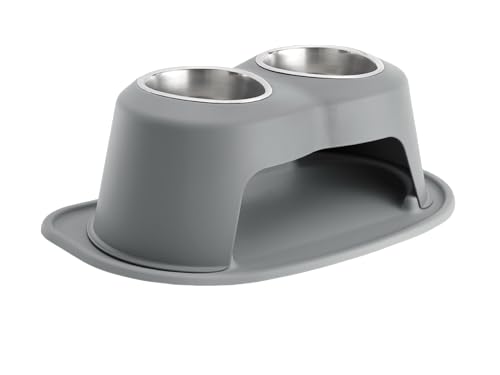
WeatherTech Double High Pet Feeding System
Stainless steel bowls sit on a stand available in three heights, easing strain on aging necks and shoulders. Bowls lift out for dishwasher cleaning. Owners of large or giant senior breeds often choose the tallest setting.
Pros
- Bowls remove easily for washing
- Three stand heights match different dog sizes
- Stainless steel resists bacteria buildup
Cons
- Stand and bowls sometimes ship as separate bundles
- Costs more than basic elevated feeders

Basis Pet Elevated Dog Bowls
A bamboo stand holds two stainless bowls at a fixed elevated height, cutting down on hunching over food. Rubber ring inserts stop bowls from rattling during meals. Owners who want a feeder that blends into home decor tend to favor the wood frame.
Pros
- Wood finish suits most kitchen decor
- Rubber-lined inserts keep meals quiet
- Light enough to move between rooms
Cons
- Fixed height limits use across different-sized dogs
- Bamboo shows water stains over time

IRIS USA Elevated Dog Bowl
A single-tier plastic stand lifts one stainless bowl a few inches off the floor, an easy entry point for testing elevated feeding. Multiple bowl sizes ship for small through large dogs. Assembly means snapping the bowl into a molded frame.
Pros
- Low price for trying elevated feeding
- Stainless bowl is dishwasher safe
- One-piece stand needs no tools to assemble
Cons
- Plastic frame is less durable than metal stands
- Only one bowl per unit, so two are needed for food and water

Neater Feeder Deluxe
A catch basin under the bowls traps spilled water and dropped kibble, useful for older dogs who drool or miss the bowl. Leg extensions raise the unit further for big breeds with hip or shoulder stiffness. Bowls detach independently for quick refills.
Pros
- Catch basin cuts down on floor mess
- Leg extension kit suits large and giant breeds
- Bowls detach for separate washing
Cons
- Takes up more floor space than standard stands
- Leg extensions sell separately for some sizes

Hepper NomNom Bowl
A wide, weighted base anchors this bowl even when a weaker senior dog noses it across the floor. A raised lip catches food that spills over the edge. Bowl and tray separate into two pieces for easier washing.
Pros
- Weighted tray resists sliding and tipping
- Raised lip keeps water off the floor
- Two-piece design simplifies cleaning
Cons
- No elevation, so it won’t ease neck bending
- Takes up more counter space than a single bowl

UPSKY Elevated Dog Bowls with Adjustable Stand
Three adjustable height settings let owners raise the stand as arthritis progresses over time. Removable stainless bowls sit in silicone rings that limit sliding. The metal frame folds flat for storage or travel.
Pros
- Adjustable height tracks worsening joint stiffness
- Silicone rings cut down on noise and slipping
- Frame folds flat for compact storage
Cons
- Requires assembly out of the box
- Silicone rings need periodic cleaning to avoid odor

Outward Hound Fun Feeder Slow Feed Bowl
Raised ridges inside the bowl force dogs to eat around obstacles, slowing gulping that can trigger bloat or vomiting in older dogs. The bowl sits directly on the floor rather than on a stand. A non-slip base keeps it steady during use.
Pros
- Ridge pattern slows gulping and lowers bloat risk
- Plastic construction is dishwasher safe
- Non-slip base holds position during meals
Cons
- No elevation, so it won’t help neck or shoulder strain
- Ridges trap food residue without regular scrubbing
What to look for
What to look for in a bowl for a senior dog Material matters first. Stainless steel resists bacteria and scratching better than plastic. Stability comes next, since a sliding bowl can startle a dog with poor balance. Capacity should match appetite, because many senior dogs eat smaller, more frequent meals. Cleaning ease counts too, especially across multiple pets or feeding schedules.
How bowl height affects joint and neck strain Bending to eat pulls on a dog’s neck, shoulders and front legs at every meal. Dogs with arthritis or spinal issues feel that repeated motion more than younger dogs. Elevated stands raise the bowl toward chest height, cutting the bend. Height needs vary by breed, so adjustable stands like the UPSKY let owners fine-tune the level as mobility changes. Vets sometimes recommend elevation after surgery, though needs differ by dog.
Choosing a bowl for large versus small senior dogs Large and giant breeds often need taller stands and bigger bowl capacity than small dogs. The Neater Feeder Deluxe adds leg extensions for bigger frames. Small senior dogs may need only a few inches of lift, since their necks reach less distance to the floor. Multi-dog households sometimes need two stand heights rather than one shared stand. Bowl width matters too, since flat-faced breeds do better with wide, shallow bowls.
Bowls for dogs with mobility issues, dental pain or fast eating Dogs with sore teeth or gum disease often prefer a shallow bowl that avoids pressing on sensitive gums. Weighted, non-tip bases like the Hepper NomNom’s help dogs with a weak grip or shaky steps. Fast eaters benefit from slow-feed ridges that stretch out mealtime and ease digestion. Combining a slow-feed bowl with an elevated stand is not always possible, so owners often address whichever issue feels more urgent. Rotating between bowl types as a dog’s condition changes is common.
How they compare
| # | Model | Material | Best for | Score | Price |
|---|---|---|---|---|---|
| 1 | WeatherTech Double High Pet Feeding System | 304 stainless steel bowls | Best overall | 9.4 | Check price |
| 2 | Basis Pet Elevated Dog Bowls | Bamboo | Best value | 9.1 | Check price |
| 3 | IRIS USA Elevated Dog Bowl | Molded plastic | Best budget | 8.8 | Check price |
| 4 | Neater Feeder Deluxe | BPA-free plastic frame, stainless steel bowls | Best for large senior dogs | 8.6 | Check price |
| 5 | Hepper NomNom Bowl | Stainless steel bowl, ABS plastic tray | Best for messy eaters | 8.4 | Check price |
| 6 | UPSKY Elevated Dog Bowls with Adjustable Stand | Powder-coated steel | Best for arthritic dogs | 8.2 | Check price |
| 7 | Outward Hound Fun Feeder Slow Feed Bowl | BPA-free plastic | Best for fast eaters | 8.0 | Check price |
Good to know
What is the best bowl height for a senior dog?
Height depends on shoulder height, but many owners start around 4 to 8 inches off the floor and adjust from there. Adjustable stands let you raise the level further as arthritis or spinal issues progress.
Do elevated dog bowls help dogs with arthritis?
Owners of arthritic dogs report less hesitation at mealtime once bowls are raised, since less bending eases pressure on stiff joints. Vets sometimes suggest elevation for dogs recovering from spinal or joint surgery too.
Can senior dogs use slow feeder bowls?
Yes, especially dogs prone to gulping food and vomiting afterward. Ridge patterns like the Outward Hound Fun Feeder’s slow down eating without changing portion size.
Is stainless steel better than plastic for older dogs?
Stainless steel resists scratches and bacteria buildup better than plastic, which matters for dogs with weaker immune systems. Plastic bowls can also trigger chin acne in some dogs, an issue steel avoids.
How do I stop my senior dog’s bowl from sliding?
A weighted, wide base like the Hepper NomNom’s tray keeps a bowl in place even when a dog noses it. Rubber feet or silicone rings under a stand, like the UPSKY’s, add grip too.
Which bowl works best for large senior dogs with hip problems?
The Neater Feeder Deluxe suits large dogs well, since leg extensions add height for bigger frames while a catch basin manages spills. Taller elevated stands generally beat tabletop feeders for big breeds.
Are ceramic bowls safe for senior dogs?
They can be, if lead-free and chip-free, but chips can harbor bacteria and cracks can injure a dog’s mouth. Stainless steel or BPA-free plastic tends to be lower-maintenance for aging pets.
How often should dog bowls be cleaned or replaced?
Wash bowls daily, ideally in a dishwasher for stainless steel models, to stop bacterial film from building up. Replace a bowl once it shows deep scratches, cracks or a base that no longer sits flat.
Elevated vs regular dog bowls, which is better for seniors?
Elevated bowls ease neck and shoulder strain for dogs with joint pain, while regular bowls suit dogs without mobility issues just as well. Choose elevation based on the individual dog’s mobility, not age alone.
The bottom line
WeatherTech’s Double High system offers the most flexibility across dog sizes and mobility levels, making it a solid starting point for most seniors. Owners on a tighter budget can still ease neck strain with the IRIS USA stand or get better value from Basis Pet’s bamboo design. Matching height and stability to a dog’s specific joint or dental issue matters more than chasing one universal winner.


