What Grooming Tools Work Best on Large, Thick-Coated Dogs?
Owners handling thick double coats get the most cutting power from the Andis ProClip AGC2, while the Wahl Lithium Ion Pro kit delivers full-body trims at a lower cost. For shedding control, the FURminator deShedding Tool for Large Dogs removes loose undercoat fastest based on owner reports.
Large-breed coats overwhelm a standard grooming kit fast. A motor built for double coats keeps cutting speed steady instead of stalling mid-pass. Brush width and grinder wheel speed matter just as much as blade sharpness once a dog crosses fifty pounds.
Coat type varies widely across large breeds, from a short-haired Labrador to a heavily coated Bernese Mountain Dog. We compared motor specifications, blade steel, and pin length against manufacturer coat-type guidance, then checked owner feedback on shedding results and noise tolerance.
What we recommend
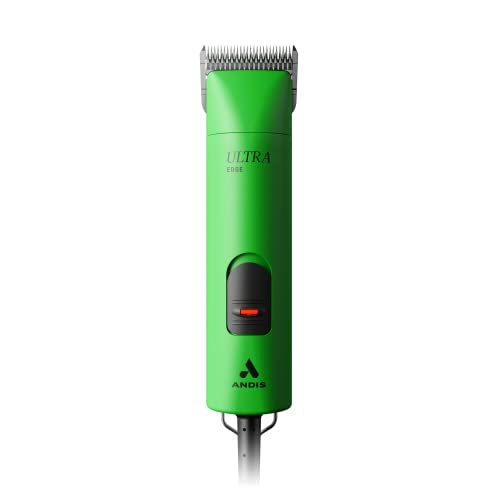
Andis ProClip AGC2 Super 2-Speed Clipper
Groomers reach for this detachable-blade clipper because its rotary motor holds speed even through dense undercoat. Two speed settings slow things down around paws and ears where skin is sensitive. Being corded, it skips battery limits entirely across back-to-back sessions.
Pros
- Rotary motor maintains speed under heavy coat load
- Detachable blades swap easily between lengths
- Corded power removes any runtime limit
Cons
- Cord length restricts movement during grooming
- Costs more than most home clipper kits

Wahl Lithium Ion Pro Series Dog Clipper Kit
This cordless kit ships with several guide combs for different trim lengths across a large dog’s body. Its lithium-ion battery runs up to two hours per charge, enough for one full groom without a recharge break. Self-sharpening stainless steel blades keep cutting well through repeated use on thick fur.
Pros
- Two-hour runtime covers a full grooming session
- Guide combs handle multiple trim lengths
- Self-sharpening blades reduce maintenance needs
Cons
- Motor noise runs higher than quiet-mode clippers
- Needs a full charge before long sessions
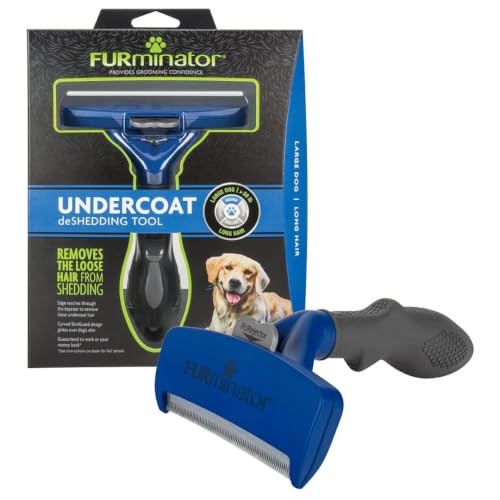
FURminator deShedding Tool for Large Dogs
This tool works through a large dog’s topcoat to pull loose undercoat while leaving guard hairs intact. Its stainless steel edge is sized specifically for large breeds, not scaled down from a small-dog version. An ejector button clears trapped hair from the tool between passes.
Pros
- Reaches undercoat without cutting guard hairs
- Ejector button speeds up cleanup between passes
- Edge sized specifically for large-breed coats
Cons
- Doesn’t replace regular brushing between uses
- Frequent use on thin coats can irritate skin

Chris Christensen Big G Slicker Brush
Wide pin spacing on this slicker brush suits long, flowing coats rather than dense short fur. Its oversized head covers more surface area per stroke, which cuts brushing time on large dogs. A cushioned pad softens pin pressure against the skin during longer sessions.
Pros
- Wide spacing moves through long fur easily
- Oversized head shortens full-body brushing time
- Cushioned pad reduces pressure on skin
Cons
- Priced above standard slicker brushes
- Less effective on short, dense double coats
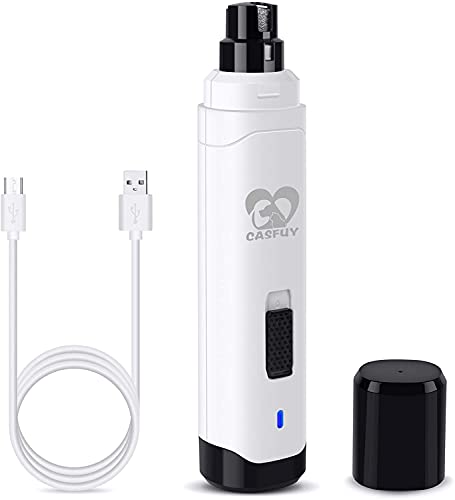
Oster Gentle Paws Pet Nail Grinder
Rather than cutting nails in one motion, this rotary grinder files them down gradually, an approach that suits dogs wary of clippers. Its low-vibration motor stays quiet enough to keep larger dogs calm during sessions. Multiple grinding ports accommodate the thicker nails common on large breeds.
Pros
- Gradual filing lowers the risk of hitting the quick
- Quiet motor keeps anxious dogs calmer
- Multiple ports fit different nail thicknesses
Cons
- Takes longer per nail than clipper-style trims
- Some dogs need desensitization before first use

Hertzko Self-Cleaning Slicker Brush
Fine, angled bristles on this brush work through everyday tangles and loose hair on a large coat. One press of the retraction button pulls collected hair off the bristles, cutting cleanup time. Its larger head size suits bigger coats better than compact slicker brushes do.
Pros
- Push-button retraction saves cleanup time
- Wide head covers more coat per stroke
- Comfortable grip for frequent daily use
Cons
- Not built for heavy matting removal
- Bristles can feel sharp on thin-coated dogs

Safari Shedding Blade for Dogs
Coarse and fine edges sit on opposite sides of this double-sided blade, covering heavy undercoat removal and finishing passes in one tool. Its looped design works like a curry comb across large areas of coat. Without a motor or battery, it costs less than powered deshedding tools while still pulling loose hair effectively.
Pros
- Two edge types in one affordable tool
- Loop design covers large coat areas fast
- No batteries or charging required
Cons
- Direct-grip handle can tire hands over long sessions
- Finish is less refined than a dedicated tool
The lineup, side by side
| # | Model | Power Source | Best for | Score | Price |
|---|---|---|---|---|---|
| 1 | Andis ProClip AGC2 Super 2-Speed Clipper | Corded, rotary motor | Best overall clipper | 9.4 | Check price |
| 2 | Wahl Lithium Ion Pro Series Dog Clipper Kit | Lithium-ion cordless, up to 2 hr runtime | Best value clipper kit | 9.2 | Check price |
| 3 | FURminator deShedding Tool for Large Dogs | Stainless steel deshedding edge | Best for shedding control | 9.0 | Check price |
| 4 | Chris Christensen Big G Slicker Brush | Wide-spaced flexible pins | Best for long coats | 8.8 | Check price |
| 5 | Oster Gentle Paws Pet Nail Grinder | Battery-powered rotary motor | Best for nail care | 8.6 | Check price |
| 6 | Hertzko Self-Cleaning Slicker Brush | Fine angled stainless pins | Best for daily brushing | 8.3 | Check price |
| 7 | Safari Shedding Blade for Dogs | Coarse and fine double-sided blade | Best budget deshedding tool | 8.0 | Check price |
How to choose
What to look for in large-dog grooming supplies Large breeds put more strain on a clipper motor than a small dog’s coat ever will. Rotary or high-torque motors hold cutting speed through thick fur instead of stalling mid-pass. Brush and comb heads sized for large coats cover more area per stroke, which shortens grooming time. Noise also matters, since some big dogs react anxiously to a loud clipper or grinder.
Gear for thick or double-coated breeds Double-coated breeds like Huskies and Bernese Mountain Dogs shed a dense undercoat that a standard brush can’t reach. Deshedding tools with a stainless steel edge, sized for large coats, pull loose fur while leaving the topcoat alone. A rotary clipper motor holds speed through dense fur better than a standard vibrating motor during trims.
Gear for long-haired large breeds Golden Retrievers, Afghan Hounds, and other long-haired large breeds need wider brush pin spacing to move through length without snagging. Slicker brushes built for long coats cover more surface area per stroke than compact models do. Brushing between full grooming sessions also prevents the matting that longer coats are prone to.
Nail and finishing care for large dogs Nails on large breeds grow thicker and often darker than small-dog nails, making the quick harder to spot before a trim. Rotary grinders file gradually, lowering the risk of cutting into the quick compared with clipper-style trimmers. Low-vibration motors also help keep bigger, more sensitive dogs calm during nail sessions.
Questions worth asking
What grooming supplies do large dogs need most?
A clipper rated for thick coats, a slicker brush sized for a large coat, a deshedding tool, and a nail grinder cover most large-breed grooming needs.
Are dog clippers different for large versus small breeds?
Motor power matters more for large breeds. Rotary motors, like the one in the Andis ProClip AGC2, hold cutting speed through thicker coats better than motors built for small dogs.
How often should a large dog be brushed?
Double-coated large breeds generally need brushing several times a week. Short-haired large breeds can often go with once a week during light shedding periods.
Do deshedding tools work on all large dog breeds?
They work best on breeds with a dense undercoat, such as Labradors and German Shepherds. Wiry or curly-coated breeds often need a different brush type instead.
What is the difference between a slicker brush and a deshedding tool?
A slicker brush handles everyday tangles and surface hair. A deshedding tool reaches deeper to pull loose undercoat specifically.
Is a nail grinder better than clippers for large dogs?
Grinders file nails gradually, which lowers the risk of cutting the quick on thick, dark large-breed nails. Clippers cut faster but demand more precision.
Can you use human clippers on a large dog?
Dog-specific clippers use blades built for coat density and skin sensitivity that differ from human hair clippers, so a dog-rated clipper typically gives better results.
How long does a cordless dog clipper battery last?
Runtime varies by model. Kits like the Wahl Lithium Ion Pro list up to two hours per charge, generally enough for one full-body groom on a large dog.
What size slicker brush is best for a large dog?
Look for an oversized brush head, like the one on the Chris Christensen Big G, since a wider surface covers more coat per stroke than compact brushes made for small dogs.
Is a deshedding blade or a deshedding tool better for large dogs?
A deshedding tool such as the FURminator offers a more refined finish, while a shedding blade like the Safari costs less and still clears loose undercoat effectively.
Our pick
Coat type should guide the pick more than price alone. Thick double coats call for the motor power in the Andis ProClip AGC2 and the reach of the FURminator deShedding Tool, while long-haired breeds do better with the wide pin spacing on the Chris Christensen Big G brush. A low-vibration grinder like the Oster Gentle Paws rounds out the kit for manageable nail care.