How to Pick Dog Travel Gear That Actually Protects Them
The Ruffwear Load Up Harness is our top pick because it is crash tested and doubles as a walking harness at rest stops. The Sleepypod Air leads for in-cabin flights, and the Kurgo Wander Hammock is the most practical way to protect a back seat.
Ruffwear’s Load Up Harness leads this ranking, with the Sleepypod Air covering in-cabin flights and the Kurgo Wander Hammock handling back seat protection. Ramps, carriers, and a collapsible bowl round out a complete travel kit.
Marketing language makes travel gear tricky to shop for. Plenty of harnesses are described as safe without any crash testing behind them, and carrier dimensions billed as airline approved vary by carrier and aircraft. We compared published crash test programs, stated dimensions, materials, and what owners report about long journeys, then ranked on evidence rather than claims.
The best picks, ranked

Ruffwear Load Up Harness
Strength webbing and a reinforced steel loop form the core of this dedicated vehicle restraint, and Ruffwear has put it through independent crash testing. Padding across the chest spreads load rather than concentrating it on the throat. Owners report the tether length is short enough to keep a dog seated without feeling punitive.
Pros
- Independently crash tested rather than self certified
- Wide chest panel spreads force away from the neck
- Works as a walking harness at stops
Cons
- Stiffer and warmer than a light walking harness
- Sizing runs snug, so measure carefully
Sleepypod Air
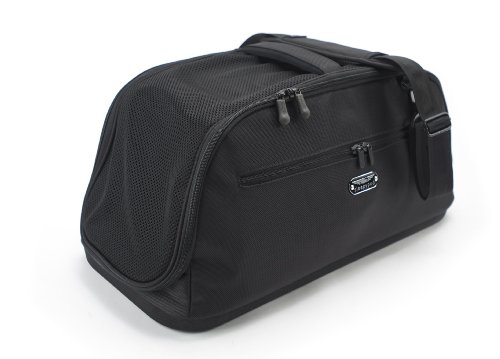
Compressible ends let this carrier fit under a range of airline seats without squashing the dog inside. It has also been through crash testing, which matters since the same carrier usually rides in the car to the airport. Owners report the plush interior mat washes well and settles anxious travelers.
Pros
- Adapts to different under seat dimensions
- Doubles as a secured car carrier
- Ventilation on multiple panels
Cons
- Only suitable for small dogs and puppies
- Heavier than basic fabric carriers

Kurgo Wander Hammock Car Seat Cover
Slung across the back seat, this hammock keeps a dog from sliding into the footwell during hard braking. Water resistant fabric keeps mud and wet fur off upholstery, and the cover converts to a flat bench when you carry passengers instead. Owners report the seat anchors hold better than the elastic straps on cheaper covers.
Pros
- Stops dogs slipping into the footwell
- Converts between hammock and bench cover
- Washes without losing shape
Cons
- Not a restraint, so pair it with a harness
- Bulky to store when not fitted

PetSafe Happy Ride Telescoping Dog Ramp
Removing the jump into a boot or high seat matters for seniors and long backed breeds, and a ramp solves that directly. This one telescopes from a compact carry length out to just over six feet and has a high traction surface. Owners report it takes a couple of sessions before a nervous dog walks it with confidence.
Pros
- Takes strain off hips and elbows
- Wide enough for large breeds
- Latches shut for carrying
Cons
- Still bulky in a small boot
- Some dogs need training to use it

Petmate Sky Kennel
Metal fixings, ventilation on four sides, and included live animal labels make this the classic hard sided crate for dogs traveling as checked baggage or cargo. It also works as a sturdy crate once you reach your destination. Owners report checking specific airline requirements first, since rules differ between carriers and routes.
Pros
- Built for the demands of hold travel
- Wide size range including giant breeds
- Doubles as a solid home crate
Cons
- Heavy and awkward to move alone
- Airline acceptance varies, so confirm before booking

Sherpa Original Deluxe Pet Carrier
Spring wire rims let the top of this soft sided carrier flex down to meet seat height limits at the gate. A luggage strap slides over a suitcase handle, which makes airport transfers less of a juggle. Owners report the mesh panels move air well but need care around determined chewers.
Pros
- Flexes to fit tighter under seat spaces
- Slides onto rolling luggage handles
- Light to carry when empty
Cons
- Less protective than a hard shell
- Mesh can be damaged by anxious chewers

Kurgo Mash and Stash Collapsible Dog Bowl
This collapsible bowl is the smallest piece of kit here and likely the one used on every single trip. Folded flat, it clips to a bag with a carabiner and holds a useful volume for a rest stop drink. Owners report it holds its shape better than silicone bowls that flop when full.
Pros
- Packs down to almost nothing
- Stays upright when filled
- Clips to a leash or backpack loop
Cons
- Fabric liner takes time to dry fully
- Too small for very large breeds to drink deeply
How to pick the right one
What every dog travel kit needs first An unrestrained dog is a hazard to itself and to everyone in the car during hard braking. Start your kit with a crash tested harness or a secured crate, then add hammocks, covers, and bowls around it. Seat covers and beds make the journey pleasant but do nothing in a collision, so do not treat them as substitutes.
How to choose a carrier that meets airline rules Under seat dimensions differ by airline and by aircraft type, and no carrier is universally approved despite the marketing. Confirm the maximum height and footprint for your specific route, then buy to that. Soft carriers with flexible tops give a margin of error that rigid boxes cannot.
How to measure your dog for the right size gear Manufacturer size charts use chest girth, length, and weight, and breed averages hide a lot of individual variation. Take a soft tape measure to the widest part of the chest and from collar to tail base. Sizing up for comfort usually backfires with restraints, where a loose fit reduces protection.
Handling mess and heat on long trips Drool, muddy paws, and occasional accidents come with long journeys, so favor washable liners and water resistant fabrics. Ventilation matters just as much as absorbency. Park in shade at stops, keep water accessible, and never leave a dog in a stationary car in warm weather even with a crate fan running.
How they compare
| # | Model | Type | Best for | Score | Price |
|---|---|---|---|---|---|
| 1 | Ruffwear Load Up Harness | Vehicle safety harness | Best overall | 9.4 | Check price |
| 2 | Sleepypod Air | In cabin pet carrier | Best for flights | 9.2 | Check price |
| 3 | Kurgo Wander Hammock Car Seat Cover | Full back bench, hammock or flat | Best seat protection | 9.0 | Check price |
| 4 | PetSafe Happy Ride Telescoping Dog Ramp | Around 72 inches | Best for older dogs | 8.8 | Check price |
| 5 | Petmate Sky Kennel | Hard plastic shell with metal door | Best for cargo travel | 8.6 | Check price |
| 6 | Sherpa Original Deluxe Pet Carrier | Soft sided carrier | Best value carrier | 8.3 | Check price |
| 7 | Kurgo Mash and Stash Collapsible Dog Bowl | Around 24 ounces | Best packable extra | 8.0 | Check price |
Questions worth asking
Is a car harness safer than a crate for dogs?
Both can work well when chosen properly. A crash tested harness restrains the dog against the seat belt system, while a secured crate contains the dog in a rigid shell. The wrong version of either is unsafe, so prioritize products with published crash testing over generic ones.
Can a dog ride in the front seat of a car?
It is generally discouraged, because a deploying airbag can injure a dog badly. The back seat or a secured cargo area is safer overall. If a dog must ride in front for medical reasons, ask about disabling the passenger airbag for that seat.
How often should you stop on a road trip with a dog?
Every two to three hours is a common guideline, and more often for puppies and seniors. Stops let a dog drink, relieve itself, and stretch, which reduces travel sickness. Keep a leash on before opening any door at an unfamiliar stop.
What helps a dog with car sickness?
Facing forward, a stable restrained position, fresh air, and an empty stomach a couple of hours before departure all help. Owners report gradual short trips build tolerance over time. Persistent sickness is worth raising with a vet, who can advise on options.
Do young healthy dogs need a car ramp?
Not usually, though repeated jumping from a high boot is hard on joints over the years. Ramps become genuinely valuable for seniors, long backed breeds, and dogs recovering from surgery. Introducing one early makes acceptance easier later in life.
How do you get a dog used to a travel carrier?
Leave it open at home with familiar bedding and treats inside for days before travel. Feed meals near it, then inside it, then close the door for short periods. Owners report this gradual approach turns the carrier into a den rather than a trap.
What paperwork do dogs need to fly?
Requirements vary by country and airline, and often include microchipping, vaccination records, and a health certificate issued within a set window. Check the destination rules and the airline policy early, since some certificates carry short validity periods.
Should a dog harness clip to the seat belt or an anchor?
Follow the manufacturer instructions for the specific product you own. Most vehicle harnesses use a short tether through the seat belt path, which limits forward movement. Very long tethers defeat the purpose, so keep the dog able to sit and lie down but not move between seats.
What is the best dog travel gear for flying with a small dog?
The Sleepypod Air stands out because its compressible ends fit varying under seat dimensions and it has been crash tested for the car ride too. Pack familiar bedding inside and confirm your airline’s carrier limits before booking, since rules differ by route.
The verdict
For most owners the Ruffwear Load Up Harness plus a Kurgo Wander Hammock covers everyday car travel properly, one for safety and one for the upholstery. Small dog owners flying in cabin should look at the Sleepypod Air, which handles both the flight and the drive. Add a ramp and a collapsible bowl as the trips get longer.