Top Drawing Inks for Artists and Illustrators
The best drawing ink overall is the Winsor & Newton Indian Ink, prized for its deep, opaque black and quick-drying waterproof finish. It suits artists who need reliable permanence for line work and washes. Its main limitation is the shellac content, which can clog pens if left to dry.
Drawing ink is a staple for illustrators, calligraphers, and sketch artists. The right ink can make the difference between crisp, lasting lines and frustrating smudges.
We compared popular inks from trusted brands, focusing on pigment quality, drying time, and ease of use. Whether you work with dip pens, brushes, or technical pens, this guide helps you find the perfect match.
How to choose
Our top picks
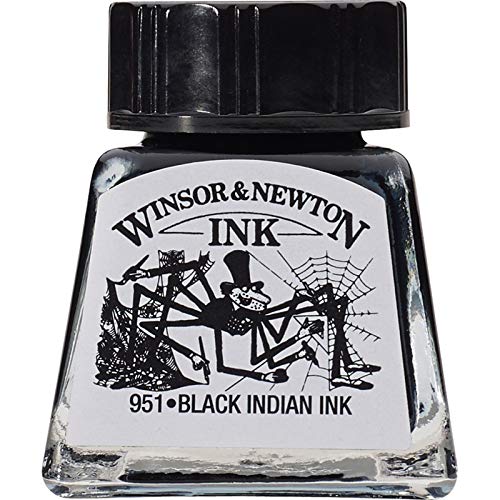
Winsor & Newton Indian Ink
A classic shellac-based ink that dries to a permanent, matte black. It flows beautifully from dip pens and brushes, and once dry, it is completely waterproof, making it ideal for layering washes.
Pros
- Deep opaque black
- Dries waterproof
- Excellent flow
Cons
- Shellac can clog pens
- Not suitable for fountain pens

Dr. Ph. Martin’s Bombay India Ink
This water-resistant India ink comes in a wide array of vivid colors. It works well with dip pens, brushes, and airbrushes, and its low odor makes it pleasant to use in studios.
Pros
- Many vibrant shades
- Water-resistant
- Low odor
Cons
- Can separate if not shaken
- Some colors less lightfast

Speedball Super Black India Ink
An affordable, reliable India ink that delivers a rich black. It is opaque, dries quickly, and is waterproof, making it a staple for introductory art classes and practice.
Pros
- Budget friendly
- Reliable performance
- Available in many sizes
Cons
- Less archival than premium inks
- Can be somewhat thin

Faber-Castell India Ink
This ink is known for its intense black and smooth consistency. It is waterproof and pigmented, and it does not bleed through most papers, making it a favorite for urban sketchers.
Pros
- Very opaque black
- Won’t bleed through paper
- Good for layering
Cons
- Small bottle size
- Can be thick for fine pens

Ziller Inks (Dark Blue)
Ziller inks are dye-based and offer a wide range of colors. They are highly fluid and produce beautiful hairlines, making them a favorite among calligraphers who use dip pens.
Pros
- Excellent flow for fine lines
- Stunning color depth
- Works well on various papers
Cons
- Not waterproof
- May fade over time

Pelikan Drawing Ink A and C (Black)
Pelikan’s drawing inks are known for their high quality and consistency. The black is deep and dries to a matte finish. It is suitable for technical pens when diluted appropriately, but best used with brushes or dip pens.
Pros
- Very consistent quality
- Deep matte black
- Good for airbrush
Cons
- Can clog technical pens if not cleaned
- Requires dilution for some uses

Kuretake Sumi Ink (Black)
This liquid sumi ink is made from soot and animal glue, offering a rich, velvety black. It is perfect for brush calligraphy and sumi-e painting, providing a smooth, flowing consistency.
Pros
- Authentic sumi quality
- Rich, layered blacks
- Works beautifully with brushes
Cons
- Not waterproof
- Requires careful handling
The lineup, side by side
| # | Model | Volume | Best for | Score | Price |
|---|---|---|---|---|---|
| 1 | Winsor & Newton Indian Ink | 75 ml bottle | Waterproof black line work | 9.6 | Check price |
| 2 | Dr. Ph. Martin’s Bombay India Ink | 30 ml bottle | Vibrant colors and versatile use | 9.2 | Check price |
| 3 | Speedball Super Black India Ink | 59 ml bottle | Beginners and students | 9.0 | Check price |
| 4 | Faber-Castell India Ink | 30 ml bottle | Sketching with brushes and pens | 8.8 | Check price |
| 5 | Ziller Inks (Dark Blue) | 30 ml bottle | Calligraphy and dip pen work | 8.6 | Check price |
| 6 | Pelikan Drawing Ink A and C (Black) | 30 ml bottle | Technical pens and airbrushing | 8.4 | Check price |
| 7 | Kuretake Sumi Ink (Black) | 60 ml bottle | Traditional Japanese brush painting | 8.2 | Check price |
Questions worth asking
What is the difference between India ink and regular drawing ink?
India ink traditionally contains shellac and is waterproof when dry. Regular drawing inks may be dye-based and non-waterproof, offering easier erasure but less permanence.
Can I use drawing ink in a fountain pen?
Most drawing inks are not suitable for fountain pens because they contain particles or shellac that can clog the feed. Use only inks specifically labeled for fountain pens.
Is drawing ink permanent?
Permanence varies by brand. Pigmented inks and those with shellac are usually waterproof and highly permanent. Dye-based inks are less permanent and may fade over time.
How do I clean brushes used with drawing ink?
Clean brushes with warm soapy water immediately after use. For shellac-based inks, use rubbing alcohol or a specialized brush cleaner to dissolve the residue.
Can I mix different brands of drawing ink?
Mixing different inks can be risky due to incompatible binders. It’s best to stick with one brand or test small amounts first to avoid precipitation or separation.
What paper is best for drawing ink?
A heavy, smooth paper like Bristol board or hot-press watercolor paper works well. Avoid thin papers that may bleed or buckle.
How do I achieve a lighter value with drawing ink?
Dilute the ink with distilled water to create washes. For line work, use a lighter touch or a finer nib to produce thinner lines.
Are there non-toxic drawing inks?
Many modern inks are labeled non-toxic and are safe for general use. However, always check the label, and avoid ingesting or getting ink in your eyes.
Our take
If you need a versatile, permanent black ink, choose the Winsor & Newton Indian Ink. For a budget-friendly option that still performs well, the Speedball Super Black India Ink is a solid choice. And for calligraphers seeking vibrant colors, the Ziller Inks offer exceptional flow and hue.