Which Drawing Paper Fits Graphite, Ink, or Charcoal Best
Strathmore’s 400 Series pad handles most graphite and charcoal work, thanks to its medium tooth and heavier 80 lb stock. Canson XL delivers the best value for daily sketching. Ink and marker artists get crisper lines from the smooth-finish Strathmore 300 Series Bristol pad.
Strathmore’s 400 Series Drawing Pad leads this lineup for graphite and charcoal artists. Its 80 lb medium-tooth surface holds pigment through repeated erasing. Fine ink linework is the one place its texture gets in the way.
Tooth, weight, and sizing change how a pencil or pen behaves on paper. Heavier stock resists ghosting and survives more erasing before it wears through. We compared these pads on GSM weight, surface texture, sheet count, and binding across graphite, charcoal, ink, and mixed media use.
The shortlist, ranked

Strathmore 400 Series Drawing Pad
An 80 lb (130 gsm) sheet gives this pad enough tooth to hold graphite and charcoal without shredding under an eraser. Wire binding keeps the pad flat for shading with a resting hand. Perforated edges let sheets tear away cleanly for a portfolio.
Pros
- Holds up to repeated erasing
- Lies flat for shading with a resting hand
- Perforated sheets tear away cleanly
Cons
- Texture shows through very fine ink lines
- Not sized for heavy wet media

Canson XL Series Drawing Pad
A lighter 60 lb (97 gsm) sheet keeps this pad affordable for daily sketch practice. Fine grain surface handles graphite, charcoal, and light ink washes. Acid-free stock resists yellowing over years of use.
Pros
- Large 100-sheet count lowers cost per page
- Acid-free stock resists yellowing
- Works well for daily practice without wasting premium paper
Cons
- Thinner sheet ghosts under heavy pencil pressure
- Not built for wet media layering
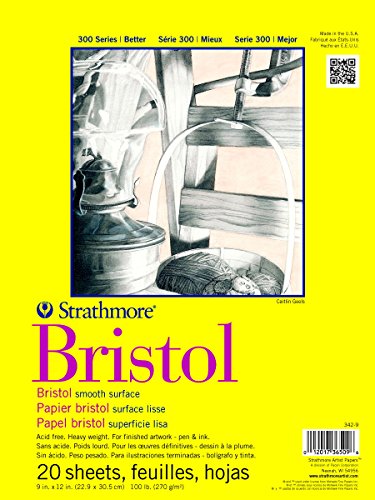
Strathmore 300 Series Bristol Smooth Pad
Smooth plate finish gives ink pens and markers a crisp line with no paper texture interrupting the stroke. At 100 lb, the stock resists buckling from light marker or watercolor washes. Twenty sheets per pad keep the price reasonable for finished ink work.
Pros
- Crisp lines for pen and ink
- Heavier stock resists warping
- Handles light marker layering
Cons
- Little tooth for graphite shading
- Fewer sheets per pad than sketch-focused options

Canson Mi-Teintes Pastel Paper Pad
Honeycomb texture on this 160 gsm stock holds pastel and charcoal pigment better than smooth paper. Both sides of each sheet are usable, each with a different texture. Assorted tinted colors skip a separate toning step before drawing.
Pros
- Holds heavy pastel and charcoal layers
- Two usable textures per sheet
- Tinted stock skips a colored background step
Cons
- Not suited for graphite fine detail
- Higher cost per sheet than plain sketch pads

Strathmore 500 Series Bristol Vellum Pad
Vellum finish adds slight tooth over standard Bristol smooth, letting graphite and colored pencil blend. Inked linework still holds up on the same sheet. At 300 gsm, the stock tolerates layered mixed media better than lighter pads.
Pros
- Balances tooth and smoothness for mixed media
- Heavy stock resists buckling
- Works for graphite and ink in the same piece
Cons
- Premium price per sheet
- Smaller sheet count than practice-focused pads

Canson Montval Watercolor Pad
Cold press texture on this 140 lb (300 gsm) sheet is built for watercolor, but it also suits graphite and ink work with an occasional wash. Heavy weight resists buckling under light wet media. Twelve sheets per pad reflect the premium stock.
Pros
- Handles light watercolor washes over sketches
- Heavy weight resists warping
- Versatile for mixed graphite and wash pieces
Cons
- Overkill weight for dry-media-only sketching
- Fewer sheets per pad given the price

Strathmore 200 Series Recycled Sketch Pad
A 50 lb (74 gsm) sheet made partly from recycled fiber keeps cost low for rough practice work. Light tooth suits quick graphite studies rather than finished pieces. One hundred sheets per pad make it easy to sketch daily without rationing paper.
Pros
- Lowest cost per sheet in this lineup
- Recycled fiber content
- Good for warm-up sketches and thumbnails
Cons
- Thin sheet shows pencil ghosting on the back
- Not durable under repeated erasing
Compared at a glance
| # | Model | Weight | Best for | Score | Price |
|---|---|---|---|---|---|
| 1 | Strathmore 400 Series Drawing Pad | 80 lb / 130 gsm | Best overall | 9.3 | Check price |
| 2 | Canson XL Series Drawing Pad | 60 lb / 97 gsm | Best value | 8.8 | Check price |
| 3 | Strathmore 300 Series Bristol Smooth Pad | 100 lb / 270 gsm | Best for ink and pen | 9.0 | Check price |
| 4 | Canson Mi-Teintes Pastel Paper Pad | 160 gsm | Best for pastel and charcoal | 8.9 | Check price |
| 5 | Strathmore 500 Series Bristol Vellum Pad | 300 gsm | Best for mixed media detail work | 9.1 | Check price |
| 6 | Canson Montval Watercolor Pad | 140 lb / 300 gsm | Best for wet media crossover | 8.7 | Check price |
| 7 | Strathmore 200 Series Recycled Sketch Pad | 50 lb / 74 gsm | Best budget for practice sketching | 8.3 | Check price |
How to pick the right one
What paper weight means for drawing GSM or pound weight indicates how thick a sheet is. Heavier stock resists buckling and ghosting from pressure. Sketchbooks for quick practice typically run 50 to 70 lb. Finished graphite or mixed media work benefits from 80 lb or higher.
Matching tooth to your medium Tooth describes the surface texture of a sheet. Rougher tooth holds more pigment, which suits charcoal and pastel. Smooth Bristol surfaces suit ink pens and markers instead. Texture would otherwise break up a clean line.
Wire-bound vs glue-bound pads Wire-bound pads lie flat, which helps when shading with a hand resting near the spine. Glue-bound tablets cost less and tear out cleanly. Portfolios needing loose, uniform sheets favor the tablet format.
When a specialty surface makes sense Pastel and charcoal artists benefit from textured or tinted stock built for those media. Standard drawing paper wears down faster under heavy pigment layers. Mixed media work that crosses into light watercolor washes needs a heavier, more absorbent sheet than typical sketch paper provides.
Common questions
What GSM is best for drawing paper?
130 to 160 gsm balances durability with cost for general graphite and charcoal work. Lighter 90 gsm paper suits quick practice sketches but shows ghosting from pressure and erasing.
Is Bristol paper good for drawing?
Yes, especially for ink pens and markers, since the smooth plate finish supports crisp lines. Bristol vellum adds slight tooth for graphite work that also needs ink detail.
Can you use regular sketch paper for charcoal?
Light charcoal sketches work fine on standard sketch paper. Heavier layering needs textured pastel or charcoal-specific paper that holds more pigment without smearing.
What is the difference between sketch paper and drawing paper?
Sketch paper runs lighter and suits quick practice. Drawing paper runs heavier and holds up to finished, detailed work with more erasing and layering.
Does drawing paper need to be acid-free?
Framed or archived pieces benefit from acid-free stock, which resists yellowing over time. Practice sketchbooks matter less, since those pages rarely get archived long-term.
Which paper works best for both pencil and ink?
Vellum-finish Bristol paper offers a middle ground. It has enough tooth for graphite shading and a smooth enough surface for ink linework in the same piece.
Do wire-bound pads work better than tablets for drawing?
Wire-bound pads lie flatter, which helps hand positioning near the spine. Tablets cost less and tear cleanly for portfolio presentation.
Is cold press paper suitable for pencil drawing?
Cold press texture, common on watercolor paper, works for graphite too. The rougher tooth produces a grainier line than dedicated drawing paper.
Strathmore vs Canson: which drawing pad is better for beginners?
Canson XL costs less per sheet and suits high-volume beginner practice. Strathmore’s 400 Series holds up better once a beginner starts finishing pieces worth keeping.
Is heavier drawing paper always better?
Not for quick sketching. Heavier stock like 300 gsm costs more per sheet and adds nothing for thumbnails or warm-up drawings, where a lighter 50 to 74 lb sheet works fine.
The verdict
Strathmore’s 400 Series pad fits most graphite and charcoal artists best, thanks to its balanced tooth and reliable eraser durability. Ink and marker users should reach for the Strathmore 300 Series Bristol Smooth instead. Anyone sketching daily on a budget gets more value from the Canson XL Series, and pastel or charcoal artists layering heavy pigment should pick the Canson Mi-Teintes pad.


