How to Pick a Drawing Pen for Inking, Manga, and Lettering
Sakura Pigma Micron leads this comparison for archival pigment ink and consistent tip sizes from 005 to 08. Copic Multiliner SP suits manga and comic inking through swappable nibs and ink cartridges. Faber-Castell PITT Artist Pen fits illustrators who want a flexible brush nib paired with lightfast ink.
Sakura Pigma Micron fits most artists best, thanks to archival pigment ink and six tip sizes from 005 to 08. Its polyester tips wear faster than metal-clad nibs once rough paper enters the mix.
Fineliners, brush pens, and refillable technical pens each solve a different inking problem, so the right pick depends on paper texture and marker compatibility. We compared nib construction, ink chemistry, and owner feedback across manga, illustration, and technical drawing to rank these seven pens.
What matters most
What to look for in a drawing pen Pigment ink resists fading and stays waterproof, while dye-based ink can smear under water or alcohol markers. Tip material matters too, since fiber tips wear faster than metal-clad casings against rulers or rough paper. Nib size ranges from 0.03mm for fine detail to 1.0mm or wider for bold outlines. Refillable barrels cost more upfront but cut waste for artists inking every day.
Fineliner or brush pen: matching tip style to your work Fineliners hold one fixed width no matter how hard you press, which suits technical drawing and consistent outlines. Brush pens flex under pressure instead, producing thin upstrokes and thick downstrokes like a small paintbrush. Letterers and manga artists favor brush tips for expressive, variable-weight strokes. Architects and illustrators drafting precise line art usually reach for fineliners instead.
Picking ink for archival art, comics, or everyday sketching Archival ink matters for original art headed to galleries, scanners, or long-term storage, since pigment resists fading far better than dye. Waterproof ink also protects linework from smearing once watercolor or alcohol markers go on top. Casual sketchers and journalers can get by with dye-based pens like the Pentel Sign Pen instead. Anyone selling prints or archiving originals should stick with pigment-based, lightfast pens.
Which pen fits manga, technical drawing, or a tighter budget Manga artists often pick refillable technical pens so nib size stays consistent across a long project, and the Copic Multiliner SP fits that workflow with nibs from 0.03mm to 1.0mm. Drafters working with a ruler need metal-clad tips like Uni Pin’s that resist denting during straightedge work. Comic inkers layering screen tones benefit from waterproof ink that will not smear under an eraser. Students and hobbyists on a budget can rely on the Staedtler Pigment Liner for daily inking without the higher archival-brand cost.
What we recommend
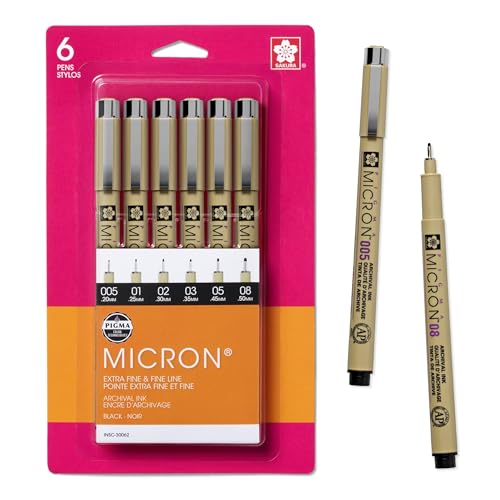
Sakura Pigma Micron Fineliner Pen Set
Pigma ink resists fading and stays waterproof once it dries. A polyester tip holds its width more evenly than plain fiber nibs across repeated strokes. Comic artists, journalers, and technical sketchers all reach for this set because six sizes cover fine detail through bold outlines.
Pros
- Archival pigment ink meets long-term fade resistance standards
- Line width holds steady across the pen’s working life
- Six tip sizes span fine detail to bold outlines
Cons
- Tips wear down faster on rough or textured paper
- Ink runs out with no refill option available

Copic Multiliner SP
Replaceable nibs and ink cartridges let one barrel last for years of daily inking. Manga artists lean on the 0.03mm nib for fine detail and the 1.0mm nib for bold panel borders. An aluminum grip section keeps balance steady during long inking sessions.
Pros
- Refillable nib and cartridge system cuts long-term waste
- Nib range spans hairline detail to bold outlines
- Ink stays waterproof beneath Copic marker layers
Cons
- Costs more upfront than disposable fineliner sets
- Replacement nibs must be purchased as separate units

Faber-Castell PITT Artist Pen
India ink rated lightfast suits illustration meant for galleries or long-term storage. A flexible brush nib produces variable width, unlike the fixed line most fineliners draw. Many illustrators pair the fine and brush nibs together for line art plus shading in one set.
Pros
- Lightfast India ink holds up under archival storage
- Brush nib adds expressive, pressure-sensitive line width
- Ink layers cleanly beneath watercolor washes
Cons
- Brush nib splays under heavy or repeated pressure
- India ink can bleed slightly on low-quality paper
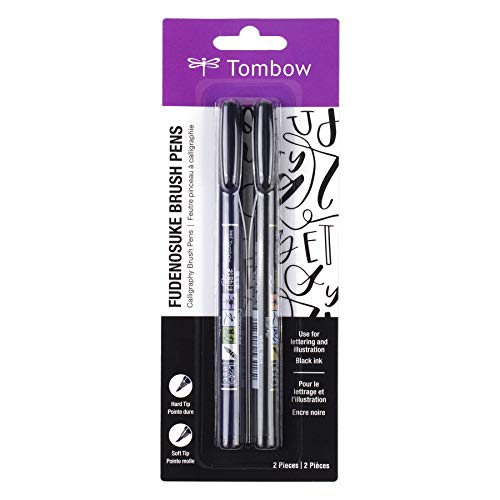
Tombow Fudenosuke Brush Pen
Hard and soft tips ship together, covering controlled lettering plus looser brush strokes in one pack. Pressure shifts the line from a hairline to a medium width. Letterers use the hard tip for small text and save the soft tip for larger flourishes.
Pros
- Hard and soft tip pair covers two skill levels
- Pigment ink resists smearing once it dries
- Slim barrel supports precise finger control
Cons
- Soft tip loses its point faster with heavy use
- Ink is not built for large color fills

Uni Pin Fine Line Drawing Pen
Metal cladding wraps the fiber tip, resisting dents from ruler and straightedge work. Drafters use the 0.05mm nib for hatching and the 0.8mm nib for outlines. Pigment ink stays put underneath alcohol-based marker layers, even after repeated passes.
Pros
- Metal-clad tip resists wear from straightedge use
- Wide size range covers hatching through bold outlines
- Line work stays crisp under marker or watercolor
Cons
- Fine 0.05mm tip can catch on rough paper fibers
- Barrel skips a grip section for long sessions

Pentel Arts Sign Pen S520
A firm fiber brush tip holds its shape longer than softer felt brushes at a similar cost. Water-based ink flows smoothly for sketching and everyday lettering. Tilting the writing angle covers fine outlines and medium fills with just one pen.
Pros
- Firm fiber tip resists fraying versus softer brushes
- Smooth ink flow suits sketching and everyday writing
- Sold as an affordable single pen or color set
Cons
- Dye-based ink is not waterproof once it dries
- Color sets fade faster than pigment-based lines

Staedtler Pigment Liner 308
Waterproof pigment ink costs less per pen than most archival brands charge. A metal-clad fiber tip resists light ruler use without denting quickly. Students and hobbyists pick this line for everyday inking on a tighter budget.
Pros
- Costs less per pen than most pigment liner competitors
- Waterproof ink survives light water exposure once dry
- Metal-clad tip adds durability at this price point
Cons
- Offers fewer tip sizes than premium fineliner lines
- Ink looks slightly gray rather than deep black
How they stack up
| # | Model | Tip sizes | Best for | Score | Price |
|---|---|---|---|---|---|
| 1 | Sakura Pigma Micron Fineliner Pen Set | 005, 01, 02, 03, 05, 08 | Best overall | 9.4 | Check price |
| 2 | Copic Multiliner SP | 0.03mm to 1.0mm, swappable | Best for manga and comic art | 9.1 | Check price |
| 3 | Faber-Castell PITT Artist Pen | Brush, superfine, fine, medium, bold | Best for illustration with archival ink | 8.8 | Check price |
| 4 | Tombow Fudenosuke Brush Pen | Hard tip and soft tip, sold as a pair | Best for brush lettering | 8.6 | Check price |
| 5 | Uni Pin Fine Line Drawing Pen | 0.05, 0.1, 0.3, 0.5, 0.8mm | Best for technical drawing | 8.4 | Check price |
| 6 | Pentel Arts Sign Pen S520 | Firm fiber brush tip | Best value | 8.2 | Check price |
| 7 | Staedtler Pigment Liner 308 | 0.1, 0.3, 0.5, 0.7, 1.0mm | Best budget | 8.0 | Check price |
Frequently asked questions
What is the difference between a fineliner and a brush pen?
A fineliner keeps one fixed line width no matter how hard you press, which suits technical and detail work. A brush pen flexes under pressure, so the line thickens and thins like a paintbrush stroke.
Are drawing pens waterproof?
It depends on the ink. Pigment-based pens like Sakura Pigma Micron and Uni Pin stay waterproof once dry, while dye-based pens like the Pentel Sign Pen can smear if water touches the line.
Which drawing pen is best for manga artists?
Copic Multiliner SP is a common choice because its refillable nibs range from 0.03mm to 1.0mm, covering fine detail and bold panel borders without buying a new pen each time a tip wears out.
Can you use drawing pens under alcohol markers like Copic?
Pigment-based lines such as Uni Pin and Copic Multiliner SP resist bleeding under alcohol marker layers. Dye-based ink is more likely to lift or smear when a marker passes over it.
How many tip sizes does a beginner actually need?
Most artists get by with three sizes: something fine around 0.1 to 0.3mm for detail, a medium 0.5mm for general linework, and a bold 0.8mm or larger for outlines.
Is Sakura Pigma Micron good for beginners?
Yes. The archival pigment ink forgives paper choice, and the fixed tip sizes stay consistent from the first line to the last, which helps anyone still learning pressure control.
Do pigment liner pens dry out if left uncapped?
Most start to dry within minutes if left uncapped, especially finer tips like 0.05mm. Recapping right after use extends nib life and keeps ink flow even.
What is the best drawing pen for technical drawing and drafting?
Uni Pin Fine Line pens suit drafting well, since the metal-clad tip resists denting against a ruler and the ink stays crisp under later marker or watercolor layers.
Copic Multiliner SP vs Sakura Pigma Micron, which lasts longer?
Copic Multiliner SP lasts longer overall because its nibs and ink cartridges are replaceable, while Pigma Micron gets discarded once the ink runs dry inside a fixed tip.
Which drawing pens work best for brush lettering?
Tombow Fudenosuke pairs a hard and soft tip in one pack, covering small controlled text and larger expressive flourishes without switching pens.
Our pick
Sakura Pigma Micron remains the safest pick for most artists, since its archival ink and tip range from 005 to 08 cover sketching, inking, and journaling at no added cost. Daily comic and manga inkers should choose the Copic Multiliner SP instead, because its refillable nib system pays off over hundreds of pages. Illustrators building an archival portfolio may prefer the Faber-Castell PITT Artist Pen for its lightfast ink and flexible brush nib.


