Which Drawing Supplies Are Actually Worth Buying?
Staedtler Mars Lumograph pencils top this list for even, predictable graphite grades. Strathmore’s 400 Series Sketch Pad is the paper most other supplies depend on. Once color and blending matter more than line work, Prismacolor Premier Colored Pencils take over.
Staedtler Mars Lumograph pencils anchor this list because grade spacing stays even, so a 4B behaves the same way every time you sharpen it. Paper matters just as much as the pencil resting on it, and the Strathmore 400 Series Sketch Pad is the surface most other supplies quietly assume you own. Once flat line work stops being enough, Prismacolor Premier Colored Pencils take drawing into color and blending.
Expensive and important are not the same thing when it comes to art supplies. A large marker set on thin paper looks worse than three good pencils on decent stock, and a set labeled for artists can still use dyes that fade within a year on a wall. We compared stated pigment and lightfastness data, graphite grade ranges, paper weight and surface, and ink permanence, then weighed that against what owners report about breakage, bleed-through and colors that shift after a few months.
Our top picks
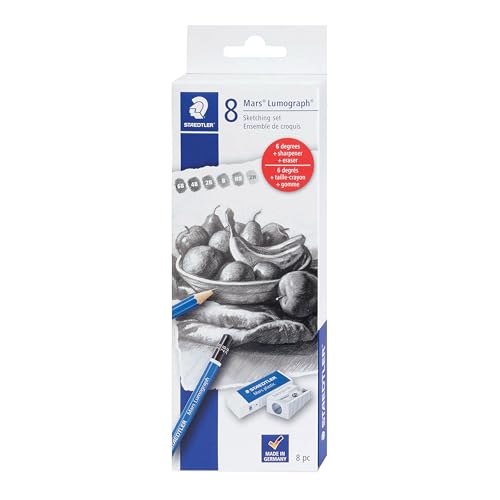
Staedtler Mars Lumograph Drawing Pencils
Grade spacing stays even across the set, so an HB reads as an HB and a 4B reads as a 4B no matter who sharpened it. Bonded lead resists crumbling even at a long, fine point. Clay-to-graphite ratios keep the darker grades from turning shiny too fast, which matters for shaded work.
Pros
- Grade spacing stays predictable set to set
- Leads hold a long point without crumbling
- Darker grades resist going shiny early
Cons
- Large sets include grades most people skip
- Barrels dent easily loose in a bag

Strathmore 400 Series Sketch Pad
Medium tooth grabs graphite and charcoal without shredding under an eraser. Weight is enough for light ink work, though heavy washes belong on a different pad. This is the paper most sketching advice quietly assumes you already own.
Pros
- Tooth suits pencil and charcoal equally
- Handles repeated erasing without pilling
- Comes in a wide range of pad sizes
Cons
- Too thin for markers or wet media
- Sheets tear at the binding if pulled fast

Prismacolor Premier Colored Pencils
Soft wax cores blend smoothly with almost no pressure, so layers build into rich color instead of streaks. A few passes read as solid coverage. That same softness is the tradeoff, since dropped pencils often crack internally and points wear down fast.
Pros
- Blends and burnishes under light pressure
- Strong coverage after just a few layers
- Wide range of individual colors sold separately
Cons
- Soft cores crack if the pencil is dropped
- Points need frequent sharpening
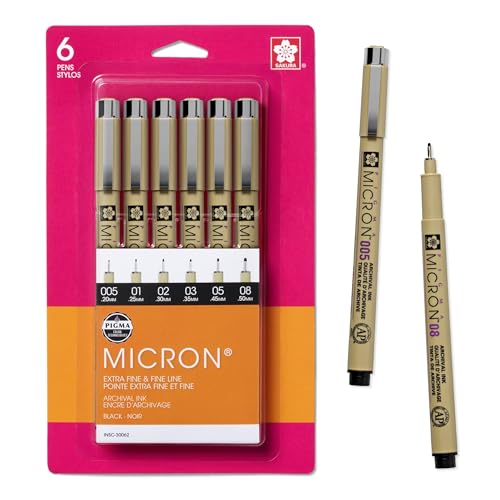
Sakura Pigma Micron Pen Set
Archival pigment ink holds a consistent line width and resists bleeding into graphite or smearing under a light wash. Nib widths in the set range from fine hatching to bold outlines. Pressing hard or dragging across rough paper will fray the tip over time.
Pros
- Line width stays consistent as ink runs low
- Ink resists fading and water smearing
- Set covers several nib widths at once
Cons
- Fine nibs deform under heavy hand pressure
- Rough paper wears the tip down quickly

Faber-Castell Pitt Artist Pens
India ink ships in disposable barrels, including a brush nib that gives tapering, expressive strokes without a bottle and dip pen. Lightfast pigment means framed work will not visibly fade. Brush tips soften and lose their point faster than fineliners do.
Pros
- Brush nib adds real stroke variation
- Lightfast ink suits pieces meant for display
- Layers cleanly over graphite without smearing it
Cons
- Brush tips soften with heavy use
- Barrels cannot be refilled once empty
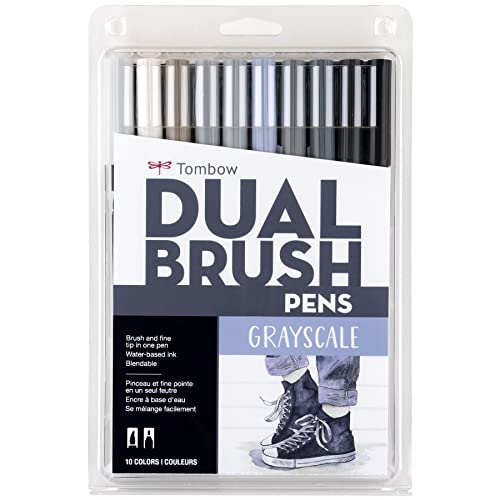
Tombow Dual Brush Pen Art Markers
One end carries a flexible brush nib, the other a fine bullet tip, covering lettering and illustration from a single pen. Water based ink blends into gradients with a blender pen or damp brush. Thin sketch paper will let that ink bleed through, so heavier stock works better.
Pros
- Two nibs cover lettering and shading
- Blends into smooth gradients with water
- Large color range for building custom sets
Cons
- Bleeds through paper lighter than sketch grade
- Later layers can reactivate ink underneath

Faber-Castell Kneaded Eraser
Dabbing lifts graphite and charcoal instead of scrubbing, so paper tooth survives and highlights stay clean. Hand-shape a point for small corrections or flatten it for broad lifting. Graphite saturation builds over time, and the eraser eventually needs replacing.
Pros
- Leaves no crumbs on the page
- Shapes to a point for fine highlights
- Will not polish or tear the paper surface
Cons
- Saturates with graphite and needs replacing
- Too soft to remove dark ink or heavy layers
The lineup, side by side
| # | Model | Type | Best for | Score | Price |
|---|---|---|---|---|---|
| 1 | Staedtler Mars Lumograph Drawing Pencils | Graphite pencils | Best overall | 9.4 | Check price |
| 2 | Strathmore 400 Series Sketch Pad | Medium tooth sketch paper | Best everyday sketch paper | 9.2 | Check price |
| 3 | Prismacolor Premier Colored Pencils | Wax based colored pencils | Best for color and blending | 9.0 | Check price |
| 4 | Sakura Pigma Micron Pen Set | Pigment ink fineliners | Best for line work | 8.8 | Check price |
| 5 | Faber-Castell Pitt Artist Pens | India ink artist pens | Best for ink and brush marks | 8.6 | Check price |
| 6 | Tombow Dual Brush Pen Art Markers | Water based dual tip markers | Best for color washes and lettering | 8.3 | Check price |
| 7 | Faber-Castell Kneaded Eraser | Kneaded rubber eraser | Best budget essential | 8.0 | Check price |
What matters most
What paper actually controls Tooth is the microscopic texture that holds pigment, and it caps how many layers any tool can build. Smooth paper gives crisp ink lines but fills fast under colored pencil. Toothy paper holds many passes of graphite and charcoal but makes fineliners skip. Weight matters separately, since anything under sketch grade buckles or bleeds under markers. Match paper to the medium used most, then build the rest of the kit around it.
How graphite grades work H grades run harder and lighter, B grades run softer and darker, and HB sits between them. Most sketches need far fewer grades than a boxed set contains, and three well-chosen pencils cover almost everything. Soft grades smudge fast and turn shiny under heavy pressure, so build darks through layers instead of pushing harder. Even spacing between grades is what separates a good set from a bargain one.
Why lightfastness matters for finished work Student grade color costs less because it uses thinner pigment or dyes that fade under normal room light. That barely matters for a sketchbook that lives in a drawer. It matters a lot for anything hung on a wall, so check for a stated lightfastness rating and treat unrated bright pinks and fluorescents with suspicion, since those fade first.
Building a starter kit before a big one Large boxed sets look like value but mostly sell grades and colors that go untouched. A smaller kit works better to start: a few graphite grades, one decent pad, a kneaded eraser, a sharpener that will not chew leads, and one ink pen. Add color once it is clear whether pencils’ control or markers’ coverage fits better, since each wants different paper.
Questions worth asking
What drawing supplies does a complete beginner need?
A handful of graphite pencils, a medium-tooth sketch pad, a kneaded eraser and a sharpener cover the fundamentals. Everything past that is a preference only drawing itself will reveal. Owners report that large boxed sets bought early mostly sit unused.
Are expensive pencils actually better than cheap ones?
Mostly in consistency, not magic. Higher priced pencils have leads that resist crumbling, grades that space evenly, and cores centered in the barrel so sharpening does not waste half the pencil. That reliability pays off more as control improves.
Which paper weight stops markers from bleeding through?
Standard sketch paper bleeds under most alcohol and water based markers. Marker pads use heavier, coated stock built to hold ink at the surface. A scrap sheet underneath protects the page below if sketch paper is all that is on hand.
Is a blending stump better than using a finger?
Yes. Skin oils transfer to paper and leave patches that resist graphite and show up later as uneven tone. A stump or tortillon also gives finer control in small areas than a fingertip can.
How do you stop colored pencil from looking waxy?
That sheen is wax bloom from burnishing too hard too soon. Building color in light layers and keeping pressure low until the last pass prevents it. A soft cloth wipes away existing bloom, and a fixative rated for colored pencil holds it off.
Do you need a fixative spray for drawings?
For charcoal and soft pastel, close to essential, since both sit on the surface and smudge from handling alone. A light workable fixative helps finished graphite pieces too. Ink and colored pencil generally do not need it.
What is the difference between sketch paper and drawing paper?
Sketch paper is lighter and meant for volume practice. Drawing paper is heavier with a more durable surface built for finished pieces, and it takes erasing and layering better, which is why it costs more per sheet.
Best drawing supplies for someone who mostly does line art?
A Sakura Pigma Micron set and a smooth, medium weight pad cover it well. Archival ink keeps lines crisp for years, and consistent nib widths matter more here than a big color range.
How should pencils and pens be stored?
Store pencils flat or point up in a case, since drops crack cores and cause leads that keep breaking. Store ink pens horizontally or nib down so ink stays at the tip, and cap them firmly, because fineliner nibs dry out fast.
Can beginners skip colored pencils and markers entirely?
Yes, and many should at first. Graphite pencils, one pad and a kneaded eraser teach shading and proportion, which are the skills that make color tools worth adding later.
The verdict
Most people are covered by pairing the Staedtler Mars Lumograph pencils with a Strathmore 400 Series Sketch Pad, and that combination will outdraw any large boxed set on cheap paper. Add Sakura Pigma Micron pens for line work meant to last, then move to Prismacolor Premier Colored Pencils once color and blending become the goal.


