Best Drone Landing Pads for Quick and Safe Touchdowns
The PGYTech Drone Landing Pad stands out as the top pick for most pilots because it offers a balanced mix of portability, visibility, and solid construction, making it easy to deploy and reliable on varied terrain. Its main advantage is the wind-resistant design with weighted edges and a high-visibility pattern that helps with precision landings. The main limitation is that it is not the largest option, so pilots with bigger drones or those needing a massive landing zone might prefer the larger Hoodman pad.
A reliable landing pad protects your drone from dust, moisture, and debris, which can shorten its lifespan. It also provides a clear visual reference for precise landings, especially in grassy or sandy areas. Whether you are a hobbyist or a professional, a good pad is a worthwhile investment.
We have analyzed top-rated pads from Amazon, considering factors like size, weight, portability, and durability. Our selection includes options for various drone sizes and budgets. Read on to find the perfect landing pad for your flying needs.
What matters most
The top picks, ranked
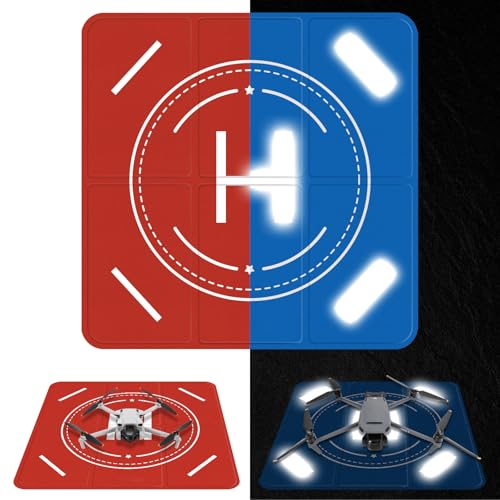
PGYTech Drone Landing Pad
The PGYTech pad is a favorite among drone enthusiasts for its excellent balance of size, portability, and stability. It features a reinforced fiberglass frame that keeps it flat even on uneven ground, and the high-visibility markings aid in accurate landings. The included carrying bag and ground stakes add to its practicality.
Pros
- Rigid construction prevents flapping in wind
- High contrast pattern improves depth perception
- Easy to fold and carry with included bag
Cons
- Not the largest option for heavy drones
- Some users find the stakes too short for soft ground

Hoodman Drone Landing Pad
The Hoodman pad is a heavy-duty option designed for professional drone operators. Its large surface provides a generous landing zone, and the heavy-duty fabric with reinforced edges withstands rough use. It comes with a convenient carry case and can be secured with stakes or weights.
Pros
- Large landing area for bigger drones
- Durable material resists rips and tears
- Flat surface even on bumpy terrain
Cons
- Bulkier and heavier than others
- Higher price point
DJI Landing Pad
DJI’s official landing pad is tailored for their drone lineup, offering a perfect size for models like the Mavic and Phantom. It features a unique design with a built-in weight system that keeps it grounded. The reflective surface enhances visibility, making it ideal for beginners learning to land precisely.
Pros
- Official DJI accessory ensures compatibility
- Reflective markings are easy to see
- Compact folding design
Cons
- Slightly expensive for what it offers
- May not be large enough for heavy-lift drones
Lurgey Drone Landing Pad
The Lurgey pad offers excellent value for money, providing a reliable landing surface at an affordable price. It is lightweight and portable, making it easy to carry on outdoor shoots. The fabric is water-resistant, and the design includes corner loops for staking down.
Pros
- Very affordable
- Lightweight for travel
- Water-resistant material
Cons
- Not as rigid as more expensive models
- Stakes may not hold on hard ground
Potensic Landing Pad
The Potensic pad is designed for maximum portability, folding down to a compact size that fits in a backpack. It is lightweight yet sturdy, with a non-slip surface that keeps your drone stable during landing. The package includes a carry pouch and ground anchors.
Pros
- Ultra-light and compact
- Quick setup and takedown
- Non-slip surface
Cons
- Smaller size may not suit larger drones
- Thin material can wrinkle on uneven ground

Lume Cube Landing Pad
The Lume Cube pad features a built-in LED lighting system that illuminates the landing zone, making it perfect for low-light or night operations. It is constructed from rip-stop nylon and includes a remote control to toggle the lights. The pad is also water-resistant and easy to clean.
Pros
- LED lights improve visibility at night
- Large landing area
- Remote control for light modes
Cons
- Requires battery for LED (not included)
- Heavier and bulkier due to electronics
GPC Technology Landing Pad
The GPC Technology pad is one of the largest options on the market, offering a generous surface for big drones and professional rigs. It is made from durable PVC material that resists cuts and abrasions. The pad comes with a heavy-duty carrying case and multiple tie-down points.
Pros
- Very large landing zone
- Rugged PVC construction
- Ample tie-down points
Cons
- Not as portable due to size and weight
- May be overkill for small drones
How they compare
| # | Model | Size | Best for | Score | Price |
|---|---|---|---|---|---|
| 1 | PGYTech Drone Landing Pad | 30 inches diameter | Overall best for most drone pilots | 9.4 | Check price |
| 2 | Hoodman Drone Landing Pad | 32 x 32 inches square | Professional and heavy-duty use | 9.2 | Check price |
| 3 | DJI Landing Pad | 31.5 inches diameter | DJI drone owners and beginners | 9.0 | Check price |
| 4 | Lurgey Drone Landing Pad | 30 inches diameter | Budget-conscious pilots | 8.7 | Check price |
| 5 | Potensic Landing Pad | 27.5 inches diameter | Portable and on-the-go use | 8.5 | Check price |
| 6 | Lume Cube Landing Pad | 36 inches diameter | Glow-in-the-dark visibility | 8.3 | Check price |
| 7 | GPC Technology Landing Pad | 40 x 40 inches square | Large drones and multirotors | 8.0 | Check price |
Good to know
What is the purpose of a drone landing pad?
A landing pad provides a clean, flat, and clearly defined area for your drone to take off and land. It protects the drone from dust, moisture, and debris that could damage sensors or propellers, and it helps with precise landings.
Do I really need a landing pad for my drone?
It is not mandatory, but highly recommended, especially when flying in dusty, sandy, or wet environments. A landing pad can extend your drone’s lifespan by keeping it cleaner and reducing the chance of landing on uneven surfaces.
How do I choose the right size landing pad?
Consider the size of your drone. For small drones like the DJI Mini, a pad of at least 20 inches is sufficient. For standard drones like the Mavic Air or Phantom, a 30-inch pad is ideal. For heavy-lift or professional drones, go for 36 inches or larger.
Can I use a landing pad on grass or sand?
Yes, landing pads are designed for use on grass, sand, and other uneven surfaces. They create a stable platform that prevents your drone from sinking into soft ground or kicking up debris.
Are landing pads waterproof?
Most landing pads are water-resistant, meaning they can handle light moisture but are not fully submersible. They are designed to keep your drone dry from ground moisture, but you should avoid leaving them in heavy rain.
How do I secure a landing pad in windy conditions?
Most pads come with stakes or ground anchors. For extra stability, you can place weights on the corners or use tie-down straps. Some pads have a rigid frame that helps them stay flat without extra securing.
Can I use a landing pad for multiple drone types?
Yes, as long as the pad is large enough for your drone. A larger pad will accommodate any drone that fits within its surface area. So, if you have multiple drones, choose a pad that works for your largest one.
Do landing pads come with a carrying case?
Most landing pads include a carrying bag or case for portability. Check the product details to confirm. Having a case makes it easier to transport and protects the pad when not in use.
Are expensive landing pads worth it?
Expensive pads often use higher quality materials and offer features like LED lights or rigid frames. If you fly professionally or frequently, a premium pad can provide better durability and functionality. For occasional hobbyists, a budget option may suffice.
How do I clean and maintain my landing pad?
After use, shake off dirt and debris. Use a damp cloth to wipe down the surface. Allow it to dry completely before folding and storing. Avoid using harsh chemicals that could damage the material.
The verdict
If you are a typical drone pilot looking for a reliable and portable pad, go with the PGYTech Drone Landing Pad. It offers the best combination of durability, visibility, and ease of use. For professional use or larger drones, the Hoodman pad is the superior choice due to its larger size and rugged build.


