Which DTF Printer Fits a Small Apparel Business?
Epson SureColor F2270 is the top direct to film printer for shops that need reliable output and factory support. Procolored V11 Pro is the strongest entry point for a starting business, and DTF Station Prestige A3+ suits growing studios moving beyond hobby volumes.
Epson SureColor F2270 leads this list because it is a supported industrial machine rather than a converted desktop unit. Procolored V11 Pro is the realistic starting point when budget matters most. DTF Station Prestige A3+ sits in between for studios that have outgrown occasional printing.
Comparing direct to film printers is unusually hard, since two machines with matching print width can differ completely in head design, white ink circulation and daily maintenance demands. We compared stated print widths, head configuration, ink systems, bundled RIP software and the maintenance routines each manufacturer specifies, then ranked seven current machines by how well they suit different production volumes. Film, powder, a curing oven or press and a steady ink supply all add to running costs, so budget for the whole workflow rather than the printer alone.
The top picks, ranked

Epson SureColor F2270
A hybrid machine handles both direct to garment and direct to film work, backed by Epson’s own service network. Support matters more than any single specification once a machine is earning money. Size, weight and running requirements exceed every other unit in this roundup.
Pros
- Manufacturer service and parts support
- Handles both garment and film printing
- Consistent color from a mature ink set
Cons
- Highest investment in this roundup
- Needs dedicated space and power planning

Procolored V11 Pro DTF Printer
RIP software, starter ink and film ship with the printer, removing most of the guesswork for a first machine. A dual head configuration keeps output reasonable for small batch work. Daily white ink agitation is not optional if the machine is to behave, according to owner feedback.
Pros
- Complete starter package in one purchase
- Reasonable speed for small batches
- Support materials aimed at beginners
Cons
- Requires disciplined daily maintenance
- Third party parts supply is limited

DTF Station Prestige A3+ Printer
Shops printing daily rather than occasionally are the target here, with a white ink circulation system that cuts clogging between runs. A matching shaker and oven pair with it for a complete production line. Based on specifications, it sits comfortably between hobby machines and industrial units.
Pros
- White ink circulation reduces clogging
- Designed as part of a full production line
- Dealer support network in place
Cons
- Costs considerably more than entry machines
- Needs matched shaker for best results
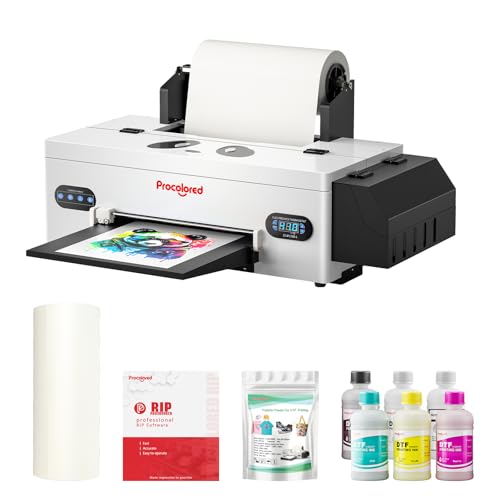
Procolored L1800 Pro DTF Printer
A familiar single head platform underpins this printer, which is where many people first find out whether direct to film suits their business. Modest output speed suits one off and short run orders fine. Learning ink management takes time before results become consistent.
Pros
- Lowest barrier to entry for direct to film
- Compact enough for a spare room
- Widely documented by other users
Cons
- Slow for anything beyond short runs
- Single head is a bottleneck as orders grow

UniNET DTF 100 Printer
Dealers who supply consumables and training alongside the machine sell this system, which shortens the learning curve considerably. A powder shaker is designed into the package rather than sold as an afterthought. Businesses wanting a supplier relationship rather than just a box tend to prefer it.
Pros
- Training and consumables from one supplier
- Complete system rather than a single unit
- Well documented maintenance routine
Cons
- Consumables usually bought through the dealer
- Less flexible on third party inks
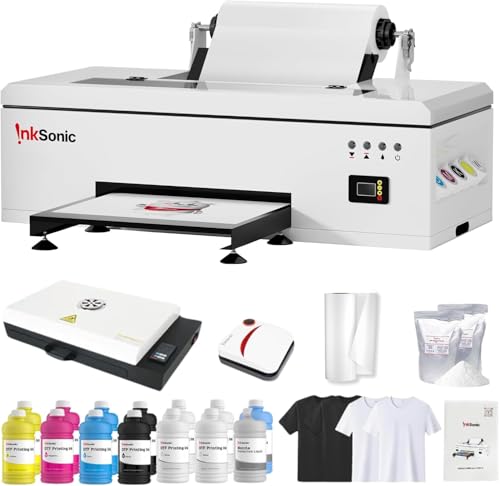
SUBLICOOL A3 DTF Printer
SUBLICOOL sells across both sublimation and direct to film, so this A3 machine suits shops already running other decoration methods. Automatic stirring keeps white pigment in suspension within the ink system. Documentation runs thinner than the established brands, so community guides fill some gaps.
Pros
- Fits alongside existing sublimation work
- White ink stirring built in
- Competitive price for the specification
Cons
- Documentation is limited in English
- Support depends on the reseller
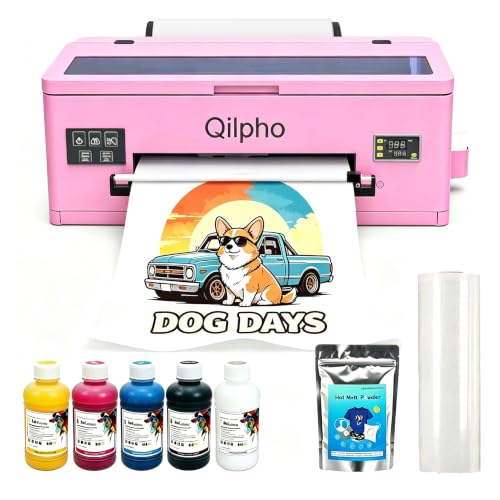
VEVOR A3 DTF Printer
The cheapest route into direct to film printing here works best as a way to test demand before committing further. Print quality can be respectable once profiles are dialled in, though consistency demands patient setup. Treat it as a learning machine rather than the backbone of a business.
Pros
- Lowest cost entry point available
- Compact footprint for a home studio
- Comes with basic starter supplies
Cons
- Results vary until profiles are tuned
- Support and spare parts are inconsistent
The lineup, side by side
| # | Model | Type | Best for | Score | Price |
|---|---|---|---|---|---|
| 1 | Epson SureColor F2270 | Hybrid direct to garment and direct to film | Best overall | 9.4 | Check price |
| 2 | Procolored V11 Pro DTF Printer | A3 format film | Best value | 9.2 | Check price |
| 3 | DTF Station Prestige A3+ Printer | A3 plus format | Best for growing studios | 9.0 | Check price |
| 4 | Procolored L1800 Pro DTF Printer | A3 format film | Best for starting out | 8.7 | Check price |
| 5 | UniNET DTF 100 Printer | A3 width film system | Best for supported growth | 8.5 | Check price |
| 6 | SUBLICOOL A3 DTF Printer | A3 format film | Best for mixed decoration shops | 8.2 | Check price |
| 7 | VEVOR A3 DTF Printer | A3 format film | Best budget | 8.0 | Check price |
What to look for
Budget for the whole workflow, not just the printer Film, adhesive powder, a curing oven or shaker, a heat press and a steady ink supply all sit around a direct to film printer. Machines sold as complete packages remove the guesswork about which shaker matches which printer. Working out the full setup before ordering avoids the common problem of a printer sitting idle waiting for the rest of the line.
White ink decides your maintenance routine White pigment settles and clogs heads faster than any other ink, which is why circulation and stirring systems appear so prominently in the specifications above. Automatic circulation tolerates gaps between print runs far better than manual agitation does. Bursts of orders rather than daily printing make that feature worth prioritizing heavily.
Match print width and head count to real order volume A single head A3 machine handles one off and small batch work comfortably but becomes a bottleneck at a few dozen shirts a day. Dual head machines roughly halve the print time for the same artwork. Wider roll fed machines only pay off once gang sheets are a regular part of production, since they cost more to buy and to maintain.
Weigh support as heavily as specifications Revenue stops the moment a production printer stops, so parts availability and technical support matter as much as print resolution. Machines backed by a manufacturer or dealer network cost more but come with training, consumables and someone to call. Community supported machines cost less and remain workable, provided you are willing to learn the maintenance yourself.
Common questions
What is direct to film printing?
Artwork prints onto a special film with CMYK and white ink, gets coated with adhesive powder, is cured, and then heat pressed onto the garment. Unlike direct to garment printing, it works on cotton, polyester and blends without pretreatment.
Do you need a separate shaker and oven for DTF?
For anything beyond occasional printing, yes. Manual powder application and curing with a heat press works for a handful of transfers but turns messy and inconsistent at volume. Many machines ship as a package with a matched shaker for this reason.
How much maintenance does a DTF printer need?
Daily attention is the norm, including white ink agitation or circulation, head checks and capping station cleaning. Machines left idle for a week without a maintenance routine commonly need head cleaning cycles, or worse, before they print properly again.
Can you convert a desktop inkjet into a DTF printer?
Converted units exist, and several entry level machines are built on desktop platforms. Good results are possible, but these units lack white ink circulation, warranty coverage and the sealed ink handling of purpose built machines.
What print width do you need for DTF?
A3 covers most shirt sized designs and is the standard for small shops. Wider roll fed machines pay off once you are consistently printing gang sheets full of small designs for multiple orders at once.
Does DTF printing work on dark garments?
Yes, and that is one of its main advantages. A white ink layer sits under the color, so designs stay opaque on black and colored fabrics without any pretreatment step.
How durable are DTF transfers?
Properly cured transfers survive repeated washing well. Durability depends mostly on curing temperature, powder coverage and press settings, so follow the film and powder manufacturer’s stated temperatures rather than guessing.
Is a DTF printer suitable for a home studio?
The A3 machines here fit a spare room, but ventilation for powder and curing, a stable surface and storage for film and ink all need planning. Check local rules on running a business from home before committing to equipment.
DTF vs DTG, which is better for a small shop?
DTF works across cotton, polyester and blends without pretreatment, while DTG needs pretreatment and suits cotton best. Shops printing mixed fabrics often lean toward DTF for that flexibility alone.
Final word
If direct to film work is a real revenue line, Epson SureColor F2270 is the machine to buy, because manufacturer support and a mature ink system matter more than headline specifications when downtime costs money. Procolored V11 Pro is the sensible starting point for testing demand with a complete bundled workflow, and DTF Station Prestige A3+ is the natural upgrade once orders arrive daily.


