Dual Action Polishers That Correct Paint Without Burning It
The Griot’s Garage G9 wins on smooth power and a reliable long throw orbit. The Avid Power dual action polisher is the budget entry point for first timers, and the Rupes LHR 15 Mark III is the premium pick detailers reach for on serious correction work.
Orbit throw, motor power and body weight all change how fast a dual action polisher cuts and how much your arm feels it after an hour, and spec sheets rarely spell that out. The Griot’s Garage G9 balances those factors best for most people. First timers get a safe, cheap way in with the Avid Power model, while detailers correcting paint often reach for the Rupes LHR 15 Mark III.
Orbit size, motor power, ergonomics and value formed this comparison across seven current machines, based on published specifications and what owners report from real correction jobs.
The top picks, ranked

Griot’s Garage G9 Random Orbital Polisher
A strong motor pairs with a smooth long throw orbit that corrects efficiently without feeling harsh on the panel. Balanced body weight and a solid warranty back it up. Hobbyists and pros both reach for it as a confident all rounder.
Pros
- Smooth, vibration-controlled operation
- Corrects paint efficiently
- Strong warranty support
Cons
- Corded, so you manage a cable
- Larger throw needs care in tight areas
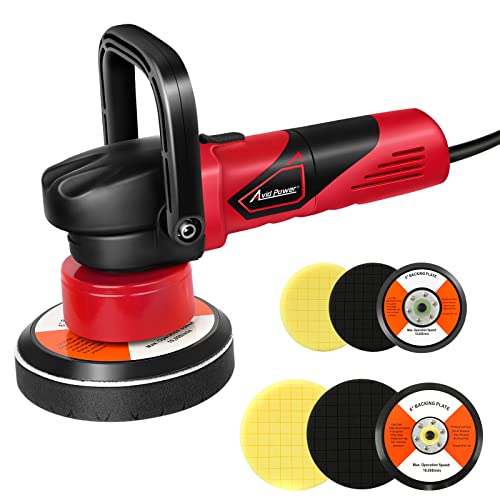
Avid Power Dual Action Polisher
An affordable random orbital machine lets beginners try paint correction and finishing without a big outlay. Light swirl removal and applying waxes or sealants are both well within its range. Heavy correction work asks more than its motor can deliver.
Pros
- Very affordable entry point
- Beginner-friendly variable speed
- Comes with starter pads
Cons
- Less power for heavy correction
- Shorter throw works slower

Rupes LHR 15 Mark III BigFoot
This professional long throw polisher is known for a refined finish and smooth power delivery under load. A 15mm orbit paired with a progressive trigger gives detailers precise control on demanding paintwork. Occasional users will find it overbuilt for their needs.
Pros
- Refined, high-quality finish
- Smooth progressive control
- Trusted by professionals
Cons
- Premium price
- Overbuilt for occasional users

Porter-Cable 7424XP Polisher
A long running favorite that made safe DA polishing accessible to everyday users in the first place. Its proven random orbit design and wide pad support make it dependable for regular detailing on a budget. Vibration runs higher than newer machines, and the shorter throw cuts more slowly.
Pros
- Proven, reliable design
- Wide range of pad options
- Approachable for learners
Cons
- Shorter throw cuts slower
- More vibration than newer machines
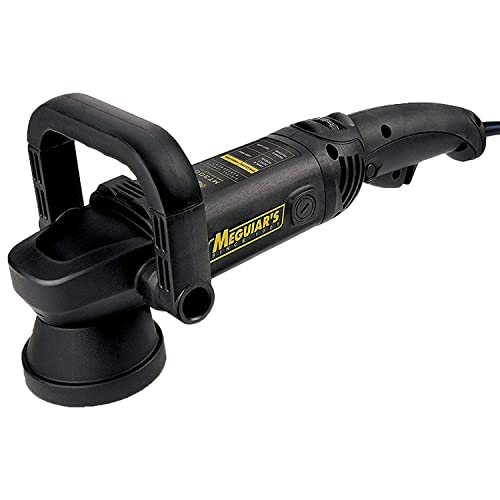
Meguiar’s MT300 Dual Action Polisher
Constant speed DFP technology keeps pad speed steady under pressure, helping new users cut consistently without stalling the pad. A comfortable body and a clear speed dial make learning correction less intimidating. Its 8mm throw covers smaller panels faster than large flat ones.
Pros
- Holds pad speed under pressure
- Comfortable, controllable body
- Clear speed adjustment
Cons
- Shorter throw than 15mm machines
- Corded operation

Adam’s Swirl Killer 15mm Polisher
A long throw random orbital built for faster correction across larger panels. A rubberized grip stays comfortable through extended sessions, and cutting speed impresses for the price point. Extra weight and a large throw make tight spots more awkward to work.
Pros
- Fast correction on big panels
- Comfortable rubberized grip
- Strong cutting for the price
Cons
- Large throw is awkward in tight spots
- Heavier than compact models

Chemical Guys TORQ 10FX Polisher
This random orbital targets applying polishes, glazes and waxes with light correction in a single pass. Hobbyists wanting an easy machine for maintenance polishing and protection find it approachable. Heavy defect removal sits outside what its 8mm throw and lighter motor can manage.
Pros
- Easy for maintenance polishing
- Good for applying waxes and sealants
- Beginner-approachable controls
Cons
- Limited on heavy defect removal
- Shorter throw works slower
How they compare
| # | Model | Orbit throw | Best for | Score | Price |
|---|---|---|---|---|---|
| 1 | Griot’s Garage G9 Random Orbital Polisher | 15mm | Best overall | 9.4 | Check price |
| 2 | Avid Power Dual Action Polisher | Random orbital | Best budget | 8.5 | Check price |
| 3 | Rupes LHR 15 Mark III BigFoot | 15mm | Best premium | 9.3 | Check price |
| 4 | Porter-Cable 7424XP Polisher | About 8mm | Best value workhorse | 8.8 | Check price |
| 5 | Meguiar’s MT300 Dual Action Polisher | 8mm | Best for beginners | 8.7 | Check price |
| 6 | Adam’s Swirl Killer 15mm Polisher | 15mm | Best for detailers | 8.9 | Check price |
| 7 | Chemical Guys TORQ 10FX Polisher | 8mm | Best for one-step polishing | 8.3 | Check price |
Before you buy
What is the difference between dual action and rotary polishers? A dual action polisher spins and oscillates at the same time, spreading heat and making it far less likely to burn through paint than a rotary. Rotary machines cut faster but demand real experience to use safely. Almost anyone learning paint correction should start with a DA.
What orbit throw size should I buy? Throw is how far the pad travels in its orbit. Short throw machines around 8mm, like the Porter-Cable 7424XP, offer control in tight areas but cut more slowly. Long throw 15mm machines, like the Griot’s G9 and Rupes LHR 15, correct larger panels faster but need more room and care around edges.
Does motor power matter for paint correction? More motor power keeps the pad spinning under pressure instead of bogging down, which is where real correction happens. Features like Meguiar’s constant speed DFP hold pad rotation steady as you press, giving more consistent results and removing some guesswork for newer users.
How much does weight and ergonomics matter on long jobs? A polisher often runs for hours across a full car, so weight, balance and grip matter as much as raw power. A well balanced body with a rubberized grip and controlled vibration, like the G9 or Adam’s Swirl Killer, cuts fatigue and helps keep the pad flat for even correction.
Good to know
What is a dual action polisher used for?
It removes swirls, light scratches and oxidation, and applies polishes, waxes and sealants. Its spinning and oscillating motion makes it safe enough for beginners to correct paint without easily burning through it.
Is a dual action polisher safe for beginners?
Yes. The dual action motion spreads heat and resists digging into one spot, making it far more forgiving than a rotary. It is the recommended starting point for anyone new to paint correction.
What orbit size should I choose for my first polisher?
An 8mm throw gives control and suits tight areas and learners, while a 15mm throw corrects larger panels faster. Many people start with a versatile long throw machine and add a smaller one for tight spots later.
Dual action vs rotary polisher, which should I buy?
A DA both spins and oscillates, reducing heat and the risk of paint damage, which suits beginners. A rotary only spins and cuts faster but is much easier to damage paint with, so it suits experienced users instead.
Can a dual action polisher remove deep scratches?
A DA handles swirls and light to moderate defects well, but very deep scratches that catch a fingernail may need more aggressive correction or professional attention. Compounds and cutting pads extend how much a DA can remove.
Do I need different pads for correction versus finishing?
Yes. Cutting pads paired with compound remove defects, while softer polishing and finishing pads refine the surface and apply waxes or sealants. Matching pad and product to the step gives the best results.
How long does it take to polish a whole car?
Correcting a full car with a DA often takes several hours to a day, depending on paint condition, panel size and how many stages you run. A long throw machine speeds up the larger flat panels.
Are cordless dual action polishers worth buying?
Cordless models add freedom of movement and suit quick jobs, but corded machines like the ones here usually deliver more consistent power for full corrections. Heavy work still favors a dependable corded DA.
What is the best dual action polisher for beginners?
The Avid Power model offers an affordable, beginner-friendly way to try correction, while the Meguiar’s MT300 adds constant speed technology that helps new users cut consistently. Both cost less than professional grade machines.
Our take
Most people should put the Griot’s Garage G9 in their hands, since it combines smooth long throw power with easy control and strong support. First timers on a tight budget can start with the Avid Power model, while detailers correcting paint regularly will appreciate the refined finish of the Rupes LHR 15 Mark III.


