Dumbbells for Home Workouts in Small Indoor Spaces
Bowflex SelectTech 552 adjustable dumbbells lead for weight range in a small footprint. NUOBELL dumbbells switch weight fastest with a simple handle twist, while coated CAP Barbell hex dumbbells remain the most durable choice if you have room for a rack.
For indoor training where space is the constraint, Bowflex SelectTech 552 adjustable dumbbells cover the widest useful range in the least floor area, with NUOBELL adjustable dumbbells switching weight fastest and coated CAP Barbell hex dumbbells offering the toughest option when you have room for a rack.
Choosing dumbbells for indoor use is really a decision about floors, storage and how fast you need to change weight between sets. We compared weight ranges, adjustment mechanisms, cradle footprints, coating materials and published dimensions, then weighed what owners report about dropping adjustable sets, how loud each type is on a wooden floor and how long the selection mechanisms hold up under regular use.
The top picks, ranked

Bowflex SelectTech 552 Adjustable Dumbbells
One pair replaces fifteen sets of dumbbells, adjusting from very light to fifty two and a half pounds with a dial at each end. That range covers everything from lateral raises to heavy rows in a footprint the size of a shoebox. Owners report the dial mechanism is reliable provided the weights are always returned to the cradle rather than dropped.
Pros
- Huge range in minimal floor space
- Fine increments for smaller lifts
- Cradles keep the set tidy
Cons
- Must not be dropped
- Longer than fixed dumbbells at low weights

NUOBELL 80lb Adjustable Dumbbells
Changing weight means twisting the handle while the dumbbell sits in its cradle, which takes a couple of seconds rather than fumbling with a pin or dial. The shape is also closer to a traditional dumbbell than most adjustable designs. Based on specifications the range extends well beyond typical adjustable sets, which suits stronger lifters.
Pros
- Fastest weight changes here
- Higher top end than most adjustables
- Compact shape handles well
Cons
- Premium outlay compared with rivals
- Twist mechanism needs the cradle to work

PowerBlock Elite EXP Adjustable Dumbbells
The block design keeps the weight tightly around your hand rather than extending along a bar, so the dumbbell stays short at every weight and takes very little floor space. Expansion kits raise the top end later rather than requiring a new purchase. Owners report the square shape takes a session or two to get used to.
Pros
- Very small storage footprint
- Length stays short at all weights
- Expandable rather than replaceable
Cons
- Square shape feels unusual at first
- Handle opening can crowd larger hands

REP Fitness QuickDraw Adjustable Dumbbells
QuickDraw uses a lever mechanism rather than a dial, and REP builds it with the same tolerance for abuse as its rack equipment. The knurled handle feels closer to a gym dumbbell than the smooth grips on most home sets. Based on specifications it targets serious home lifters who want adjustable convenience without a fragile mechanism.
Pros
- Sturdier than typical dial systems
- Knurled handle improves grip
- Solid feel at higher weights
Cons
- Heavier cradles to move
- Still not designed to be dropped

CAP Barbell Coated Hex Dumbbells
Fixed hex dumbbells have no mechanism to break, and the rubber or urethane coating protects both the floor and the dumbbell when a set ends badly. The hexagonal shape stops them rolling, which matters in a room where they live on the floor. Owners report they are the quietest and most forgiving option for apartment training.
Pros
- Nothing to break or jam
- Coating protects floors
- Do not roll away between sets
Cons
- Need a rack and real floor space
- Buying a full range gets expensive
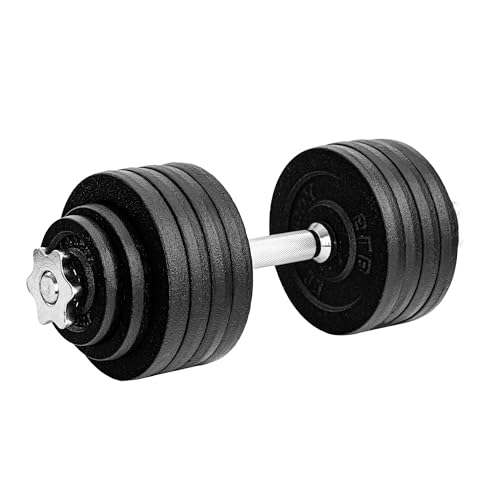
Yes4All Adjustable Dumbbells
These are the classic spinlock style, where you slide cast iron plates onto a threaded handle and secure them with collars. Changing weight takes longer than any selectorised system, but there is very little to go wrong. Owners report they suit slower paced strength work better than circuits where you change weight constantly.
Pros
- Least expensive way to cover a range
- Simple mechanism with nothing to jam
- Add plates to extend later
Cons
- Slow to change weight between sets
- Bare iron plates can mark floors

Amazon Basics Neoprene Dumbbell Set
A light neoprene coated set with a small stand is the right answer for circuit work, rehabilitation exercises and general conditioning rather than progressive strength training. The coating is quiet on floors and comfortable to grip without gloves. Owners report they outgrow the top weight quickly if strength is the goal.
Pros
- Quiet and floor friendly
- Comfortable grip without gloves
- Includes a small stand
Cons
- Top weight is limiting for strength work
- Neoprene can tear over time
How they compare
| # | Model | Weight range | Best for | Score | Price |
|---|---|---|---|---|---|
| 1 | Bowflex SelectTech 552 Adjustable Dumbbells | 5 to 52.5 lb per dumbbell | Best overall | 9.4 | Check price |
| 2 | NUOBELL 80lb Adjustable Dumbbells | Up to 80 lb per dumbbell | Best for fast switching | 9.2 | Check price |
| 3 | PowerBlock Elite EXP Adjustable Dumbbells | Block style with selector pin | Best for compact storage | 9.0 | Check price |
| 4 | REP Fitness QuickDraw Adjustable Dumbbells | Lever selection mechanism | Best for durability | 8.7 | Check price |
| 5 | CAP Barbell Coated Hex Dumbbells | Fixed weight hex dumbbells | Best for drops and durability | 8.5 | Check price |
| 6 | Yes4All Adjustable Dumbbells | Spinlock plate loaded | Best budget adjustable | 8.2 | Check price |
| 7 | Amazon Basics Neoprene Dumbbell Set | Neoprene over cast iron | Best for light training | 8.0 | Check price |
What to look for
Adjustable or fixed comes down to space Adjustable dumbbells replace an entire rack in the footprint of two cradles, which is usually decisive in a spare room or apartment. Fixed dumbbells need floor space and a rack but have no mechanism to fail, survive being dropped and change weight instantly. If you have the room and train heavy, fixed sets are the more durable answer, and if you do not, adjustables are the only realistic option.
Match the weight range to your training A set that tops out below your working weight becomes useless within months, while a set that starts too heavy makes shoulder and accessory work impossible. Look at both ends of the range and the size of the increments, since two and a half pound steps matter far more for lateral raises than for rows. Expandable systems let you extend the top end later without replacing everything.
Protect the floor and the neighbours Indoor training happens on floors that were not designed for iron. Rubber or urethane coated heads absorb impact and reduce noise, and a dedicated rubber mat under your training area protects the floor and dampens sound further. This matters most in apartments and upstairs rooms, where the thud of a dropped dumbbell travels much further than you expect.
Respect the limits of adjustable mechanisms Almost every selectorised dumbbell is designed to be set down, not dropped, and the plates can misalign if the handle is returned to the cradle carelessly. That is a real constraint if you train close to failure on presses, where controlled setdowns are not always possible. Lifters who regularly push to failure at heavy weights are usually better served by fixed dumbbells.
Common questions
Are adjustable dumbbells worth it?
For home training in limited space, yes. One pair replaces a rack of fixed weights and costs far less than buying a full range. The trade offs are a mechanism that can fail and a design that does not tolerate being dropped.
What weight dumbbells should I start with?
That depends on your training and current strength. A range that covers light accessory work through to your working weight for rows and presses is more useful than a single heavy pair, which is exactly why adjustable sets are popular.
Will dumbbells damage my floor?
Bare iron will mark wood and can crack tile. Rubber or urethane coated dumbbells plus a dedicated mat under your training area prevent nearly all of this, and they cut noise significantly in apartments.
Can I drop adjustable dumbbells?
You should not. Dial and lever mechanisms rely on precise alignment with the cradle, and dropping can damage the selector or the plates. If you regularly train to failure on heavy presses, fixed dumbbells are the safer choice.
How much space do I need for a home dumbbell setup?
A pair of adjustable dumbbells needs little more than the cradle footprint plus room to train, roughly the area of a yoga mat. A full fixed set needs a rack of about four to six feet of wall space.
What is the fastest adjustable dumbbell to change?
Twist handle designs like NUOBELL change weight in a couple of seconds without leaving your position. Dial systems are almost as quick, while spinlock plate loaded handles are considerably slower.
Are hex dumbbells better than round ones?
For home use, yes. Hexagonal heads do not roll across the floor, they sit stable for renegade rows and pushups, and they stack more predictably on a rack.
Do I need a rack for fixed dumbbells?
Strongly recommended. A rack keeps weights off the floor, protects the flooring, prevents trip hazards and makes it obvious when a dumbbell is missing from the set.
Final word
Bowflex SelectTech 552 dumbbells remain the most sensible choice for indoor training because they compress an entire rack into two cradles without compromising on useful increments. Choose NUOBELL if you value fast weight changes and a higher top end, or PowerBlock if storage space is the tightest constraint you have. If you train heavy and have room for a rack, coated CAP Barbell hex dumbbells will outlast every mechanism here.