Dutch Ovens for Slow Braises and Crusty Bread
The Le Creuset Signature leads our roundup for its even heat and durable enamel, while the Lodge Enameled delivers nearly the same performance for far less. The Staub Round Cocotte rounds out the top three, favored by owners for slow braising and its self-basting lid design.
If you want one Dutch oven that does almost everything, the Le Creuset Signature is our top overall pick, with the Lodge Enameled as the smart-value alternative and the Staub Round Cocotte as the braising specialist.
Choosing a Dutch oven is tricky because most look alike but differ in enamel quality, knob heat rating, weight and warranty, and those gaps only show up after months of use. To sort the field we compared published specifications, warranty terms and long-term owner feedback across capacity, oven-safe temperature and lid design, then ranked each pot on real-world versatility rather than brand name alone.
Our top picks

Le Creuset Signature Enameled Cast Iron
The Le Creuset Signature is the pot most owners point to when they want something that lasts for decades. Its sand-colored interior enamel resists staining and makes it easy to see browning, and the oversized handles are noticeably easier to grip with oven mitts. It is a serious investment, but the lifetime warranty and consistent heat make it hard to fault.
Pros
- Even, steady heat that owners rely on for bread and braises
- Light interior enamel makes it easy to judge browning
- Lifetime limited warranty backs the investment
Cons
- Among the most expensive options in the category
- Heavy to lift when full, like most cast iron

Lodge Enameled Cast Iron Dutch Oven
The Lodge Enameled delivers the core performance of a premium pot for a fraction of the outlay. Owners report it browns and simmers reliably, and the roomy 6-quart bowl handles big-batch soups and no-knead bread with ease. The enamel is slightly less refined than pricier rivals, but for most kitchens the difference is hard to notice.
Pros
- Excellent performance for the outlay
- Generous 6-quart capacity suits families
- All-cast-iron knob is safe at high oven temperatures
Cons
- Enamel finish is less polished than premium brands
- Heavier than several similarly sized pots

Staub Round Cocotte
The Staub Round Cocotte is built around moisture, with spikes on the underside of the lid that drip condensation back over food as it cooks. Owners who braise meat and cook stews frequently tend to prefer its dark matte interior, which hides staining and stands up well to searing. It is heavy and premium priced, but purpose-built for slow cooking.
Pros
- Self-basting lid keeps braises moist
- Dark interior hides stains and handles searing well
- Solid brass knob rated for high oven heat
Cons
- Dark interior makes browning harder to judge
- Premium price and heavy build

Cuisinart Chef’s Classic Enameled Cast Iron
The Cuisinart Chef’s Classic sits comfortably in the middle of the market, offering enameled cast iron performance without a premium outlay. Owners describe it as a dependable everyday pot for soups, chilis and roasts, with wide side handles that make lifting easier. The enamel is thinner than top-tier brands, so it rewards gentle handling.
Pros
- Balanced performance at a fair outlay
- Wide side handles are easy to grip
- Porcelain enamel interior cleans up easily
Cons
- Enamel is thinner and chips if knocked
- Smaller 5-quart size limits big batches

Amazon Basics Enameled Cast Iron Dutch Oven
The Amazon Basics Enameled is the entry point for anyone testing whether cast iron cooking suits them. Owners report it handles everyday braises and one-pot meals well for the money, though the enamel and knob are not built for the same abuse as premium pots. As a low-risk first Dutch oven, it earns its place.
Pros
- One of the lowest-cost ways into enameled cast iron
- Roomy 6-quart bowl for stews and soups
- Performs well for everyday cooking
Cons
- Lower oven-safe rating than rivals
- Enamel durability lags premium brands
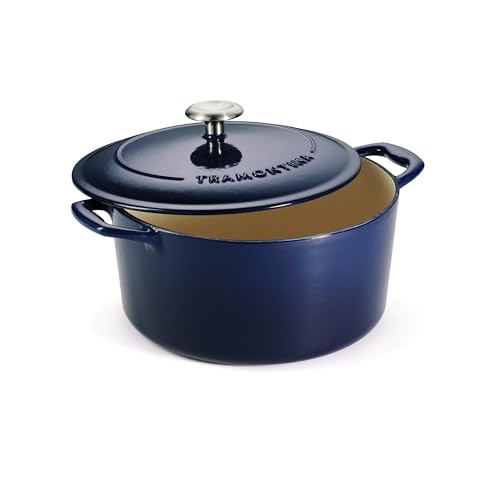
Tramontina Enameled Cast Iron Dutch Oven
The Tramontina Enameled has a loyal following among cooks who want a large, workhorse pot without splurging. Its extra-large 6.5-quart capacity suits big roasts and batch cooking, and owners report even simmering across the base. The finish is functional rather than fancy, which is exactly the point at this price.
Pros
- Extra-large capacity for batch cooking
- Even simmering reported by owners
- Strong value for a full-size pot
Cons
- Enamel color options and finish are basic
- Heavy to maneuver when fully loaded

Crock-Pot Artisan Enameled Cast Iron Dutch Oven
The Crock-Pot Artisan is an approachable, oversized pot aimed at cooks who mainly make soups, stews and slow-simmered dishes. Owners appreciate the generous 7-quart bowl and the simple, forgiving design. It is not the most refined enamel in the group, but for beginners building confidence it does the fundamentals well.
Pros
- Largest capacity in our roundup
- Forgiving, beginner-friendly design
- High oven-safe temperature rating
Cons
- Enamel refinement trails premium pots
- Size can be unwieldy for small kitchens
Side by side
| # | Model | Capacity | Best for | Score | Price |
|---|---|---|---|---|---|
| 1 | Le Creuset Signature Enameled Cast Iron | 5.5 quarts | Best overall | 9.4 | Check price |
| 2 | Lodge Enameled Cast Iron Dutch Oven | 6 quarts | Best value | 9.2 | Check price |
| 3 | Staub Round Cocotte | 5.5 quarts | Best for braising | 9.0 | Check price |
| 4 | Cuisinart Chef’s Classic Enameled Cast Iron | 5 quarts | Best midrange | 8.8 | Check price |
| 5 | Amazon Basics Enameled Cast Iron Dutch Oven | 6 quarts | Best cheap pick | 8.6 | Check price |
| 6 | Tramontina Enameled Cast Iron Dutch Oven | 6.5 quarts | Best for everyday cooking | 8.4 | Check price |
| 7 | Crock-Pot Artisan Enameled Cast Iron Dutch Oven | 7 quarts | Best for beginners | 8.2 | Check price |
What matters most
How we chose these Dutch ovens Rather than lean on brand reputation, we compared published specifications, warranty terms and the patterns that show up in long-term owner feedback. We weighed capacity, oven-safe temperature, knob material and enamel durability, then judged each pot on how versatile it is across searing, braising, baking and everyday one-pot meals. Value mattered too, so a pot only ranked high if its performance justified its outlay.
Enamel quality and why it matters The enamel coating is what separates a pot that lasts for decades from one that chips within a year. Lighter interior enamel, as on the Le Creuset, makes it easier to judge browning, while dark matte interiors like Staub’s hide staining and handle searing well. Budget pots use thinner enamel that rewards gentle handling and wooden or silicone utensils to avoid chips.
Choosing the right size Capacity is the choice most owners second-guess. A 5 to 5.5-quart pot suits couples and small families and is the most versatile everyday size. A 6 to 7-quart pot earns its keep for batch cooking, big roasts and no-knead bread, but the extra weight is real once the pot is full. If you can only own one, most cooks are best served in the 5.5 to 6-quart range.
Knob heat rating and oven use The lid knob quietly limits how you can use a Dutch oven. All-metal knobs, like the cast iron on the Lodge, are safe at the highest oven temperatures, which matters for bread baking. Some budget pots ship with knobs rated lower, so check the oven-safe temperature before committing to high-heat recipes. Replacing a factory knob with a metal one is a common upgrade owners mention.
Questions worth asking
What size Dutch oven is best for most people?
A 5.5 to 6-quart Dutch oven is the most versatile size for the majority of households. It is large enough for family soups, roasts and no-knead bread, yet still manageable to lift and store. Larger 7-quart pots suit batch cooking, while 5-quart models fit couples and smaller kitchens.
Is an expensive Dutch oven worth it?
Premium pots like the Le Creuset Signature and Staub Round Cocotte justify their cost through refined enamel, superior warranties and long-term durability that owners report lasting decades. That said, value picks like the Lodge Enameled deliver most of the same everyday performance, so the right answer depends on how often you cook and your budget.
Can you use metal utensils in an enameled Dutch oven?
It is safer to use wood, silicone or nylon utensils to protect the enamel from chips and scratches. Metal utensils can mark the coating over time, and budget pots with thinner enamel are especially vulnerable. Gentle handling is one of the biggest factors in how long a Dutch oven lasts.
What temperature can Dutch ovens handle in the oven?
Most enameled cast iron Dutch ovens are oven safe from around 400F up to 500F, depending on the knob material. Pots with all-metal knobs, such as the Lodge, tolerate the highest temperatures, which matters for bread baking. Always check the specific oven-safe rating before using high-heat recipes.
How do you clean a Dutch oven without damaging the enamel?
Let the pot cool, then wash with warm soapy water and a non-abrasive sponge. For stuck-on food, simmer water with a little baking soda to loosen residue rather than scrubbing hard. Avoid harsh scouring pads and sudden temperature changes, which can stress the enamel.
Le Creuset vs Lodge: which should I buy?
The Le Creuset Signature offers more refined enamel, a lifetime warranty and slightly easier handling, making it the pick if you want an heirloom pot. The Lodge Enameled delivers close to the same cooking results for far less, so it is the smarter choice for budget-conscious cooks who still want dependable cast iron performance.
Do Dutch ovens work on induction cooktops?
Yes, enameled cast iron is naturally magnetic, so every pot in this roundup works on induction as well as gas, electric and ceramic cooktops. Cast iron also retains heat exceptionally well, which suits the low, steady temperatures induction cooking is known for.
What is the difference between a round and oval Dutch oven?
Round Dutch ovens heat more evenly and match most burners, making them the better all-purpose choice for soups, stews and bread. Oval pots suit long cuts of meat and whole poultry but can heat less evenly over a round burner. For a first Dutch oven, round is usually the safer pick.
Can you bake bread in these Dutch ovens?
Yes, a Dutch oven is one of the best tools for crusty artisan bread because the lidded pot traps steam for a better rise and crust. Choose a model with an all-metal knob so it is safe at the high temperatures bread baking requires, such as the Lodge or Le Creuset.
How long should a good Dutch oven last?
A well-made enameled Dutch oven can last for decades with proper care, and premium brands back that with lifetime warranties. Longevity comes down to enamel quality and how the pot is handled, so avoiding metal utensils, sudden temperature shifts and abrasive scrubbing goes a long way regardless of price.
The bottom line
For most cooks, the Le Creuset Signature is the Dutch oven worth building a kitchen around, thanks to its even heat, refined enamel and lifetime warranty. If value matters more, the Lodge Enameled gets you most of the way there for far less, while the Staub Round Cocotte is the specialist to choose if slow braising is your main goal.