Electric Staple Guns for Upholstery, Fencing and Framing
Arrow ET200 leads for upholstery and craft work thanks to its adjustable depth dial. Arrow T50DCD suits outdoor jobs where a cord cannot reach. Surebonder 9600A drives staples deeper into plywood and softwood for daily heavy use with fewer jams.
Arrow ET200 covers most upholstery, screen repair and light carpentry without tiring a wrist over a long session. Fencing and other outdoor jobs favor the cordless Arrow T50DCD, built around a rechargeable battery pack. Surebonder 9600A steps in for dense wood or repeated daily stapling, driving deeper with fewer misfires.
Depth control and staple range matter more than motor speed alone. A gun built for thin fabric jams in plywood, while an oversized model wastes battery on light trim. We compared listed depth settings, staple gauge ranges and power sources, then weighed owner reports of jamming and handling in tight corners.
The best picks, ranked

Arrow ET200 Electric Staple Gun
Side mounted dial adjusts drive depth for fabric, foam and thin wood without swapping tools. Standard T50 staples keep restocking simple, since most hardware stores carry them. Low weight helps steady the gun through long upholstery sessions.
Pros
- Dial adjusts depth from fabric to thin wood
- Uses widely stocked T50 staples
- Light enough for extended sessions
Cons
- Cord limits reach outdoors
- Struggles to sink staples into hardwood
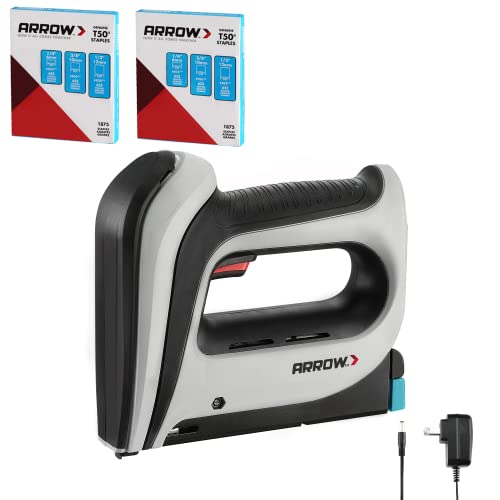
Arrow T50DCD Cordless Electric Staple Gun
Rechargeable battery removes the cord for fencing, insulation and jobs far from an outlet. It still fires standard T50 staples, sharing ammunition with corded Arrow guns already on hand. Trigger response stays close to the corded ET200 despite running on battery power.
Pros
- No cord needed for outdoor jobs
- Shares T50 staples with corded Arrow models
- Trigger feel matches the corded ET200
Cons
- Battery needs recharging on long jobs
- Costs more than the corded ET200

Surebonder 9600A Heavy Duty Electric Staple Gun
Stronger motor sinks staples flush into plywood and softwood framing where lighter guns stall. Two power settings back off the force for trim work without switching tools. Daily users report fewer jams here than with craft focused models.
Pros
- Sinks staples flush into plywood and softwood
- Two power settings cover light and heavy jobs
- Fewer jams under repeated daily use
Cons
- Heavier than craft focused models
- More gun than occasional fabric stapling needs
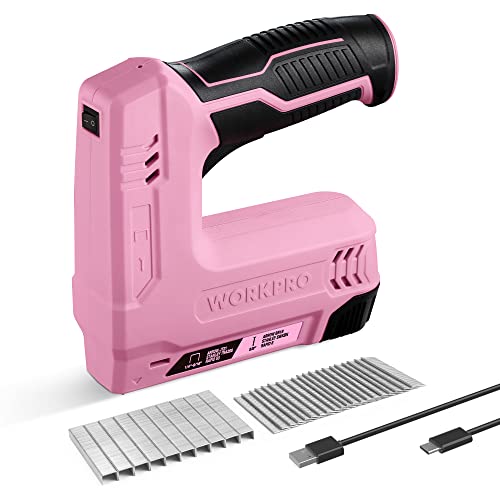
WORKPRO W020021A Electric Staple Gun
Both staples and brad nails fire from this single tool, covering upholstery and light trim. A wheel adjustment tunes penetration for softer materials like foam. Lower price makes it a reasonable first electric staple gun for occasional projects.
Pros
- Fires staples and brad nails from one tool
- Depth wheel suits foam and soft wood
- Affordable for occasional use
Cons
- Nail mode needs a separate magazine load
- Feels less durable than pro grade guns

NEU MASTER NTC0060 Electric Staple Gun
Single shot and continuous firing modes suit careful upholstery corners and fast fabric coverage alike. A safety lock prevents accidental discharge when the gun rests on a bench. A bundled mixed pack of staples and nails lets a project start immediately.
Pros
- Single shot and continuous modes both included
- Safety lock avoids accidental firing
- Bundled starter fastener pack
Cons
- No depth dial for fine tuning
- Continuous mode taxes a household circuit on long runs

Meite ES50 Electric Staple Gun
Narrow nose reaches chair corners and window frame edges where bulkier guns cannot sit flush. Standard T50 staples fire at moderate depth, fitting fabric and light wood trim. That slim head trades some raw driving power for the improved access.
Pros
- Slim nose reaches tight corners
- Light weight suits detail work
- Handles common T50 staple sizes
Cons
- No adjustable depth setting
- Less driving force than heavy duty models

Stanley SharpShooter TRE550Z Electric Staple Gun
Fixed depth and a simple trigger keep this option straightforward for basic upholstery, insulation and screen jobs. Low weight keeps wrist fatigue down across a full afternoon of repairs. Its price and name recognition make it an easy starter pick.
Pros
- Simple to operate for beginners
- Light weight reduces wrist fatigue
- Affordable and widely stocked
Cons
- No depth adjustment for varied materials
- Limited to lighter staple leg lengths
How they stack up
| # | Model | Power | Best for | Score | Price |
|---|---|---|---|---|---|
| 1 | Arrow ET200 Electric Staple Gun | Corded electric | Best overall | 9.4 | Check price |
| 2 | Arrow T50DCD Cordless Electric Staple Gun | Rechargeable battery | Best cordless | 9.1 | Check price |
| 3 | Surebonder 9600A Heavy Duty Electric Staple Gun | Corded electric | Best for heavy daily use | 8.8 | Check price |
| 4 | WORKPRO W020021A Electric Staple Gun | Corded electric | Best value | 8.5 | Check price |
| 5 | NEU MASTER NTC0060 Electric Staple Gun | Corded electric | Best for craft projects | 8.3 | Check price |
| 6 | Meite ES50 Electric Staple Gun | Corded electric | Best for tight corners | 8.1 | Check price |
| 7 | Stanley SharpShooter TRE550Z Electric Staple Gun | Corded electric | Best budget | 8.0 | Check price |
What to look for
What matters most in an electric staple gun Depth adjustment, staple gauge range and power source count more than a headline speed rating. A dial or switch that tunes penetration stops staples sitting proud in soft fabric or refusing to sink into plywood. Staple range decides whether a single gun covers delicate upholstery and firmer trim. Corded models generally push harder than cordless ones at a similar price.
Corded or cordless for regular use Corded guns deliver steady power without watching a battery gauge, good for shop and workbench tasks near an outlet. Cordless models such as the Arrow T50DCD free you to work along a fence line or under a deck. Battery weight adds some bulk, and charging becomes part of the workflow on longer jobs. Base the choice on where the work actually happens, not just convenience in the store.
Matching staple depth to the material Fabric and foam need shallow, controlled depth so staples clamp material without tearing through it. Softwood trim and plywood need deeper penetration, where guns like the Surebonder 9600A separate from craft focused models. A fixed depth setting works fine when projects stay within one material type. Adjustable depth pays off once a session mixes fabric, foam and wood.
How to cut down on jams during repeated use Jams usually trace back to staples longer than the gun is rated for, or firing into material harder than the motor handles. Keeping the staple channel clean and using the manufacturer’s recommended staple brand cuts down on misfeeds. Heavy duty models built for daily use, like the Surebonder 9600A, report fewer jams under repetition. Occasional users can rely on lighter guns as long as they respect the rated staple range.
Common questions
What size staples do electric staple guns use?
Most models here use the T50 staple series, a standard size sold at most hardware stores. Leg length runs from about 1/4 inch up to 9/16 inch depending on the gun, so check the rated range before buying a box of staples.
Can an electric staple gun drive into hardwood?
Light craft models struggle with hardwood and suit fabric, foam and softwood instead. Heavier corded guns like the Surebonder 9600A handle softwood framing and plywood but still are not a substitute for a pneumatic framing stapler on hardwood.
Is a cordless electric staple gun as powerful as a corded one?
Cordless models generally deliver slightly less consistent power than corded guns at a similar price, since battery voltage tapers as it drains. For most upholstery and craft work the difference is minor, but heavy daily use favors a corded model.
How do you stop an electric staple gun from jamming?
Match staple leg length to the gun’s rated range, keep the staple channel free of debris, and avoid firing into material denser than the gun is built for. Using the staple brand the manufacturer recommends also reduces feed problems.
Are electric staple guns good for upholstery work?
Yes, models with adjustable depth like the Arrow ET200 are common choices for upholstery, since a dial lets you set enough force to clamp fabric without punching through foam padding underneath.
Electric versus manual staple gun, which is easier on the hand?
Electric staple guns need only a light trigger pull, while manual staplers require a firm squeeze for every shot. For long sessions like reupholstering a chair, an electric gun reduces hand fatigue considerably.
Can electric staple guns fire brad nails too?
Some models, including the WORKPRO W020021A and NEU MASTER NTC0060, switch between staples and brad nails using separate magazines. This adds flexibility for trim work without buying a second tool.
How long does a cordless staple gun battery last?
Runtime depends on staple gauge and how continuously the trigger fires, but the Arrow T50DCD typically covers a few hundred staples per charge under moderate use. Keeping a spare battery charged avoids downtime on longer outdoor projects.
Which electric staple gun works best for beginners?
The Stanley SharpShooter TRE550Z keeps things simple with a fixed depth and light trigger, making it an easy first electric staple gun. The Arrow ET200 is a step up once a beginner wants depth control across different materials.
Final word
Arrow ET200 is the pick for general upholstery and craft work, its depth dial adapting to fabric and thin wood without extra tools. Choose the Arrow T50DCD instead when the job sits outdoors away from an outlet. Anyone stapling into plywood or softwood daily should skip both and pick the Surebonder 9600A for deeper drive and fewer jams. Occasional users on a tight budget can still get by with the Stanley SharpShooter TRE550Z.