Espresso Machines That Pull Cafe Quality Shots at Home
Breville Barista Express pairs a built-in grinder with approachable manual control that owners rate highly for beginners. Gaggia Classic Pro rewards anyone learning true manual pulls, while Breville Bambino Plus suits small kitchens. Each of the seven machines here targets a different skill level and counter size.
Breville Barista Express leads this list by combining a built-in grinder with beginner-friendly control, Gaggia Classic Pro follows for anyone learning manual technique, and Breville Bambino Plus suits compact kitchens best. Seven real models appear below, from pod machines to prosumer semi-automatics, so a match exists for most skill levels and spaces.
Shot quality depends on boiler stability, grind consistency and steam power, none of which show up clearly on a spec sheet. The right machine also depends heavily on how much of the process you want to do yourself rather than let the machine handle. We compared published specifications, grinding and steaming setup, and machine type, then weighed those against what owners report about day to day performance.
The top picks, ranked

Breville Barista Express BES870
A built-in conical burr grinder turns this semi-automatic into a one machine path from beans to shot. Owners report it balances control and approachability well, with an adjustable grind, dose and a steam wand capable of real microfoam. Dialing in a consistent shot still takes a bit of practice.
Pros
- Built-in grinder simplifies the whole workflow
- Steam wand produces quality microfoam
- Adjustable grind and dose for dialing in shots
Cons
- Single boiler cannot pull and steam at once
- Takes practice to dial in consistently
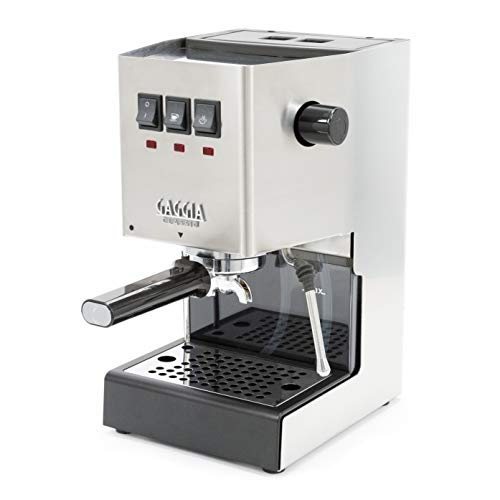
Gaggia Classic Pro
A commercial-style 58mm portafilter and an all metal build set this compact semi-automatic apart, and owners praise both for durability and upgrade potential. Its single boiler drives a proper steam wand, though a separate grinder is required. Many enthusiasts pick it specifically to learn manual espresso technique.
Pros
- Commercial-style 58mm portafilter
- Durable metal build with strong upgrade path
- Real steam wand for manual milk texturing
Cons
- Needs a separate grinder to perform its best
- Single boiler requires switching between brew and steam

Breville Bambino Plus BES500
A fast-heating thermojet system and an automatic milk steamer fit inside a very slim body here, which suits tight counter space. Owners report it reaches brewing temperature in seconds, and its automatic frothing helps beginners get consistent milk. A separate grinder is required, and its small size limits back-to-back milk drinks.
Pros
- Very slim footprint for tight kitchens
- Thermojet heats up in seconds
- Automatic milk steaming aids beginners
Cons
- No built-in grinder
- Small size limits back-to-back milk drinks

De’Longhi Magnifica
Grinding, tamping and brewing all happen at the push of a button on this super-automatic, which owners value for daily convenience. An integrated adjustable burr grinder and a manual milk frother cover espresso and cappuccino with little effort. Less control over shot variables is the trade-off for that convenience.
Pros
- Grinds and brews at the touch of a button
- Built-in burr grinder with adjustable settings
- Easy daily use with removable brew unit
Cons
- Less control over shot variables
- Manual frother needs some technique for latte art

De’Longhi Dedica EC685
A slim, affordable semi-automatic that owners report handles espresso and steamed milk well for its size and price point. Its thermoblock heats quickly, and it accepts both ground coffee and pods for flexibility. A pressurized portafilter offers less fine control than a commercial-style basket, though.
Pros
- Slim, affordable, and quick to heat
- Accepts both ground coffee and pods
- Adjustable espresso volume settings
Cons
- Pressurized basket limits fine control
- Steam wand is shorter than premium machines

Nespresso Vertuo
Sealed pods and a centrifugal spin system brew espresso or larger coffee here at one touch, with no grinding or tamping involved. Owners report extremely consistent results cup after cup. True high-pressure espresso is not what this machine makes, and only compatible Vertuo capsules work in it.
Pros
- Completely hands-free, no grinding or tamping
- Very consistent cup to cup
- Fast heat-up and simple cleanup
Cons
- Locked to Vertuo capsules only
- Not true high-pressure espresso

Rancilio Silvia
A brass boiler and a powerful, articulating steam wand define this prosumer semi-automatic, and owners rate the wand highly for microfoam quality. Commercial-grade components support long-term durability, though a separate quality grinder is still required. Its single boiler demands some temperature-surfing skill, so committed home baristas get the most from it.
Pros
- Strong, articulating steam wand for great microfoam
- Durable brass boiler and commercial parts
- Full manual control over the shot
Cons
- Single boiler needs temperature surfing
- Requires a separate high-quality grinder
What matters most
Semi-automatic, super-automatic or pod: what fits your routine Semi-automatics like the Barista Express and Gaggia automate pump pressure while leaving grinding, dosing and shot timing to you, which suits most enthusiasts. Super-automatics like the De’Longhi Magnifica grind and brew at one touch for maximum convenience. Pod machines like the Nespresso Vertuo trade control for total simplicity. Decide how much of the process to control manually before comparing anything else.
Boilers and why temperature stability matters A boiler controls how steady the brew temperature stays and whether a machine can pull a shot and steam milk at the same time. Single-boiler machines, which cover most picks here, must switch between brewing and steaming, so a short wait separates the two. Thermoblock and thermojet systems heat fast and suit compact machines well. Dual-boiler setups allow simultaneous brewing and steaming but cost far more and rarely appear at the home level.
Built-in grinder or a separate one Grind consistency affects shot quality as much as the machine itself, since uneven grounds cause channeling and sour or bitter shots. Machines like the Barista Express and Magnifica include a burr grinder, which simplifies setup and saves counter space. Others, including the Gaggia, Bambino Plus and Rancilio Silvia, expect a separate grinder, adding cost but allowing a better choice of burr. Budget for a quality grinder if the machine lacks one.
Milk steaming for lattes and cappuccinos Steam wand quality matters most for anyone who drinks milk-based drinks daily. Manual wands on the Gaggia and Rancilio give full control over microfoam texture but take practice to master. Automatic frothers on the Bambino Plus and Magnifica produce consistent milk with far less skill required. Portafilter size matters too, since a commercial-style 58mm basket opens up more accessories and technique options.
How they stack up
| # | Model | Type | Best for | Score | Price |
|---|---|---|---|---|---|
| 1 | Breville Barista Express BES870 | Semi-automatic with grinder | Best overall | 9.4 | Check price |
| 2 | Gaggia Classic Pro | Semi-automatic | Best for enthusiasts | 9.1 | Check price |
| 3 | Breville Bambino Plus BES500 | Semi-automatic, compact | Best for small kitchens | 8.8 | Check price |
| 4 | De’Longhi Magnifica | Super-automatic | Best automatic | 8.6 | Check price |
| 5 | De’Longhi Dedica EC685 | Semi-automatic | Best budget | 8.4 | Check price |
| 6 | Nespresso Vertuo | Pod machine | Best for convenience | 8.2 | Check price |
| 7 | Rancilio Silvia | Semi-automatic, prosumer | Best for milk steaming | 8.0 | Check price |
Frequently asked questions
What is the best espresso machine overall right now?
Based on specifications and owner feedback, Breville Barista Express is the overall pick. It pairs a built-in burr grinder with a steam wand and adjustable settings, giving beginners an approachable path to cafe-style shots without needing a separate grinder.
What type of espresso machine should a beginner buy?
A semi-automatic with a built-in grinder, like the Breville Barista Express, works well as a starting point because it teaches technique while keeping the workflow simple. Zero learning curve comes from a super-automatic like the De’Longhi Magnifica or a Nespresso pod machine instead.
Do I need a separate grinder for an espresso machine?
It depends on the machine. Barista Express and De’Longhi Magnifica have built-in burr grinders. Gaggia Classic Pro, Bambino Plus and Rancilio Silvia all need a separate grinder, and a quality burr grinder matters since grind consistency strongly affects shot quality.
What is the difference between semi-automatic and super-automatic espresso machines?
A semi-automatic automates pump pressure but leaves grinding, dosing and shot timing to you for full manual involvement. A super-automatic grinds, tamps and brews at the push of a button, trading fine control for convenience. Enthusiasts tend to prefer semi-automatics, while busy households often favor super-automatics.
Can these espresso machines make lattes and cappuccinos?
Yes, every machine here except the pod-based Vertuo has a steam wand or frother for milk drinks. Manual wands on the Gaggia and Rancilio give the most control over microfoam, while automatic steamers on the Bambino Plus and Magnifica make consistent milk with less practice required.
Is a single-boiler espresso machine good enough for daily use?
For most home users, yes. Single-boiler machines like the Gaggia and Rancilio make excellent espresso but require switching between brewing and steaming, adding a short wait between the two. Dual-boiler machines allow both at once but cost significantly more.
How much counter space does an espresso machine need?
It varies widely by model. Breville Bambino Plus and De’Longhi Dedica are built slim for small counters, while super-automatics and machines with built-in grinders like the Barista Express take up more room. Measure counter depth and cabinet clearance before buying.
How do I keep an espresso machine clean?
Backflush or rinse the group head and wipe the steam wand after every use, then empty the drip tray and used grounds regularly. Descale on the schedule listed in the manual, since mineral buildup is the most common cause of weak pressure and inconsistent temperature over time.
Are pod machines real espresso?
Pod machines like the Nespresso Vertuo brew a concentrated, crema-topped coffee that many people enjoy, but they skip the true high-pressure extraction a semi-automatic with a portafilter produces. Consistency and convenience come at the cost of that authenticity.
Semi-automatic vs super-automatic: which is worth the extra effort?
A semi-automatic rewards the extra effort with more control over grind, dose and shot timing, appealing to anyone who wants to refine technique over time. A super-automatic suits households that just want a consistent cup with minimal daily involvement.
The bottom line
For most people, Breville Barista Express is the espresso machine to buy, thanks to its built-in grinder, quality steam wand and beginner-friendly control in one unit. Choose Gaggia Classic Pro to master manual pulls, or Breville Bambino Plus if counter space is tight and fast, easy shots matter most.