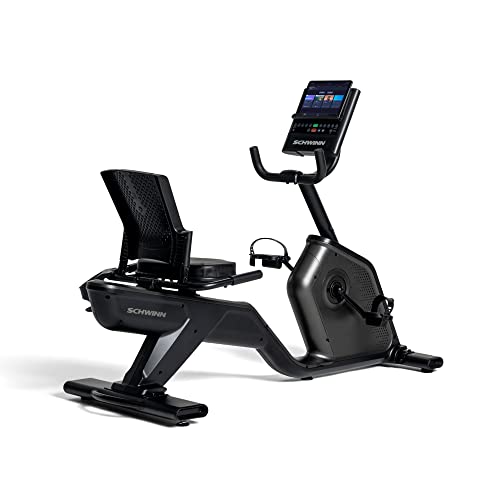
Exercise Bikes Built for Patios, Decks and Garages
The Keiser M3i is our overall pick for covered outdoor spaces thanks to its aluminium frame and sealed magnetic resistance. The Schwinn IC4 suits a garage gym with connected training, and the Sunny Health and Fitness SF-B1714 covers the same ground for far less.
If you want a stationary bike that will hold up on a covered patio, porch or unheated garage, the Keiser M3i is the one to buy, with the Schwinn IC4 the better connected option for a garage setup and the Sunny Health and Fitness SF-B1714 the value pick for the same conditions.
This is a harder question than it looks because no consumer exercise bike is actually rated for outdoor installation, and every warranty is written for indoor use. What varies is how well a machine tolerates humidity swings, condensation and temperature extremes in a sheltered outdoor space. We compared frame materials, resistance systems, fastener exposure and console sensitivity, and based on specifications ranked the seven below.
What we recommend

Keiser M3i Indoor Cycle
A commercial indoor cycle built on an aluminium frame with a sealed magnetic resistance system and a rear mounted flywheel, which keeps the drivetrain away from sweat and condensation. Aluminium does not rust the way painted steel does when humidity swings. Owners report it holding up in gyms, garages and covered outdoor studios where steel framed bikes show corrosion at the welds within a season.
Pros
- Aluminium frame resists corrosion far better than steel
- Sealed magnetic resistance has no exposed pad to seize
- Runs on batteries so no outdoor outlet is required
Cons
- Significantly more expensive than home market bikes
- Console and electronics still need covering when unused

Schwinn IC4 Indoor Cycling Bike
A magnetic resistance indoor cycle with Bluetooth broadcasting that pairs with the major training apps, which makes an unheated garage a workable training space through winter. The resistance is a smooth micro adjust knob rather than a stepped dial. Owners report the console is the part that dislikes damp, so many keep it covered between sessions.
Pros
- Works with third party training apps
- Smooth magnetic resistance with fine adjustment
- Dual sided pedals suit clipped or trainer shoes
Cons
- Steel frame needs protection from damp
- Console is the weak point in humid conditions

Sunny Health and Fitness SF-B1714 Magnetic Belt Drive Indoor Cycling Bike
A magnetic belt drive cycle with a heavy flywheel and no exposed chain, which removes the component most likely to seize in a damp garage. Belt drives also run near silently, useful if the bike lives near a neighbour’s window. Owners report it as a lot of machine for the outlay, provided you keep it out of direct weather.
Pros
- No chain to rust or require lubrication
- Very quiet running
- Wide adjustment range fits multiple household members
Cons
- Steel frame and fasteners need a cover in damp air
- Basic console with limited data

Marcy AIR-1 Fan Exercise Bike
A fan bike where resistance comes from air moving through the blades, so there is no resistance mechanism to seize and no motor at all. The simplicity is the appeal for an exposed space, since there is very little to go wrong beyond the bearings and the chain. Owners report it is loud by nature, which suits an outdoor or garage location better than a shared living room.
Pros
- Almost nothing to fail mechanically
- Resistance scales with effort with no adjustment
- Loud operation is a non issue outdoors
Cons
- Chain drive needs regular lubrication in damp air
- Noisy enough to be unpleasant indoors
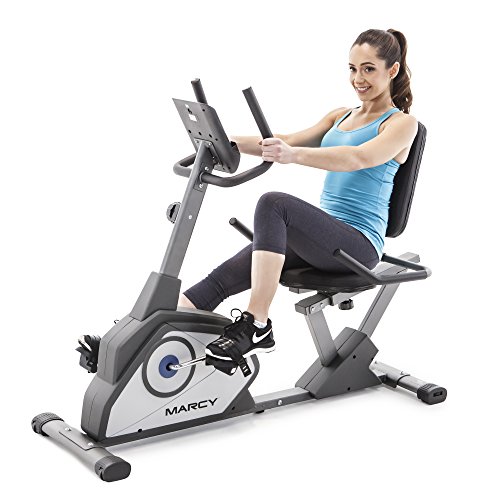
Marcy ME-709 Recumbent Exercise Bike
A recumbent bike with a low step through frame and a supportive backrest, which suits anyone with knee, hip or balance limitations who wants to train on a porch rather than indoors. The magnetic resistance is adjusted by a simple mechanical dial rather than electronically. Owners report the padded seat is the main reason they use it more often than an upright.
Pros
- Low step through is easy to get onto
- Supported back suits longer sessions
- Mechanical resistance dial with no electronics in the loop
Cons
- Larger footprint than an upright
- Limited resistance range for serious training

YOSUDA Indoor Cycling Bike Stationary
An entry level belt drive cycle with a caged flywheel, adjustable seat and handlebar, and a simple battery console, sold as a straightforward way into indoor cycling. It is the machine to choose if the outdoor space is genuinely sheltered and you would rather not risk a costly bike. Owners report assembly is quick and the ride is smoother than the price suggests.
Pros
- Low cost if the space carries real corrosion risk
- Quiet belt drive
- Straightforward assembly
Cons
- Fasteners and welds are the first thing to corrode
- Console offers only basic metrics

Cyclace Exercise Bike Stationary
A steel framed indoor cycle with a heavy flywheel and a higher stated user weight capacity than most bikes in its bracket, along with a wide stabiliser base. The extra frame material is the reason it feels planted during out of the saddle efforts. Owners report checking and retightening the fasteners periodically, which is good practice on any bike kept in a damp space.
Pros
- Stable under out of the saddle effort
- Higher weight capacity than most entry bikes
- Heavy flywheel gives a smooth pedal stroke
Cons
- Friction pad wears and can stiffen in damp conditions
- Heavy to move once assembled
Compared at a glance
| # | Model | Frame | Best for | Score | Price |
|---|---|---|---|---|---|
| 1 | Keiser M3i Indoor Cycle | Aluminium main frame | Best overall | 9.4 | Check price |
| 2 | Schwinn IC4 Indoor Cycling Bike | Powder coated steel | Best for a garage gym | 9.2 | Check price |
| 3 | Sunny Health and Fitness SF-B1714 Magnetic Belt Drive Indoor Cycling Bike | Powder coated steel | Best value | 9.0 | Check price |
| 4 | Marcy AIR-1 Fan Exercise Bike | Air, unlimited and self scaling | Best air resistance | 8.8 | Check price |
| 5 | Marcy ME-709 Recumbent Exercise Bike | Recumbent with backrest | Best recumbent | 8.6 | Check price |
| 6 | YOSUDA Indoor Cycling Bike Stationary | Belt drive | Best budget | 8.3 | Check price |
| 7 | Cyclace Exercise Bike Stationary | Heavy gauge steel with wide base | Best for heavier riders | 8.0 | Check price |
How to choose
Understand what outdoor use really means here No consumer exercise bike is rated for permanent outdoor installation, and every warranty in the category assumes indoor use. What people usually mean is a covered patio, a screened porch, a carport or an unheated garage. Those are workable, but they are not indoors: humidity swings, overnight condensation and salt air near the coast all attack steel frames and fasteners. Plan for shelter from rain and direct sun as a minimum, and treat any bike left in that environment as needing more maintenance than one in a spare room.
Frame material and resistance type matter most Aluminium framed bikes tolerate humidity far better than powder coated steel, because a single chip in the coating on a steel frame becomes a rust point. Sealed magnetic resistance has no pad to absorb moisture and stiffen, while felt friction pads can swell and grab after a damp night. Belt drives remove the chain, which is the component most likely to seize outdoors. If you can only apply one filter, choose a bike with magnetic resistance and a belt or direct drive.
Think about power and electronics separately Consoles and Bluetooth modules are the least weather tolerant part of any bike, and condensation inside a display is usually permanent. Battery powered consoles avoid running a mains lead into a damp space, which is both a convenience and a safety point: if you do need mains power outdoors, it should be a properly rated outdoor circuit with residual current protection, installed by an electrician. Many owners simply remove or cover the console between sessions.
Protect it properly between sessions A breathable outdoor equipment cover does far more for longevity than any specification on the box. Avoid sealed plastic sheeting, which traps condensation against the frame and accelerates the corrosion you are trying to prevent. Wipe sweat off after every session, since salt is more corrosive than rain, and give the fasteners a check and retighten every few weeks. A light corrosion inhibitor on exposed bolt heads and the seat post is a small job that pays for itself.
Questions worth asking
Can I actually leave an exercise bike outside?
Not exposed to weather. Rain, direct sun and dew will corrode fasteners, degrade the seat and destroy the console within a season or two. A covered, dry space such as a porch, carport or garage is realistic, particularly with a breathable cover. Anything more exposed than that means accepting the machine is a consumable.
Does using a bike outdoors void the warranty?
In most cases yes, because manufacturer warranties specify indoor domestic use. Corrosion is also commonly excluded outright. This is worth knowing before you buy, and it is an argument for either a bike cheap enough to treat as replaceable or one built well enough that you do not expect to claim.
Which resistance type holds up best in damp air?
Sealed magnetic resistance, because the mechanism is enclosed and there is no wear surface exposed to moisture. Felt friction pads can absorb damp, swell and grab. Air resistance is also robust since it is just a fan, though air bikes use a chain that needs regular lubrication in humid conditions.
Should I bolt the bike down on a deck?
Only if the deck is level and the bike moves during hard efforts. Most bikes have levelling feet that solve the problem without drilling. If you do fix it down, use stainless fasteners, since plated steel screws in outdoor timber will stain the deck and fail early.
How do I stop the seat and grips deteriorating?
Ultraviolet light is the enemy for foam grips and vinyl seats, so keep the bike out of direct sun and covered when unused. Replacement gel seat covers and grip tape are cheap and easy to renew. A vinyl protectant applied occasionally slows cracking on the saddle.
Is a mains powered bike a problem outdoors?
It adds both a safety and a reliability consideration. Any mains connection in an outdoor or damp space needs a properly rated outdoor socket with residual current protection, fitted by a qualified electrician, not an extension lead run out through a window. Battery powered consoles avoid the issue entirely.
What maintenance does an outdoor kept bike need?
Wipe down after every session to remove sweat, check and retighten fasteners every few weeks, lubricate any chain regularly, and inspect welds and the seat post for early corrosion. A light corrosion inhibitor on exposed bolt heads helps. Overall, plan on roughly triple the maintenance of an indoor machine.
Would a real bike on a trainer be a better outdoor option?
For some people, yes. A direct drive trainer plus your existing bike takes up less permanent space and can be brought inside easily, which sidesteps the weather problem entirely. It costs more once you count the bike, and it is less convenient for casual family use, but it is worth considering if you already cycle.
The verdict
The Keiser M3i is the bike to buy if the space is genuinely damp and you want it to last, since the aluminium frame and sealed magnetic resistance address the two things that kill machines in those conditions. For a sheltered garage with connected training, the Schwinn IC4 is the better value, and the Sunny Health and Fitness SF-B1714 delivers most of the same capability if you are prepared to cover it and check the fasteners.