Hamster Wheels Quiet Enough for a Bedroom Cage
The Niteangel Silent Runner Exercise Wheel leads for nighttime quiet thanks to its enclosed ball bearing hub. Want the same hush for less? The Kaytee Silent Spinner is close behind. Housing a larger hamster or a rat? The Exotic Nutrition Wodent Wheel gives a wider, deeper track than standard wire designs.
Three wheels stand out here. The Niteangel Silent Runner wins on noise, its enclosed ball bearing hub staying quiet through hours of nighttime running. The Kaytee Silent Spinner delivers similar hush at a lower cost, a fair trade for most cages. Housing a Syrian hamster or a rat? The Exotic Nutrition Wodent Wheel fits feet that overhang narrower wire designs.
Noise is the top complaint with indoor small pet cages, since these animals run most at night while owners sleep. Wheel diameter matters just as much, because a wheel too small forces the spine to curve, which can cause injury over time. We compared bearing type, running surface width and material, mounting hardware, and owner reports of squeaking after months of use.
The shortlist, ranked
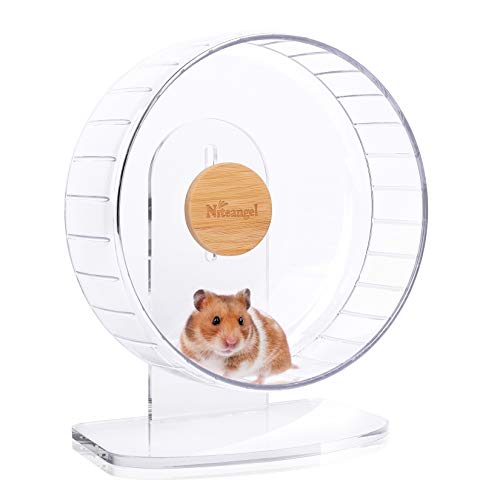
Niteangel Silent Runner Exercise Wheel
An enclosed ball bearing hub keeps this wheel nearly silent through overnight running sessions. Its solid running surface protects small feet better than wire rungs ever could. A wide base stand keeps the wheel upright without wobbling on cage bedding.
Pros
- Ball bearing hub runs nearly silent
- Solid surface protects feet from wire
- Stable free standing base
Cons
- Larger sizes take up more cage floor
- Plastic surface needs regular cleaning

Kaytee Silent Spinner Exercise Wheel
This uses an enclosed hub design similar to pricier wheels, at a lower cost. Its curved plastic track keeps a running hamster centered instead of drifting to one side. Mounting works either to a cage side or freely with the included base.
Pros
- Enclosed hub runs quietly for the price
- Curved track keeps pets centered
- Mounts to cage side or stands alone
Cons
- Hub can loosen and squeak over months
- Smaller sizes suit dwarf hamsters only

Exotic Nutrition Wodent Wheel
A wider, deeper running surface than standard wire wheels suits Syrian hamsters and small rats whose feet overhang narrower designs. Metal construction resists chewing better than plastic. It runs quieter than open wire wheels, though not silent like fully enclosed hub designs.
Pros
- Wide track fits larger hamsters and rats
- Metal resists chewing damage
- Deep sides reduce feet slipping off
Cons
- Louder than enclosed ball bearing wheels
- Larger footprint needs a bigger cage

Niteangel Wooden Hamster Exercise Wheel
Solid wood gives this wheel a natural look and texture some owners prefer over plastic. It spins on a simple axle rather than a sealed bearing, so it runs quieter than bare wire but noisier than sealed hub designs. Wood also absorbs some moisture from bedding over time.
Pros
- Natural wood surface and look
- Quieter than open wire wheels
- No plastic odor over time
Cons
- Axle needs occasional oiling to stay quiet
- Wood absorbs moisture and needs replacing eventually
Trixie Natural Living Hamster Wheel
An affordable wire wheel covers the basics for owners on a tight budget. Open wire rungs are not as gentle on feet as solid surfaces, so it suits adult hamsters more than young or injured ones. It clips onto standard wire cage bars for a stable mount.
Pros
- Low cost entry point
- Clips securely to wire cages
- Compact size fits small cages
Cons
- Wire rungs risk foot and tail injury
- Runs louder than solid surface wheels

YML Wire Hamster Exercise Wheel
Open wire construction keeps air moving around the wheel, useful for cages that run warm. It mounts to the side of a wire cage rather than standing freely, which saves floor space. As with most wire wheels, running noise stays higher than enclosed hub designs.
Pros
- Saves floor space with side mounting
- Open design ventilates well
- Simple to install on wire cages
Cons
- Wire surface is harder on feet
- Noticeably louder than solid wheels

Bucatstate Silent Hamster Wheel
This is a budget take on the enclosed hub design, built for owners who want quieter running without paying premium brand prices. The plastic hub is less refined than Niteangel or Kaytee versions and can develop a faint click after heavy use. It still runs quieter than any open wire wheel.
Pros
- Quieter than wire wheels at a lower cost
- Solid surface protects feet
- Compact base fits smaller cages
Cons
- Hub can develop a faint click over time
- Less durable than premium silent wheels
How to choose
Why does wheel noise matter so much for indoor pets? Hamsters, gerbils and mice run mostly at night, so a squeaky wheel becomes a recurring alarm for anyone sleeping nearby. Noise usually comes from the axle or bearing, not the running surface itself. Enclosed ball bearing hubs, like those on the Niteangel Silent Runner and Kaytee Silent Spinner, stay quiet far longer than a simple axle. Basic wire wheels rely on friction alone, so they squeak sooner and louder.
What size wheel does your pet actually need? A wheel too small forces a curved spine while running, which vets link to long term back problems in hamsters. Dwarf hamsters and mice fit wheels around 6.5 inches across. Syrian hamsters need at least 8 to 9 inches, and rats or large hamsters do better on 11 to 12 inch designs like the Exotic Nutrition Wodent Wheel. Unsure which size fits? Size up rather than down.
Solid surface or wire, which is safer for running feet? Wire rungs let small feet and tails slip through gaps, risking injury during a fast sprint. Solid plastic, wood or deep metal tracks support the whole foot and cut that risk. Wire wheels remain common since they cost less and ventilate better in warm rooms. Young, injured or elderly pets do best with a solid surface as the default.
How do you fit a wheel into a small or multi-pet cage? Free standing base wheels take more floor space than models mounting to a cage wall, an important trade in smaller enclosures. Side mounted designs, like the YML Wire wheel, reclaim that floor area for bedding and hideouts. In multi-pet cages, most owners provide one wheel per animal, since hamsters in particular do not share running time well.
The lineup, side by side
| # | Model | Diameter | Best for | Score | Price |
|---|---|---|---|---|---|
| 1 | Niteangel Silent Runner Exercise Wheel | 6.5 to 8.5 inch options | Best overall | 9.4 | Check price |
| 2 | Kaytee Silent Spinner Exercise Wheel | 6.5 to 9 inch options | Best value | 9.1 | Check price |
| 3 | Exotic Nutrition Wodent Wheel | 11 to 12 inch options | Best for large hamsters and rats | 8.9 | Check price |
| 4 | Niteangel Wooden Hamster Exercise Wheel | 7 to 8.5 inch options | Best natural material option | 8.6 | Check price |
| 5 | Trixie Natural Living Hamster Wheel | 6.7 inch | Best budget | 8.3 | Check price |
| 6 | YML Wire Hamster Exercise Wheel | 6 to 8 inch options | Best for open ventilation | 8.1 | Check price |
| 7 | Bucatstate Silent Hamster Wheel | 6.5 to 8 inch options | Best budget silent option | 8.0 | Check price |
Frequently asked questions
What size exercise wheel does a hamster need?
Dwarf hamsters need at least 6.5 inches across, while Syrian hamsters need 8 to 9 inches. A wheel that is too small forces the spine to arch during running, which can lead to posture and back problems over time.
Why does my hamster wheel squeak at night?
Squeaking usually comes from a dry or worn axle, not the running surface. Basic wire wheels squeak sooner because they rely on simple friction, while enclosed ball bearing hubs on wheels like the Niteangel Silent Runner stay quiet much longer.
Are silent hamster wheels really silent?
Near silent is more accurate than fully silent. Enclosed ball bearing hubs cut noise dramatically compared to wire wheels, though a faint hum remains audible in a quiet room at night.
Wire wheel vs solid wheel, which is safer?
Solid surfaces are safer for feet and tails, since wire rungs leave gaps that small limbs can slip into during a fast run. Wire wheels ventilate better and cost less, which is why budget options still use them.
How do I stop a hamster wheel from squeaking?
A drop of pet safe lubricant on the axle fixes most squeaks. If the noise continues, the bearing or hub itself has likely worn out and the wheel needs replacing rather than more oil.
Can gerbils and rats use the same wheel as hamsters?
Gerbils and mice fit the same smaller wheels hamsters use, around 6.5 to 8 inches. Rats need the larger 11 to 12 inch designs built for bigger animals, like the Exotic Nutrition Wodent Wheel, since standard hamster wheels are too small for their stride.
Should the exercise wheel stand freely or mount to the cage?
Either works, but free standing bases save time during cage cleaning since the wheel lifts out separately. Side mounted wheels save floor space, which matters more in smaller enclosures with limited room.
How often should I clean a hamster exercise wheel?
Wipe the running surface weekly to remove waste and bedding buildup, and check the axle or hub monthly for grime that can cause squeaking. A build up of debris is a common cause of wheels slowing down or sticking.
Do wooden hamster wheels need special care?
Wood absorbs moisture from bedding and waste over time, so wipe it dry regularly and expect to replace it sooner than plastic or metal wheels. Avoid soaking wooden wheels in water, since that can warp the running surface.
What is the best exercise wheel for a Syrian hamster?
The Exotic Nutrition Wodent Wheel or an 8 to 9 inch Niteangel Silent Runner both give a Syrian hamster enough diameter and surface width to run without arching its spine.
The verdict
The Niteangel Silent Runner Exercise Wheel is the safest bet for a quiet cage, its enclosed ball bearing hub outlasting basic axles. The Kaytee Silent Spinner delivers nearly the same hush for less money. Owners of Syrian hamsters or rats should size up to the Exotic Nutrition Wodent Wheel, since its wider track fits bigger animals that standard wheels leave cramped.