Top Extension Cords for DIY Projects and Workshops
The DeWalt 50 Ft 12/3 Extension Cord stands out for most DIYers. It offers a heavy duty 12 gauge build with a rugged jacket and lighted end. Its main advantage is reliable power delivery for high draw tools. Its main limitation is the bulk and weight of the cord.
A reliable extension cord is a cornerstone of any DIY toolkit. Whether you are running a miter saw in the driveway or a sander in the garage, the right cord ensures consistent power and safety.
We compared popular models from trusted brands to find cords that offer durability, flexibility, and value. Our focus is on real specifications and owner feedback to guide your choice.
Our top picks

DeWalt 50 Ft 12/3 Extension Cord
This cord features a 12 gauge conductor that handles up to 15 amps, ideal for table saws and compressors. The tough PVC jacket resists abrasion and weather, while the lighted end shows power status. Owners report it stays flexible in cold weather.
Pros
- Handles high draw tools
- Visible power indicator
- Durable outer jacket
Cons
- Heavy and stiff to coil
- Price is higher than basic cords

Iron Forge 100 Ft 10/3 Extension Cord
With a 10 gauge conductor and 100 foot length, this cord minimizes voltage drop over long distances. It is rated for 15 amps and includes a lighted plug. The flexible rubber jacket withstands job site abuse.
Pros
- Low voltage drop
- Flexible in cold temps
- Lighted end
Cons
- Very heavy
- Requires large storage reel

Southwire 25 Ft 12/3 Extension Cord
A 25 foot length is versatile for most indoor tasks. The 12 gauge cord is UL listed and features a molded plug for strain relief. It is affordable without compromising on quality.
Pros
- Budget friendly
- Good flexibility
- Compact size
Cons
- Only 25 feet long
- No power indicator
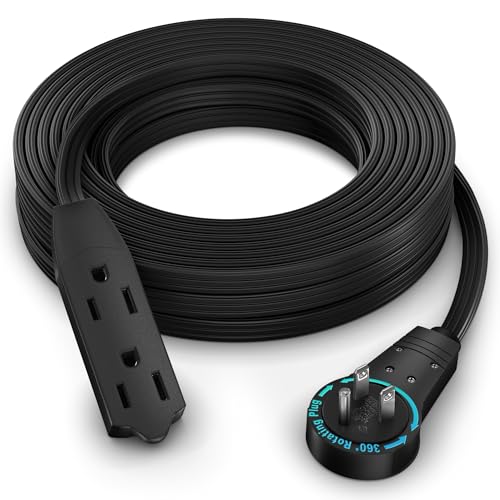
Maximm 50 Ft 16/3 Extension Cord
This cord uses a 16 gauge conductor, suitable for drills, sanders, and lamps. It is lightweight and easy to manage, with a flat plug that fits behind furniture. The bright blue color is easy to spot.
Pros
- Lightweight and flexible
- Flat plug head
- Bright color visibility
Cons
- Not for high amp tools
- May overheat with heavy loads

Husky 25 Ft 12/3 Extension Cord
With a special cold resistant jacket, this cord stays flexible even below freezing. It is rated for 15 amps and includes a lighted end. Husky’s design includes a reinforced plug and strain relief.
Pros
- Excellent cold flexibility
- Durable construction
- Lighted end
Cons
- Shorter length
- Premium price

Coleman Cable 100 Ft 12/3 Outdoor Extension Cord
This cord is designed for outdoor use with a water resistant jacket and a lighted end. The 12 gauge wire supports up to 15 amps, making it suitable for hedge trimmers and lawn mowers. It resists UV and moisture.
Pros
- Weather resistant
- Long reach
- Lighted plug
Cons
- Heavy to manage
- Can be stiff in cold

Anker 6 Ft 16/3 Extension Cord with Surge Protector
This short cord features a built in surge protector, shielding sensitive equipment from power spikes. It has three grounded outlets and a 6 foot length, perfect for workbenches. The compact design does not block adjacent outlets.
Pros
- Protects electronics
- Three outlets
- Compact plug
Cons
- Very short
- Not for heavy tools
How to choose
Compared at a glance
| # | Model | Length | Best for | Score | Price |
|---|---|---|---|---|---|
| 1 | DeWalt 50 Ft 12/3 Extension Cord | 50 ft | Heavy duty power tools on job sites | 9.4 | Check price |
| 2 | Iron Forge 100 Ft 10/3 Extension Cord | 100 ft | Long runs to remote outlets | 9.1 | Check price |
| 3 | Southwire 25 Ft 12/3 Extension Cord | 25 ft | Everyday workshop use | 8.9 | Check price |
| 4 | Maximm 50 Ft 16/3 Extension Cord | 50 ft | Light duty power tools and electronics | 8.6 | Check price |
| 5 | Husky 25 Ft 12/3 Extension Cord | 25 ft | Cold weather and outdoor projects | 8.8 | Check price |
| 6 | Coleman Cable 100 Ft 12/3 Outdoor Extension Cord | 100 ft | Outdoor power equipment | 8.7 | Check price |
| 7 | Anker 6 Ft 16/3 Extension Cord with Surge Protector | 6 ft | Safe power for electronics and small tools | 8.4 | Check price |
Frequently asked questions
What gauge extension cord should I use for power tools?
For most power tools that draw up to 15 amps, a 12 gauge cord is recommended. If the tool draws less than 10 amps, a 14 gauge cord may work, but 12 gauge provides more headroom and less voltage drop.
Can I use an indoor extension cord outdoors?
No. Indoor cords are not designed to withstand moisture, UV rays, or temperature extremes. Outdoor cords have a weather resistant jacket and are marked for outdoor use. Always check the label before using a cord outside.
How long can an extension cord be without losing power?
The longer the cord, the more voltage drop you experience. For a 15 amp load, keep the cord under 100 feet with a 12 gauge wire. For longer runs, use a 10 gauge cord or move the power source closer.
What does the number 12/3 mean on an extension cord?
The first number is the wire gauge (12), and the second number is the number of conductors inside (3). A 12/3 cord has three 12 gauge wires, typically including a hot, neutral, and ground wire, allowing for a grounded connection.
Is it safe to daisy chain extension cords?
Daisy chaining is not recommended because it increases resistance and the risk of overheating. If you need more length, use a single longer cord of the appropriate gauge. If you must connect two cords, ensure both are heavy duty and rated for the same amperage.
How do I prevent my extension cord from overheating?
Choose a cord with a sufficient gauge for the load. Avoid covering the cord with rugs or furniture, which traps heat. Unroll the cord fully to allow heat dissipation. Never exceed the cord’s amperage rating.
What is a lighted end on an extension cord?
A lighted end contains a small indicator light that glows when the cord is plugged in and receiving power. It helps you quickly see if the cord is live, which is useful for safety and troubleshooting.
Are flat plug extension cords better?
Flat plug cords are convenient for tight spaces because they do not protrude as far from the outlet. However, they are typically available in lower gauges, so they are best for light duty use. For heavy power tools, a standard plug is more common.
Can I use a 16 gauge cord for a circular saw?
A circular saw typically draws 15 amps, which exceeds the safe capacity of a 16 gauge cord over long distances. A 16 gauge cord is only rated for 13 amps and should be used for lighter tools. For a circular saw, use a 12 gauge cord.
How should I store my extension cord?
Coil the cord loosely without kinking. Use a reel or tie with a velcro strap. Keep it in a dry place away from direct sunlight. Inspect for cuts or fraying before each use.
Our take
For most DIYers, the DeWalt 50 Ft 12/3 is the best all around choice. It offers the durability and power handling needed for a wide range of tools. If you need to reach far corners, the Iron Forge 100 Ft 10/3 is worth the extra weight. For budget conscious shoppers, the Southwire 25 Ft 12/3 delivers quality at a lower price.