Fabric Scissors That Cut Cleanly and Stay Sharp
The Gingher 8-Inch Knife Edge Dressmaker’s Shears take the top spot for most sewists because they offer a razor-sharp, durable blade that glides through multiple layers of fabric with ease, and their forged steel construction holds an edge for years. The main limitation is the price, which is higher than many other options, but the long-term performance justifies the investment for regular use.
Cutting fabric with dull or improper scissors can fray edges, distort shapes, and cause hand fatigue. A good pair of fabric scissors is a fundamental tool for any sewing project, whether you are a beginner or a seasoned professional.
This roundup compares seven highly regarded fabric scissors available on Amazon. We considered blade material, handle design, and what owners report about their long-term sharpness and comfort.
How to choose
The best picks, ranked

Gingher 8-Inch Knife Edge Dressmaker’s Shears
These shears are forged from high-carbon steel, providing a keen edge that cuts through cotton, wool, and even denim with minimal effort. The knife-edge design ensures smooth, accurate cuts, and the molded handle fits comfortably in the hand.
Pros
- Stays sharp for many years with proper use
- Cuts multiple layers cleanly
- Comfortable for extended cutting sessions
Cons
- More expensive than many alternatives
- Not suitable for left-handed users

Fiskars Classic Cut Non-Stick SoftGrip Easy-Action Shears
Fiskars shears feature a non-stick coating that prevents adhesive residue from gumming up the blades, making them great for cutting fusible webs or tape. The SoftGrip handles reduce hand fatigue, and the spring-action design opens the blades automatically.
Pros
- Non-stick coating resists adhesive buildup
- Spring-action reduces hand strain
- Great value for the price
Cons
- Blades may dull faster than high-end steel
- Not as precise for intricate curves
Fiskars RazorEdge Micro-Tip Fabric Scissors
These scissors have ultra-sharp, micro-tip blades that allow for intricate cutting without lifting fabric. The titanium-reinforced blades stay sharp longer than standard stainless steel, and the ergonomic handle fits both right and left hands.
Pros
- Very sharp points for precise corners
- Lightweight and easy to control
- Ambidextrous design
Cons
- Short blades not for long straight cuts
- Not ideal for heavy fabrics

Pinking Shears by Kai 7250, 9-Inch
Kai pinking shears feature hardened stainless steel blades with a zigzag pattern that cuts a clean edge resistant to fraying. The adjustable pivot screw maintains tension, and the offset handles reduce wrist strain.
Pros
- Clean zigzag cuts without snagging
- Adjustable pivot for consistent cutting
- Comfortable handle angle
Cons
- Not for general cutting tasks
- Can be difficult to sharpen at home

LDHB 9.5 Inch Titanium Sewing Scissors
These titanium-coated scissors offer a long blade for cutting large pattern pieces, and the coating adds durability and corrosion resistance. The asymmetrical handles are designed for right-handed use, and the blades are sharp enough for most fabrics.
Pros
- Very affordable
- Large blades for long cuts
- Titanium coating resists rust
Cons
- Coating may wear off over time
- Not as precise as higher-end scissors
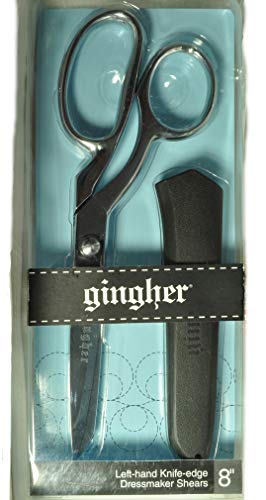
Gingher 8-Inch Bent Dressmaker Shears
The bent handle design keeps the blades flat against the cutting surface, allowing you to cut fabric without lifting it. Forged from high-carbon steel, these shears offer a smooth, precise cut and are a favorite among quilters and dressmakers.
Pros
- Bent handles reduce wrist fatigue
- Excellent for precise straight cuts
- High-quality steel retains edge
Cons
- Expensive
- Right-handed only

Havel’s 8-1/2-Inch Sewing Scissors
Havel’s scissors are made from high-carbon steel that is hardened for durability, yet they are surprisingly lightweight. The comfort handles are designed to fit naturally, and the blades are sharp enough for a variety of cutting tasks.
Pros
- Lightweight reduces hand fatigue
- Sharp blades cut cleanly
- Good value
Cons
- Some users report loosening after heavy use
- Not for very heavy fabrics
The lineup, side by side
| # | Model | Blade Length | Best for | Score | Price |
|---|---|---|---|---|---|
| 1 | Gingher 8-Inch Knife Edge Dressmaker’s Shears | 8 inches | Serious sewists who want precision and lasting sharpness | 9.4 | Check price |
| 2 | Fiskars Classic Cut Non-Stick SoftGrip Easy-Action Shears | 9 inches | Everyday sewing and cutting sticky materials | 9.0 | Check price |
| 3 | Fiskars RazorEdge Micro-Tip Fabric Scissors | 5 inches | Precise cutting of small details and tight curves | 8.8 | Check price |
| 4 | Pinking Shears by Kai 7250, 9-Inch | 9 inches | Finishing seams and preventing fraying | 8.7 | Check price |
| 5 | LDHB 9.5 Inch Titanium Sewing Scissors | 9.5 inches | Budget-conscious sewists who need a large cutting tool | 8.2 | Check price |
| 6 | Gingher 8-Inch Bent Dressmaker Shears | 8 inches | Cutting fabric flat on a table to reduce hand strain | 8.9 | Check price |
| 7 | Havel’s 8-1/2-Inch Sewing Scissors | 8.5 inches | Those who prefer a lightweight, versatile scissor | 8.4 | Check price |
Good to know
What is the difference between fabric scissors and regular scissors?
Fabric scissors have sharper, more precise blades that are designed to cut fabric without fraying or damaging the fibers. Regular scissors are not as sharp and can miss or pull the fabric.
Can left-handed people use right-handed fabric scissors?
It is not recommended. Right-handed scissors have an angled grip that forces the blades apart when used in the left hand, resulting in poor cuts. Look for left-handed or ambidextrous models.
How long should a good pair of fabric scissors last?
With proper care and regular sharpening, a high-quality pair of fabric scissors can last for decades. Cheaper scissors may need replacement after a few years of heavy use.
Can I use fabric scissors to cut paper?
Avoid it. Paper dulls the blade faster and can cause nicks. Dedicate your fabric scissors exclusively to fabric to maintain their sharpness.
What is the best blade length for fabric scissors?
For general sewing, 8 to 9 inches is ideal. Longer blades help with straight cuts on large pieces, while shorter blades offer better control for curves and details.
How do I sharpen fabric scissors?
You can use a whetstone or a specialized scissor sharpener. Some manufacturers offer sharpening services. It is often best to have them professionally sharpened to avoid damaging the edge.
Are spring-loaded scissors easier to use?
Yes, spring-loaded scissors automatically open after each cut, reducing the effort required. They are helpful for those with hand fatigue or arthritis, but they can be less precise for some tasks.
What is the best way to store fabric scissors?
Store them in a protective sheath or case to prevent the blades from hitting other tools. Keep them dry to avoid rust. A dedicated drawer or holder is ideal.
Do fabric scissors work on all types of fabric?
Most good fabric scissors can handle a wide range of fabrics, but very heavy fabrics like leather or multiple layers of denim may require specialized shears. Check the product description for recommended uses.
The verdict
For most sewists, the Gingher 8-Inch Knife Edge Dressmaker’s Shears are the clear winner, offering unmatched sharpness and durability. If you are on a budget, the LDHB Titanium Sewing Scissors provide decent performance at a fraction of the cost. For those who cut on a flat surface, the Gingher Bent Shears are an excellent alternative.


